90% of legal cannabis in Germany? Why the survey raises doubts

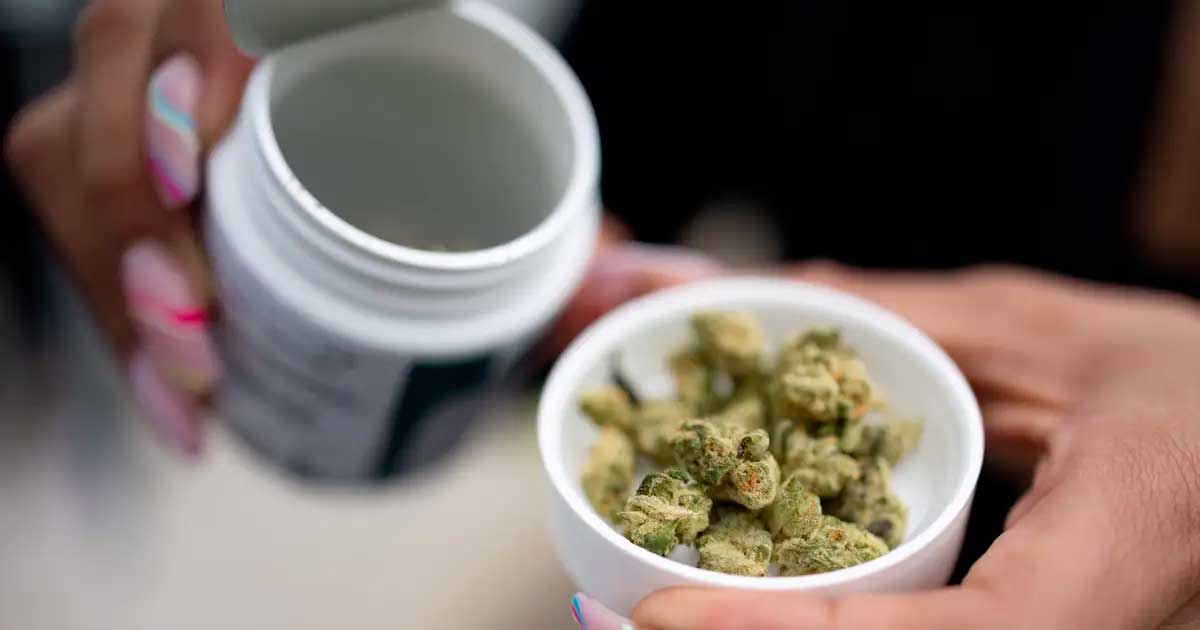
A new report, KonCanG, produced by’Frankfurt University of Applied Sciences and theEvangelical University of Freiburg, claims that 88.4 % of German cannabis consumers obtained their supply from legal sources in the last six months.
Since the cannabis law (CanG) April 1, 2024 in Germany, The survey suggests that the country has largely turned away from the illicit market.
On the face of it, this would appear to be a remarkable political success, indicating that the German Cannabis Act (CanG) has achieved one of its main objectives: to take the trade out of the hands of drug dealers and transfer it to regulated channels.
But a closer look of the study KonCanG reveals a more complex situation. Behind the figure of 90% lie methodological limitations, vague definitions of «legal supply» and the ever-present role of the black market.
An unrepresentative survey
The study KonCanG is based on a online survey of 11,471 participants between March and June 2025. Although the sample is large, the authors are clear that it is not not representative of the German population.
The recruitment strategy was based on social networks, activist networks and Cannabis Clubs, groups naturally more involved in the subject. Unsurprisingly, the sample was heavily skewed in favor of frequent users: 81% said they consumed at least once a week, and 39% said they consumed daily. On the other hand, occasional consumers, who often rely on opportunistic or informal sources, are under-represented.
Demographically, the sample was made up of 85.9% of men, à 96.5% of German nationals and was significantly better educated than the general population. All this means that the results cannot simply be generalized to «90% Germans».
Legal, but not commercial
Perhaps the most striking feature of the results is what is considered «legal». In Germany, there is no open recreational retail market. Instead, the CanG framework authorizes three main supply channels:
- Culture at home, up to three plants per person
- Cannabis cultivation associations, clubs with up to 500 members
- Pharmacies, for medical cannabis
According to the study, 62.3% of adults said they grew their crops at home, 43.7% obtained cannabis from pharmacies, while only 2.5% had recourse to cultivation associations.
This means that the «legal market» in Germany is not a structured, taxed industry comparable to that in Canada or the USA. Rather, it's a patchwork of private cultivation and drugstore purchases.
Hijacking the medical framework
The pharmaceutical channel illustrates the gray area between medical and recreational use. The study revealed that 94% of people who bought cannabis in pharmacies did so without a prescription from their health insurance company.. Instead, they relied on private prescriptions, which were easy to obtain but costly.
In practice, this means that pharmacies, which are officially part of the medical system, serve as supply points for recreational consumers. The report acknowledges this, pointing out that medical cannabis law reforms (MedCanG) have facilitated access and «are apparently also used by recreational consumers».
This blurring of categories undermines the argument that the legal market completely replaces the illegal one. On the contrary, a regulated system (medical access) is diverted to meet recreational demand.
Despite the upbeat headlines, the report KonCanG clearly indicates that the illegal market has not disappeared.
- 36.1% adults said they had used at least one illegal source in the last six months.
- Even after excluding «friends who share their home production» (a legal grey area), 20.8% always obtained cannabis from strictly illegal suppliers.
- Among young adults (18-24), 65.7% continued to rely on resellers as the main source of supply.
And only 2.5% had recourse to cultural associations.
This suggests that while frequent adult users may have switched to «legal» supply, younger and occasional users remain entrenched in the illicit market.
Consumption habits unchanged
The study also confirms that legalization has not radically altered consumption habits in just 1 year. The most common form remains joint with tobacco (40.4%), closely followed by vaporizers (37.7%). Edible products remain marginal at 2.4%, well below North American levels.
Gender and age differences persist: women are more likely to mix cannabis with tobacco, men and non-binary respondents prefer vaporizers, and young users are six times more likely than older adults to use tobacco-free joints.
These models suggest continuity rather than transformation. Legalization has changed where cannabis comes from, but not how it's consumed.
One area where the CanG seems to have had an undeniable impact is on consumers' sense of security. Over three-quarters of respondents said they no longer feared criminal prosecution for their cannabis use. This psychological relief is no mean feat, even if the underlying supply structures remain ambiguous.
Too good to be true?
Has Germany really eliminated the black market in less than 18 months? The facts suggest otherwise.
The number of 90% legal supply is technically accurate, but it reflects a reclassification of existing behaviors (home growing and private prescriptions) rather than the creation of a transparent, taxable industry. The study itself warns that it is not not representative and that it is biased in favor of heavy consumers, making the results less generalizable to the population as a whole.
In addition, the illegal channels persist, particularly among young consumers, and the medical framework is clearly exploited for recreational purposes.
German cannabis regulation is still in its infancy, and Rome was not built in a day. The report KonCanG offers important information, but its optimistic title conceals the complexity of the subject.
Yes, many consumers are now operating within the law. But without regulated retail system, with pharmacies where the line between medical and recreational use is blurred, and with a significant proportion of the population still relying on illegal dealers, it is premature to assert that the cannabis law (CanG) has achieved its objective of dismantling the illicit market.
The true impact of legalization will only become clear with larger, more representative studies, and over time.






















New Caledonia: The Courts Clear the Way for the Return of CBD

The Brazilian medical cannabis market continues to grow

Morocco: Three Cannabis-Based Medications Approved for the Treatment of Epilepsy

Canopy Growth Receives New EU-GMP Certification to Strengthen Its Presence in Europe

Three years after legalizing medical cannabis, Albania continues to establish regulations for it

The first plant-based medical THC spray arrives in the United Kingdom

Medical Cannabis in Germany: THC Prices Vary by a Factor of 12

France already has 3,000 cannabis retail outlets. None of them are legal.

Morocco's exports of legal cannabis have expanded to 15 countries

Aurora Cannabis Doubles Its Production Capacity in Germany
-
 Business2 weeks ago
The legal cannabis market in New York exceeds 4 billion $ in revenue
-

 Cannabis in France4 weeks ago
Which countries legalized medical cannabis before France?
-
Business4 weeks ago
South Korea is preparing to begin local production of medical cannabis to meet rising demand
-
Cannabis in France4 days ago
France already has 3,000 cannabis retail outlets. None of them are legal.
-
Cannabis in Thailand4 weeks ago
From the boom in dispensaries to a purely medical approach: Thailand is revising its cannabis policy
-
Cannabis in the U.S.5 days ago
A DEA report confirms that there are no fatal cannabis overdoses
-
Cannabis and driving3 weeks ago
Medical Cannabis and Driving: New South Wales Ends Automatic Penalties for THC
-
Cannabis in France3 weeks ago
France’s Drug Policy Chief Defends Cannabis Prohibition... and Runs Into the Facts
















You must be logged in to post a comment Login