
Polish parliamentarians petition prime minister to decriminalize cannabis


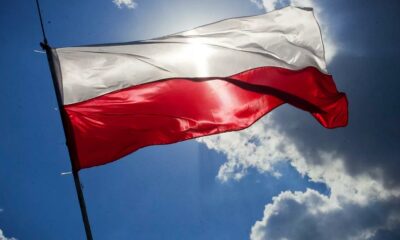
The Polish Parliamentary Petitions Committee transmitted to the Prime Minister Donald Tusk a petition to decriminalize cannabis.
The petition, presented by the commission, suggests allowing Polish citizens to possess up to 15 grams of cannabis and grow a plant for their personal use without incurring criminal penalties.
Although this proposal does not have the binding force of a formal bill, it does require a response from Donald Tusk within 30 days. He will either have to outline the potential steps for implementing the changes, or justify his decision not to proceed. He may also refer the matter to another agency.
According to Wolne Konopie, a leading Polish advocacy group, the decision to opt for a non-binding petition rather than a formal bill stems from a pragmatic assessment of the Polish political landscape.
Defenders feared that the President Andrzej Duda veto a more formal bill. On the contrary, they hope that the petition will spark a national dialogue that could lead to legislative action, particularly in the context of the Polish presidential election next May. If public reaction is strong, it could influence future political agendas, or even sway the position of presidential candidates.
Support and opposition from Polish officials
In recent months, activists have gained the support of some Polish ministry officials. In September, representatives of Wolne Konopie met with a Ministry of Health official to discuss the petition, which would have received provisional support. In July, a civil servant ministry of the interior has forwarded the reform recommendation for consideration by law enforcement agencies. It remains to be seen, however, to what extent this support resonates with government bodies.
The movement of cannabis reform in Poland is part of a broader trend in Europe, where neighbouring countries are adopting their own policies in terms of’medical or recreational use of cannabis. Poland's proximity to the Ukraine and Germany adds a little interest to this regional reform.
In February, the Ukrainian President Volodymyr Zelensky a signed a law legalizing medical cannabis. This law is remarkable for its potential to help soldiers who are facing physical and psychological trauma due to the ongoing conflict with Russia. Ukraine's move towards medical cannabis has been influenced in part by the unique circumstances of the war, but also aligns with broader European trends of cannabis policy re-evaluation.
Germany, for its part, has authorized social clubs cannabis clubs, which allow adults to grow cannabis for collective use in a private setting. The German model limits access to social clubs, where cannabis is grown and distributed to registered members, but nevertheless creates a controlled environment for recreational cannabis consumption.
The current German law, which represents the first phase of a two-part legalization plan, has already given rise to the first cannabis distributions in social clubs this year. From pilot projects have recently been announced as the basis for a second pillar that would see legal sales of cannabis.




















What if CBD enhanced the effects of THC? A comprehensive analysis challenges a common misconception

Medical cannabis: A U.S. study finds a 6.9% reduction in absences from work

Andorra Paves the Way for Medical Cannabis Cultivation

Aurora Rejects Curaleaf's Hostile Bid and Opens the Door to Other Suitors

Cannabis in Quebec: The 21-Year-Old Age Requirement in the Spotlight

Drought: Could Hemp Become the New Hope for French Farmers?

United States: Congress Rejects Ban on THC Derived from Hemp

Quick Hit August 2026: What We Missed in Recent Weeks

U.S. Congress Comes to the Rescue of THC-Infused Beverages

New York Opens Its Farmers' Markets to Small-Scale Cannabis Producers
-
 Business3 weeks ago
New York Opens Its Farmers' Markets to Small-Scale Cannabis Producers
-
 Cannabis in Africa3 weeks ago
Rwanda: A New License Revives the Country's Ambitions in Medical Cannabis
-

 Cannabis in India3 weeks ago
India Approves a Synthetic CBD Drug for Anxiety
-

 Cannabis in Europe4 weeks ago
The EU Simplifies Regulations Governing Hemp Cultivation
-
 Cannabis in the U.S.3 weeks ago
U.S. Congress Comes to the Rescue of THC-Infused Beverages
-
 Business4 weeks ago
Curaleaf Announces a Takeover Bid for Aurora Cannabis
-
 Cannabis in Europe1 day ago
Andorra Paves the Way for Medical Cannabis Cultivation
-
 Cannabis in France2 days ago
Drought: Could Hemp Become the New Hope for French Farmers?
You must be logged in to post a comment Login