China blames North American cannabis legalization for the increase in cannabis trafficking on its territory

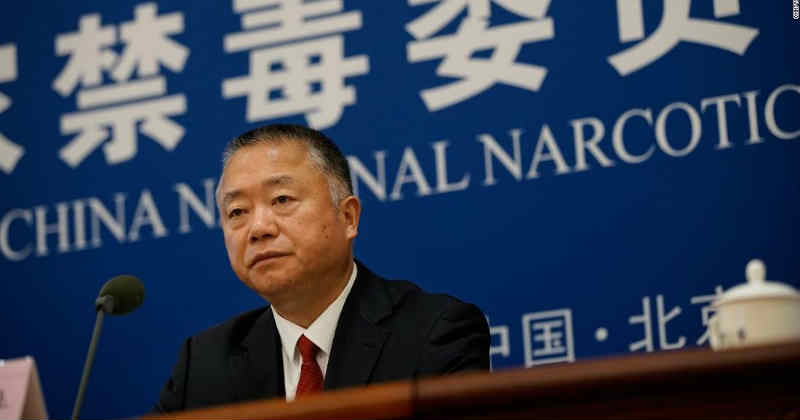
China, along with other Asian countries (Russia, Japan, South Korea), had already been worried the impact of Canada’s legalization on international trafficking. Today, China’s Narcotics Control Commission (NCC) holds North America’s legalization of cannabis responsible for the increase in consumption within its territory and in cannabis seizures at its border.
International Trafficking and Diplomatic Tensions
At a press conference In Beijing last Monday, the agency’s director, Liu Yuejin, spoke of «a new threat to China.» He noted that the number of cannabis users in China had increased by 25% in 2018. The agency estimates the total number of cannabis users at 24,000. This represents approximately 0.002% of the Chinese population.
«Over the past two years, we have seen an increase in the amount of cannabis trafficked from North America to China,» explains the director of the CCS. He notes that his agency has intercepted 115 packages containing cannabis sent through international postal services. This would amount to a total of «55 kilograms of cannabis and cannabis-derived products» in 2018.
China is not the only country to have criticized the legalization of cannabis in North America. On the occasion of Canadian legalization, Russia had denounced the decision as «unacceptable» and «hypocritical,» saying it «will certainly lead to a significant increase in trafficking to other countries.» Since then, China has even stepped up its crackdown. Law enforcement authorities in the country’s largest cities have begun conducting drug tests in bars and nightclubs to curb recreational drug use.
China already has some of the strictest laws in this area: possession of more than 50 grams of any controlled substance can result in the death penalty. This hardline stance has also caused diplomatic tensions following the death sentences handed down to several Canadians and Americans on Chinese soil for drug trafficking. Nevertheless, this ultra-conservative stance is currency in common use in Asia where anti-drug laws are increasingly at odds with the North American trend toward liberalization.
Sino-American tensions over drug trafficking do not end there. The United States, for its part, accuse China and its production of fentanyl —a prescription drug 30 to 50 times more potent than heroin—to flood the U.S. black market and to be partly responsible for the overdose epidemic that has swept North America in recent years. According to the U.S. Centers for Disease Control and Prevention, one in four overdoses was linked to fentanyl in 2018.





















Boston will host the 10th annual State of the Cannabis Industry Conference on October 26

A DEA report confirms that there are no fatal cannabis overdoses

A British patient is challenging the NHS's refusal to reimburse medical cannabis

October 2026 CBD Highlights: 10 Strains and Hash to Discover from 5 French Producers

CBD in France: Traceability, Retail Stores, THC and Driving… What the New Bill Proposes

Organigram Enters the Race for Aurora Cannabis

Medical Cannabis: Augur Associates’ latest report provides an update ahead of the publication of the decrees

Golden Buds is relaunching its Nova High vape pens with a cannabinoid formula that’s out of the ordinary

Cannabis is now Canada's fifth-largest commercial crop

Bedrocan Finally Declared Bankrupt
-
 Business2 weeks ago
The legal cannabis market in New York exceeds 4 billion $ in revenue
-

 Cannabis in France3 weeks ago
Which countries legalized medical cannabis before France?
-
Business3 weeks ago
South Korea is preparing to begin local production of medical cannabis to meet rising demand
-
Cannabis in Thailand3 weeks ago
From the boom in dispensaries to a purely medical approach: Thailand is revising its cannabis policy
-
Cannabis and driving3 weeks ago
Medical Cannabis and Driving: New South Wales Ends Automatic Penalties for THC
-
Cannabis in Argentina4 weeks ago
Argentina Opens Its Market to Hemp Flowers Containing 1% of THC
-
Autism3 weeks ago
Autism and Cannabis: Results from the First Placebo-Controlled Trial of NTI164
-
Cannabis in France2 weeks ago
France’s Drug Policy Chief Defends Cannabis Prohibition... and Runs Into the Facts

















You must be logged in to post a comment Login