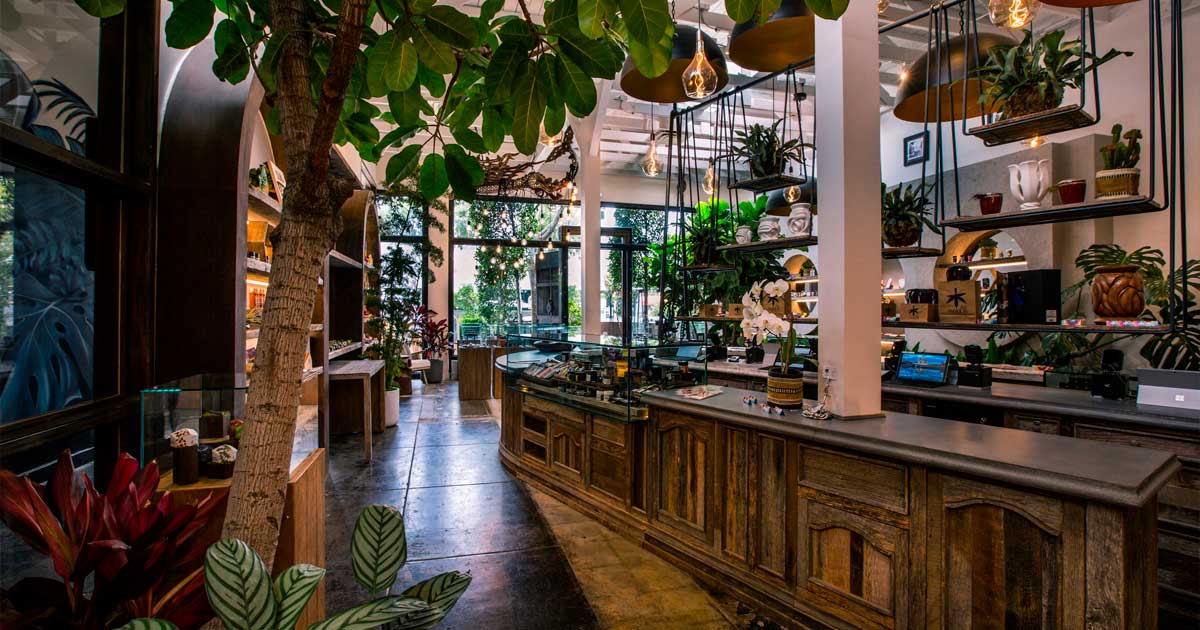
Cannabis dispensary
A cannabis store that sells products from medical cannabis or for adults—for sale or free.
Customers will find two types of dispensaries: medical and recreational. Depending on local laws and regulations, medical cannabis dispensaries generally serve patients 18 years of age and older, as well as patients with caregivers who have a recommendation or a medical cannabis card issued by a doctor authorized to recommend cannabis. Recreational cannabis dispensaries are generally open to adult customers aged 21 and older.
What is a clinic?
In most places where cannabis is legal, dispensaries are the legal industry’s primary point of contact with consumers. As such, they typically sell a wide range of cannabis products, including flower, vapes, concentrates, edibles, beverages, and more, although the products available vary by region. Dispensaries operate much like any other retail store in the consumer market.
In some places, it is also possible to legally purchase cannabis from a collective. However, cannabis collectives should not be confused with ordinary cannabis dispensaries. Even though some collectives sell cannabis in a manner very similar to dispensaries, they are not the same. A dispensary is solely a retail business. Collectives are primarily nonprofit organizations in which members work together to produce and provide access to legal cannabis. This may or may not include some form of retail sales to the public, typically for medical patients.
Depending on the state or country, users can legally purchase marijuana at a dispensary or through a collective. In general, collectives are harder to find, while dispensaries are easy to find in all places where cannabis has been legalized.
Health Clinics in Europe and France
In France, the term «cannabis dispensary» is still widely associated with legal markets abroad. As of 2026, there are no legal recreational cannabis dispensaries in France; the Consumption is prohibited there. However, as part of the pilot program for the medical marijuana Launched in 2021, cannabis-based medications are dispensed in pharmacy by prescription—essentially, a highly regulated form of medical clinic.
In the Netherlands : The model that most closely resembles a health clinic in Europe is still the coffeeshop Dutch, a regulated retail space where cannabis can be purchased and consumed on the premises, but where, paradoxically, its supply remains illegal (gedoogbeleid, policy of tolerance).
In Germany : Since 2024, cannabis clubs (Cannabis Clubs) allow members to obtain cannabis through an association, a hybrid model between a dispensary and a collective, distinct from the American commercial model.
In Spain the cannabis associations, Cannabis Social Clubs operate as nonprofit, members-only cooperatives; they do not sell to the general public.
Model Comparison Chart
| Model | Country | Sales | Public | Medical/Recreational |
|---|---|---|---|---|
| Clinic | United States, Canada | Yes | Yes | The two |
| Coffee Shop | Netherlands | Yes | Yes | Recreational |
| Cannabisclub | Germany, Spain | No (nonprofit) | No (members) | Recreational |
| Pharmacy | France (pilot program) | Yes | By prescription | For Medical Use Only |
| Collective | United States, Spain | No | No (members) | The two |
How do dispensaries get their marijuana?
Legal dispensaries purchase their cannabis or cannabis-derived products (extracts, resin, etc.) from legal, licensed growers and suppliers. The specific legal frameworks and regulatory structures that define this process vary from state to state and from country to country.
But in general, to remain legal, the entire supply chain through which dispensaries obtain their cannabis must be authorized and regulated by the government.









JIHE 2026: Japan’s Largest Trade Show Dedicated to Hemp and CBD Returns to Tokyo with More Than 100 Industry Players
New Caledonia: The Courts Clear the Way for the Return of CBD

The Brazilian medical cannabis market continues to grow

Morocco: Three Cannabis-Based Medications Approved for the Treatment of Epilepsy

Canopy Growth Receives New EU-GMP Certification to Strengthen Its Presence in Europe

Three years after legalizing medical cannabis, Albania continues to establish regulations for it

The first plant-based medical THC spray arrives in the United Kingdom

Medical Cannabis in Germany: THC Prices Vary by a Factor of 12

France already has 3,000 cannabis retail outlets. None of them are legal.

