
What is cannabis irradiation?
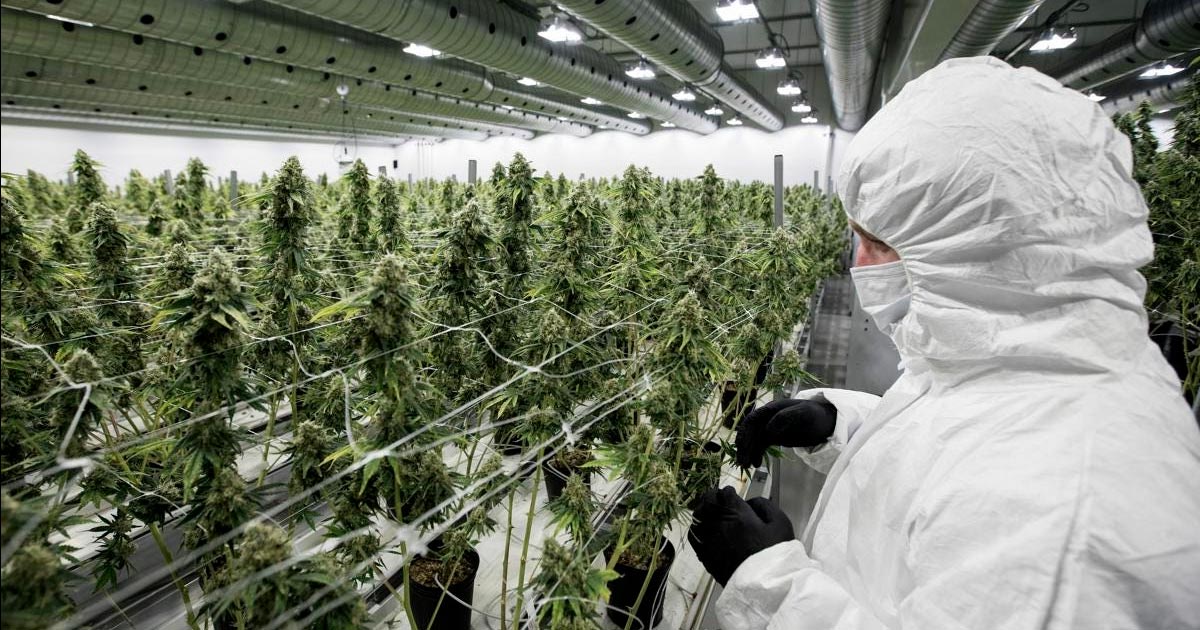
The final stage of growing cannabis—drying—is crucial. It’s often what separates good weed from great weed. The drying cannabis However, this can lead to the accumulation of pathogens such as fungi and bacteria. Most countries that have legalized cannabis—whether for medical or recreational use—therefore have strict regulations regarding the permissible level of pathogens in cannabis products.
For this reason, cannabis producers use irradiation on dried flowers to destroy potential pathogens. Today, irradiated cannabis dominates the medical markets in Canada, the United Kingdom, and Germany. But what exactly is cannabis irradiation? And although the term may sound scary, is it dangerous for the consumer?
Cannabis plants are susceptible to a variety of pathogens
Pathogens present on cannabis plants can impact plant growth because they affect the entire cannabis plant. These include fungi that colonize the flower clusters, which can lead to a reduction in product quality and, more broadly, in the quality of the entire plant: root browning, tissue discoloration, stunted growth, yellowing of plants, powdery mildew, flower rot, and potential plant death.
Examples of these pathogens that affect the cannabis plant include mold, mites, mildew, mushrooms, Fusarium, viruses, and viroids.
In order to reduce the number of pathogens present in cannabis products in accordance with regulations, methods for eliminating pathogens include the use of chemicals to disinfect plants as well as the irradiation of flowers. And that is simply what irradiated cannabis is: flowers that have been exposed to gamma radiation to kill bacteria and mold.
For immunocompromised patients who use medical cannabis—such as those undergoing cancer chemotherapy—these pathogens can cause life-threatening infections. Irradiated cannabis is therefore the safest and most appropriate treatment option for the most vulnerable patients.
Irradiation to eliminate pathogens
Irradiation refers to the exposure of plants to gamma radiation. In Canada, approximately 80% of legal growers use irradiation to sterilize their products.
Irradiation is not a new concept and is even frequently used to sterilize medical equipment. Irradiation is also used to sterilize cannabis so that only the organic and therapeutic compounds remain. Although the use of radiation is not necessary to produce contaminant-free cannabis, it has proven effective in killing undesirable microorganisms while sterilizing the products.
Regarding the security of the process, a study led by Dr. Arno Hazekamp, analyzed various cannabis strains before and after treatment with gamma radiation. The results showed that there was no effect on cannabinoids such as THC and the CBD, but that there was a slight reduction in some of the terpenes present. Dr. Hazekamp explains that this reduction in terpenes can range from 10 to 381 ppm for certain terpenes, such as myrcene or linalool.
As for potential changes in taste or effect, Dr. Hazehamp explains that «such opinions can be difficult to substantiate because the same cannabis is generally not available to consumers in both irradiated and non-irradiated forms to allow for a direct comparison, meaning there is no «reference product» to quantify the extent of the change.» There are greater differences between growers and drying methods, which may more simply explain the differences in taste, as explained by Dan Sutton, CEO of Tantalus Labs, a small Canadian producer of very high-quality cannabis.
Most arguments against irradiation suggest that cannabis goes into the process soft, fragrant, and beautiful, and comes out crispy and burnt. This is patently untrue. Crispy weed results from rushed drying and finishing processes, and much of that product happens to be irradiated.
— Dan Sutton (@DSutton1986) March 26, 2018
Is irradiated cannabis safe?
One of the main concerns regarding irradiated foods stems from the formation of radiolytic compounds, particularly 2-alkylcyclobutanones (2-ACBs). This radiolytic compound is produced when high-fat foods are exposed to gamma irradiation, «and their levels increase with the irradiation dose.» However, since cannabis is not high in fat, this concern is not really relevant when it comes to using radiation to sterilize cannabis.
Dr. Hazekamp states that «gamma irradiation does not significantly heat» the product, which means that the cannabinoids will not be activated, and that «water may be lost during the procedure.».
Also, «some terpenes are reduced, but no new compounds are formed. This means that the terpenes are evaporated to some extent and not broken down into new compounds. Irradiation accelerates evaporation just a tiny bit, but it doesn’t destroy your cannabis.».
Furthermore, the «microscopic structure of the dried cannabis flowers was not altered by the standard irritation protocol.».
Irradiating cannabis is therefore not a bad thing, at least from a medical standpoint. The main reason for this sterilization process is to comply with regulations set by local authorities and to provide sterilized cannabis to patients who have no other option.











Medical Cannabis and Back Pain: Opioid Use Has Dropped by 90 % in 10 Years

Cannabis: Wisconsin Could Finally Legalize It in 2027

Argentina Opens Its Market to Hemp Flowers Containing 1% of THC

The French Socialist Party still doesn't know how to approach the legalization of cannabis

Science in the City International: Paris at the Heart of Transatlantic Scientific and Medical Dialogue

Christine Fréchette is alienating Quebec’s cannabis industry

Rima Hassan: When «Drugs» Become a Political Weapon

From Marathons to Ultratrails: How Extreme Running Affects the Endocannabinoid System

Four days of THC may make breast cancer less aggressive, according to a new study
