New Zealand cannabis is making its way to Europe, and its terpenes are on fire


Between the Pacific Ocean and the snow-capped mountains of New Zealand’s South Island, a cannabis producer named Puro grows a product the world has never really seen before. Organic, sun-grown, rich in terpenes, and increasingly sought after abroad, its flowers and concentrates are making their way into European pharmacies.
Behind these products lies a unique story that blends exceptional terroir, agricultural expertise, and Māori traditions.
Where the mountains meet the ocean
On the northeastern coast of New Zealand’s South Island, the Pacific Ocean meets a narrow strip of farmland backed by mountains. The air smells of salt. The sea breeze sweeps across the fields, and when the sun disappears behind the mountain ranges, temperatures drop sharply.
It was in Kekerengu, a remote stretch of coastline in the Marlborough region, about 150 meters from the sea, that Puro established one of the world’s most unusual medical cannabis farms.
When you look at a map, the location becomes even more interesting. Kekerengu lies at roughly the same latitude south as Sonoma County, California, to the north. Both are coastal agricultural regions, shaped by the Pacific Ocean and the influence of the nearby mountains. Sonoma is famous for its wine. Kekerengu might one day become known for something else.
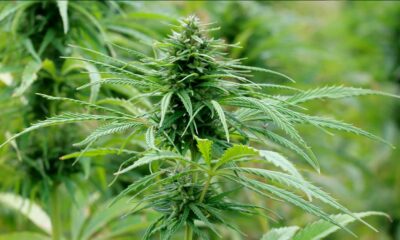
Here, cannabis grows under the exceptionally intense New Zealand sun, with ocean breezes blowing through the plants and cold nights providing a contrast to the daytime heat. Behind the fields, the mountain peaks are snow-capped in winter.
For Puro, these conditions are no accident: they were, in fact, intentional.
Cannabis can grow almost anywhere, from tropical islands to the Himalayas. Growing exceptional cannabis, however, is another matter entirely. Soil composition, sunlight, elevation, temperature, and air circulation all influence the plant’s development. The founders of Puro were convinced they had found a rare combination of these factors on the Kaikōura coast.
Rather than trying to recreate an ideal environment inside a building, they decided to take advantage of the one that already existed.
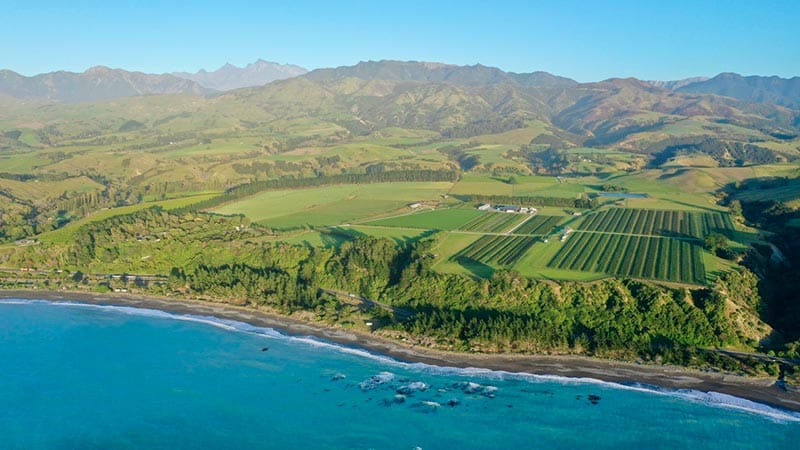
Le site de Kekerengu de Puro NZ
Forget everything you know about New Zealand grass
New Zealand has a long tradition of cannabis cultivation, one that dates back to well before the emergence of a legal industry. For decades, passionate growers have cultivated their plants out of the public eye in remote parts of the country. This culture, known as «bush weed,» has given rise to unique strains and a wealth of expertise, passed down and refined over generations.
Puro builds on this legacy, but takes a different path. Whereas traditional growers operated in secret, the company focuses on large-scale production that is certified organic and meets international pharmaceutical standards. This approach preserves the essence of outdoor cultivation while giving it a new dimension.
Founded in 2018, the company approached cannabis as an agricultural crop in its own right, devoting the same attention to soil, climate, and cultivation as the New Zealand wine industry has over generations.
While much of the global medical cannabis industry was investing in airtight indoor facilities, artificial lighting, and strictly controlled environments, Puro opted for open-air fields, living soil, and natural sunlight.
The company has since obtained organic certification, a distinction that remains relatively rare in large-scale medical cannabis production.
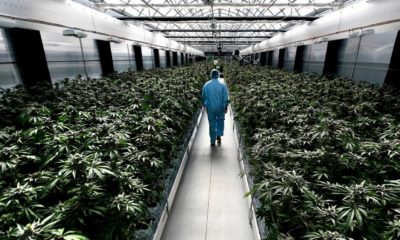
Its farm in Kekerengu is part of a larger operation that includes another cultivation site in the Waihopai Valley. During its largest harvest on record, Puro was preparing to harvest approximately 80,000 plants across 15 hectares. This is an unusual scale for a company growing cannabis outdoors to pharmaceutical standards.
$3.6 million and a country ready to take a chance
In 2019, when New Zealand’s medical cannabis industry was still in its infancy, Puro turned to the public for funding. The company launched two parallel crowdfunding campaigns via PledgeMe, inviting ordinary New Zealanders and major investors alike to become shareholders in an industry that was virtually nonexistent at the national level.
The response was extraordinary.
Puro broke the New Zealand crowdfunding record, raising 3.6 million New Zealand dollars.
Beyond its financial success, this fundraising effort marked a true turning point: it revealed New Zealanders’ enthusiasm for a sector that was still emerging but is now viewed as a full-fledged agricultural and medical industry.
This visibility brought another unexpected benefit: talent. Scientists, agronomists, and specialists began approaching the company, drawn by the opportunity to build something new.
Puro had the land, the capital, and a rapidly growing team. Then came the hardest part: proving that cannabis grown outdoors could meet some of the world’s strictest medical production standards.
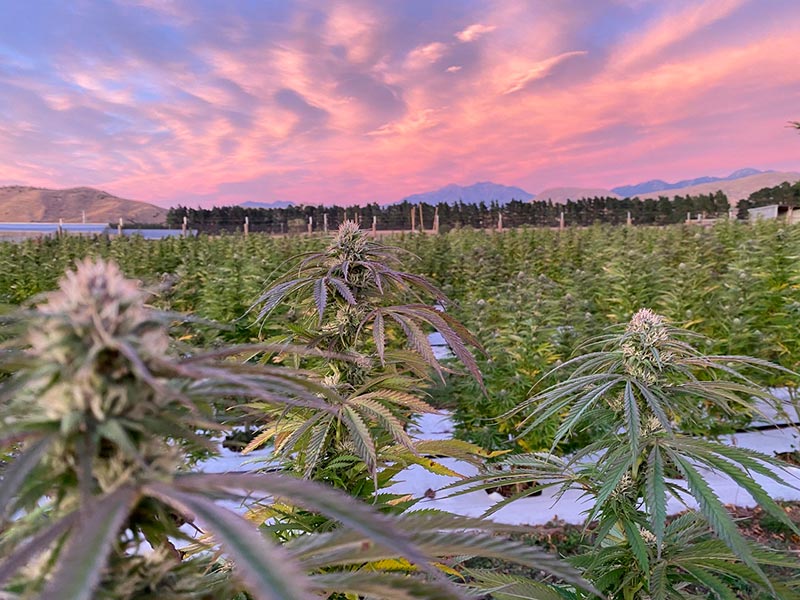
Fleurs de cannabis de Nouvelle Zélande
The Art of Preserving a Flower
Growing exceptional cannabis is only half the challenge. The other half begins when the plant is harvested.
Traditional drying takes days, sometimes weeks. During this time, moisture gradually escapes from the flower, but some of its most delicate aromatic compounds may also be lost.
Puro has developed a different approach, known as Live drying.
Instead of leaving the freshly harvested flowers hanging in a drying room, the company uses a controlled freeze-drying process. The flowers are frozen shortly after harvest and then placed in a vacuum so that moisture can be removed through sublimation.
The goal is to better preserve the flower’s original structure and its volatile aromatic compounds, particularly its terpenes.
Anyone familiar with cannabis concentratesfresh-frozenwill recognize this philosophy: to capture as much of the living plant's character as possible before post-harvest deterioration takes its toll.
This approach stands out in the European medical cannabis market, where flowers are still largely evaluated based on their THC content, appearance, and price.
But at Puro, this quest to preserve the plant’s natural qualities doesn’t stop at the dried flower.
From sun-grown flowers to live hash rosin
Concentrates now play a central role in Puro’s identity. Rather than dedicating its entire harvest to the production of dried flowers, the company separates the high-end flowers intended for inhalation from the material intended for extraction. Its product portfolio now includes live hash, live hash rosin, and distillate.
The live hash is produced through ice-water separation to collect the resin-rich trichomes. The live hash rosin takes this process a step further by using heat and pressure to produce a solvent-free concentrate.
The debate surrounding the premium hash rosin has long been centered on genetics, freshness, resin quality, and the preservation of terpenes. Puro applies this approach to certified organic, sun-grown medical cannabis on a commercial scale.
The result is a rather different perspective on pharmaceutical cannabis: one in which consistency and regulatory compliance coexist with the sensory complexity that makes each cultivar unique.
And there’s something fascinating about the idea of concentrates derived from plants grown between the Pacific Ocean and the New Zealand Alps, rather than under artificial lighting.
A Maori Connection to the Land
In 2024, the company formalized a partnership with Te Rūnanga o Kaikōura, which represents the local Ngāti Kūri people of Ngāi Tahu. This partnership includes a Māori investment in the company, training opportunities for young people, and cannabis cultivation projects on the lands of the iwi, New Zealand’s indigenous tribes.
In Māori culture, the term whenua refers to the earth, whereas kaitiakitanga describes the responsibility to protect and preserve the natural world. Traditional Māori medicine, known as rongoā, considers plants in relation to the soil, the seasons, and the environments in which they grow.
For Rāwiri Manawatu, executive director of Te Rūnanga o Kaikōura, this partnership offers a way to connect these values to a new agricultural industry.
The goal is to establish a network of local contract farmers to create jobs, develop expertise, and enable Māori communities to benefit directly from the value generated by their lands.
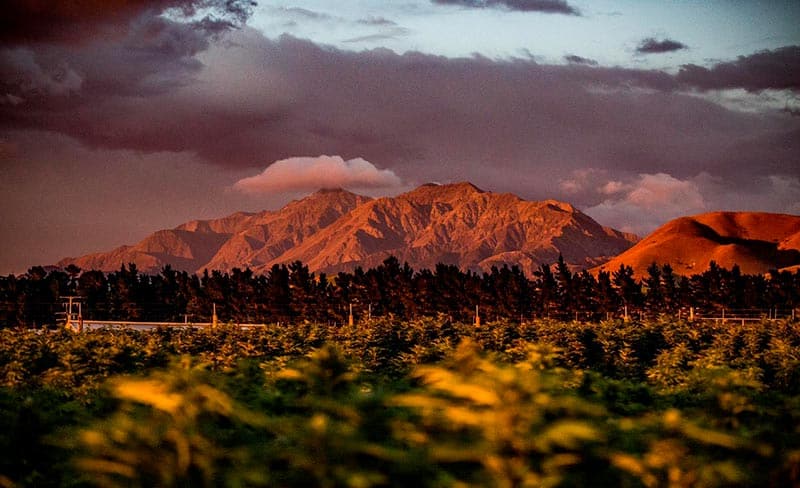
Les montages de Kekerengu
The Long Road to Europe
Until recently, New Zealand was not among the major suppliers of medical cannabis to Europe. Canada dominated imports, while producers in Portugal, Denmark, and other European countries were developing their own cultivation infrastructure. Puro is now attempting to change this geographical landscape.
After establishing its export operations in Australia, the company signed a supply contract worth 16.1 million New Zealand dollars (8 million euros) with the British pharmaceutical distributor IPS Pharma.
En novembre 2026, sa deuxième livraison de fleurs de cannabis avait atteint les pharmacies britanniques, et d’autres variétés étaient en route.Le Royaume-Uni est devenu pour l’entreprise la porte d’entrée vers le marché européen au sens large.
Germany, Poland, the Czech Republic, and Switzerland are among the countries where Puro is developing business opportunities.
Puro’s pitch is simple: certified organic New Zealand cannabis, sun-grown and produced on a large scale, with an emphasis on variety, quality, and sustainability. In a market saturated with high-THC indoor-grown flowers, this offering stands out.
It remains to be seen whether European patients and prescribers will embrace it. But Puro is no longer content to merely present a hypothetical export scenario. Its products are already reaching patients on the other side of the world.
A Different Future for Cannabis
There is a certain irony in New Zealand becoming a source of high-end medical cannabis. For years, its reputation was built on low-quality, wild-grown cannabis, cultivated outdoors, out of sight. Today, one of its most ambitious companies in the cannabis sector is turning those same fundamental ingredients—sun, soil, wind, and isolation—into a competitive advantage.
Puro did not set out to make New Zealand cannabis resemble indoor-grown California buds. On the contrary, the company drew inspiration from the country’s wine industry: the place where a product is grown—the terroir—can contribute to its value.
There is still much to be proven. European markets are competitive, pharmaceutical standards are stringent, and the quality of a flower or concentrate must ultimately speak for itself. But the idea is fascinating.
On a remote stretch of coastline, between snow-capped mountains and the Pacific Ocean, tens of thousands of cannabis plants grow in the open air. Their flowers are carefully preserved, their resin turned into concentrates, and their story travels thousands of kilometers to European pharmacies. New Zealand cannabis is making its way to Europe. And this time, no one is talking aboutbush weed.




















New Zealand cannabis is making its way to Europe, and its terpenes are on fire

The UK's largest pharmacy chain is launching a medical cannabis service

Medical cannabis: still no executive orders, but a new report is coming soon

Netherlands: Edibles at the Center of a Policy Review of the Cannabis Experiment

Ottawa Simplifies Cannabis Taxes, Without Reducing the Tax Burden on Producers

Malta Wants Licenses for the Sale of «CBD Products»

From «Cannabro» to «AI Bro»: Some U.S. cannabis growers are envisioning a new future in data centers

Israel renews its allegations of dumping against Canadian medical cannabis

Bedrocan Bankruptcy: The Dutch Government Under Pressure

1.2 million adults in Great Britain use cannabis almost every day
-
 Business4 weeks ago
Cronos Completes the Acquisition of CanAdelaar for 57.5 million euros
-
Cannabis in Quebec3 weeks ago
Cannabis: What France Could Learn from Quebec, Eight Years After Legalization
-
Cannabis in New Zealand3 weeks ago
Chronic Pain: New Zealand Is Testing Cannabis to Improve Sleep
-
Cannabis in Morocco4 weeks ago
Morocco: Three Cannabis-Based Medications Approved for the Treatment of Epilepsy
-
Cannabis in France3 weeks ago
Dr. Pascal Douek, a tireless advocate for medical cannabis in France, has died
-
Business4 weeks ago
The Brazilian medical cannabis market continues to grow
-
Cannabis in Spain4 weeks ago
Spain: Medical Cannabis Is Coming to About 50 Hospitals
-
Cannabis in France3 weeks ago
Medical cannabis: The Greens introduce two amendments to accelerate its widespread adoption













You must be logged in to post a comment Login