Does cannabis enhance the musical experience?

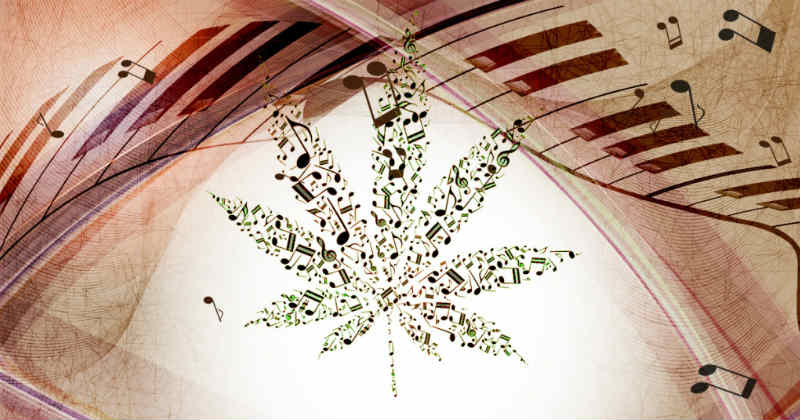
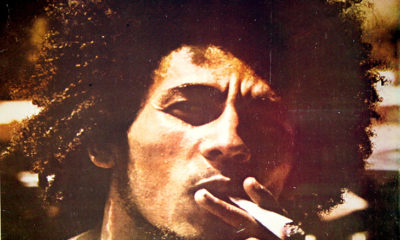
The association between cannabis culture and music is a common one. It goes back at least as far as jazz in the early 20th century, and has extended over time to a variety of musical genres thanks to ambassadors such as Bob Dylan and the Beatles, Willie Nelson or Bob Marley. In fact, one study showed that cannabis was a constant at music festivals whatever the genre. If we are to believe the testimony of consumer-listeners, cannabis, by altering perception, makes it possible to enjoy music more fully. But what does science have to say on the subject?
A psychological association?
Before trying to understand the relationship between cannabis use and music perception, we must first understand how each impacts brain activity. According to Michael Thaut, professor of music and neurology at the University of Toronto, listening to music activates the entire nervous system: «the brain is literally on fire when it listens to music».
As for cannabis, we know that it modifies the circulation of blood in the brain, underfeeding certain areas and energizing others. In this case, it increases blood pressure in the orbitofrontal cortex, which handles emotional responses and the reward system, areas which are also stimulated by music. Cannabis use and listening to music both activate the pleasure circuit in the brain by triggering the release of dopamine.
In this case, the amplified activity of the reward system may psychologically condition the consumer to associate cannabis consumption with a better musical experience. This would be a psychological association generally caused by the simultaneous practice of two activities with the same effect. After all, if you do two pleasurable things at the same time, isn't the result twice as pleasurable? Also, the relaxing effect of cannabis could lead to a better appreciation of music.
What happens in the brain
As for the direct effect of cannabis use on music perception, this is more complicated, as there is a lack of research on the subject. To answer this question, we need to directly measure the brain activity of cannabis users when they listen to music. This was done in 2002 by means of electroencephalography conducted on 4 subjects during a listening session before and after cannabis use.
The researchers found that the brain activity of cannabis-using subjects was altered in the parietal lobe, an area of the brain involved in strategic attention. This resulted in an increased emission of alpha frequencies, which characterize a calmer state of consciousness. Dr. Jörg Fachner, Professor of Music, Health and the Brain at Anglia Ruskin University, Cambridge, interprets these data as indicating increased attention, less demanding of mental energy. It would therefore be «easier to listen, concentrate and relax».
The relationship between music and the perception of time
As Professor Thaut explains, the importance of time in acoustic perception is crucial: «The basis of sound is vibration. The strings of a violin, the strings of a piano and so on. Everything is based on time, so the auditory system that processes music has to be extremely good at deciphering time. Does the string vibrate 440 times a second or 450 times a second? It makes a difference in the kind of notes you hear. For Fachner, it's clear that »if we perceive time differently, we'll listen to music differently«, but how does cannabis alter our perception of time, and what does that imply?
Cannabis consumption has been shown to give a subjective experience of slowing down, as if time were lengthening. A study corroborates this feeling. It shows that a 15-second interval is extended to around 16.7 seconds in cannabis-using subjects compared to sober subjects. This difference in time perception may explain why we generally feel we receive more musical information under the influence of cannabis. It may lead users to believe that they are better at discerning notes.
Cannabis has also been shown to impair short-term memory, which in turn alters the individual's judgment and appreciation of the moment. This is the view of professor and psychologist Daniel J Levitin, who writes: «the disruption of short-term memory plunges the listener into the present moment of the music as it unfolds; unable to keep explicitly in mind what has just been played, or to think about what is about to be played, stoned people tend to hear the music note by note (...) The music creates what many describe as a time-stopping phenomenon. They live each note, completely absorbed in the moment».
A cultural association?
Whether it's a cultural, psychological or physical association, some people already see it as a business opportunity. This is the case of Rachelle Gordon, for example, who has launched her start-up Hi-Tune. She explains that «each pre-rolled joint illustrates a different artist and comes with a QR code for a free song by that artist to download». Marking weed and music together is nothing new, and has even become an integral part of reggae and hip hop culture. A few months ago, on the occasion of the release of his new album, Cypress Hill released a limited edition with a selection of his own weed to enhance the listening experience.
















JIHE 2026: Japan’s Largest Trade Show Dedicated to Hemp and CBD Returns to Tokyo with More Than 100 Industry Players
New Caledonia: The Courts Clear the Way for the Return of CBD

The Brazilian medical cannabis market continues to grow

Morocco: Three Cannabis-Based Medications Approved for the Treatment of Epilepsy

Canopy Growth Receives New EU-GMP Certification to Strengthen Its Presence in Europe

Three years after legalizing medical cannabis, Albania continues to establish regulations for it

The first plant-based medical THC spray arrives in the United Kingdom

Medical Cannabis in Germany: THC Prices Vary by a Factor of 12

France already has 3,000 cannabis retail outlets. None of them are legal.

Morocco's exports of legal cannabis have expanded to 15 countries
-
 Business2 weeks ago
The legal cannabis market in New York exceeds 4 billion $ in revenue
-

 Cannabis in France4 weeks ago
Which countries legalized medical cannabis before France?
-
Business4 weeks ago
South Korea is preparing to begin local production of medical cannabis to meet rising demand
-
Cannabis in France4 days ago
France already has 3,000 cannabis retail outlets. None of them are legal.
-
Cannabis in Thailand4 weeks ago
From the boom in dispensaries to a purely medical approach: Thailand is revising its cannabis policy
-
Cannabis in the U.S.5 days ago
A DEA report confirms that there are no fatal cannabis overdoses
-
Cannabis and driving3 weeks ago
Medical Cannabis and Driving: New South Wales Ends Automatic Penalties for THC
-
Cannabis in France3 weeks ago
France’s Drug Policy Chief Defends Cannabis Prohibition... and Runs Into the Facts
















You must be logged in to post a comment Login