
Cleaner hemp concrete to replace conventional concrete

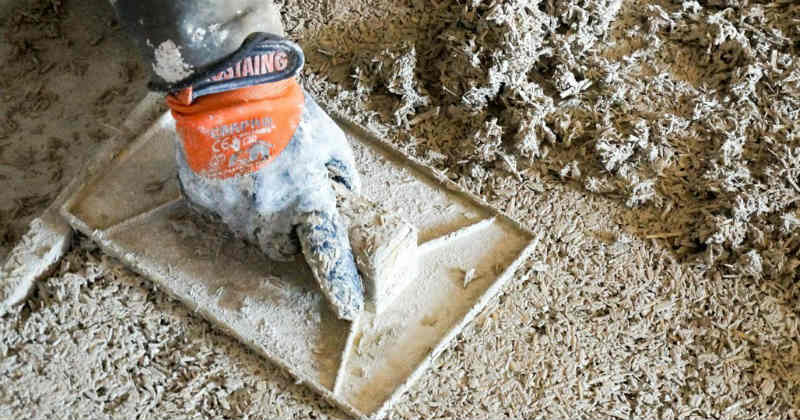
Hemp is a wonderful, eco-friendly alternative to many polluting materials because of its various industrial applications : Among other things, it can be used to make textiles, bio-based plastics, and hempcrete. It is increasingly used in the construction industry, where it could replace conventional concrete. With this in mind, the U.S. Environmental Protection Agency (EPA) has just awarded a grant of 12,000$ to California students to develop a process for transforming hemp into concrete that is as environmentally friendly as possible.
A 2nd #EPAp3 student team @UCRiverside will study the properties of hemp fiber and ultimately produce hempcrete as a lighter, stronger, and more environmentally friendly alternative to conventional fossil-based concrete. https://t.co/tmt8uLX66i #STEM
— US EPA Research (@EPAresearch) March 29, 2019
Why replace traditional concrete?
Traditional concrete, which we often see in the form of concrete blocks, is made from cement. However, cement production is polluting and energy-intensive. In fact, the rock must be fired in kilns at very high temperatures (1500°), which produces significant carbon emissions into the atmosphere and contributes to the greenhouse effect. The production of one metric ton of cement already results in the emission of approximately 0.35 metric tons of CO2simply through the calcination of raw materials. It also requires a large amount of electricity for mechanical mixing. In total, each metric ton of cement produced requires the equivalent of 60 to 130 kg of fuel and an average of 210 kWh.
Cement production also causes a form of air pollution in the form of particulate matter (cement dust). In addition, certain chemical reactions in cement—such as the one that produces calcium carbonate—also generate CO2. Finally, cement concrete is also a heavy product whose transportation requires a great deal of energy and causes a corresponding amount of pollution. Taking all factors into account, the concrete industry accounts for nearly 52% of greenhouse gas emissions in the building construction sector and approximately 5 % of the planet’s total emissions.
Hempcrete as an Alternative
Hemp cultivation, which can be renewed annually, has the advantage of being relatively easy, helping to clean the soil, requiring little irrigation, and needing no added chemicals. It is therefore a more environmentally friendly raw material and easier to obtain than those used in cement (stones, aggregates, and sand). Hempcrete is made by mixing hemp shives (plant fibers), water, and lime, a natural binder. When dry, it is as hard as cement but six times lighter and much more flexible. In addition to being recyclable, it stores CO2 which reduces the home's carbon footprint even after construction. It also has antibacterial and insecticidal properties.
For all these reasons, it is a preferable—or at least more environmentally friendly—alternative to cement concrete. On the other hand, it is often more expensive than conventional concrete—hempcrete typically costs between 40 and 150 € per square meter. Nevertheless, it provides insulation, which conventional concrete does not. Its higher cost is therefore offset by the lack of need for additional insulation. In any case, under the new thermal regulations, starting in 2020, new construction projects in France must meet energy efficiency standards. The role of hemp in construction is therefore likely to become increasingly important.
Making hempcrete even cleaner
Although the production of hempcrete is cleaner than that of conventional concrete, it is not entirely so. The reason for this is the process used to separate the industrial fibers (hemp shives) from the biomass: the Kraft pulping process ((Kraft pulping process)inherited from the paper industry.It produces a significant amount of waste. To reduce this waste, the U.S. agency awarded 12,000$ to a student project aimed at developing a cleaner process. «The goal of our project is to produce hempcrete that is as lightweight, strong, and environmentally friendly as possible as an alternative to conventional fossil-fuel-based concrete,» the researchers explain. at Marijuana Moment.
The Kraft pulp process is a multi-step process that involves treating hemp stalks with hot water, sodium hydroxide, and sodium sulfide. For one metric ton of usable fiber, the Kraft pulping process produces nearly 7 metric tons of unusable «black liquor» (lignin residues, organic sulfides, and other chemical compounds). This black liquor is then boiled and burned, releasing CO2.
Students in California are therefore studying a new process to «enable cleaner and faster fiber separation without producing «black liquor.»» The process is known by the rather technical name of Co-Solvent Enhanced Lignocellulosic Fractionation (CELF). Hemp fibers are extracted at low temperatures in a single step by applying tetrahydrofuran—a renewable organic compound—and highly diluted sulfuric acid to the stalks. According to the EPA, this process is similar to the Kraft pulping processBut instead of producing «black liquor,» it produces a fermented sugar-based solution that can be reused. The final product is also purer and more refined.









CBD is said to promote athletic recovery, without improving performance

294 cannabis clubs in Chile: a booming movement with uneven distribution

Chronic Sciatica: New York Approves First Clinical Trial of a THC-Based Medication

United States: The DEA is accelerating the integration of medical cannabis at the federal level

Florida is nearing one million patients using medical cannabis

Uruguay Revives Its Plan to Allow Tourists to Legally Access Cannabis

In Brazil, researchers are developing an innovative CBD eye drop

Autism: Medical Cannabis Is Linked to Reduced Anxiety

The $28 billion U.S. hemp market remains under threat

Jamaica Eases Small Farmers' Access to the Cannabis Market
-
 Business5 days ago
The legal cannabis market in New York exceeds 4 billion $ in revenue
-
Cannabis and driving4 weeks ago
Cannabis and CBD: French Drivers Can Now Lose Their License Even Without a Positive Test Result
-

 Cannabis in France2 weeks ago
Which countries legalized medical cannabis before France?
-
Business2 weeks ago
South Korea is preparing to begin local production of medical cannabis to meet rising demand
-
Cannabis in the Netherlands4 weeks ago
One year after the launch of the Dutch cannabis experiment, the first trends are emerging
-
Cannabis in Thailand2 weeks ago
From the boom in dispensaries to a purely medical approach: Thailand is revising its cannabis policy
-
Cannabis in France4 weeks ago
French medical cannabis remains stalled at the Ministry of Health
-
Cannabis in Argentina3 weeks ago
Argentina Opens Its Market to Hemp Flowers Containing 1% of THC















You must be logged in to post a comment Login