
In the United States, the black market also benefits from cannabis legalization

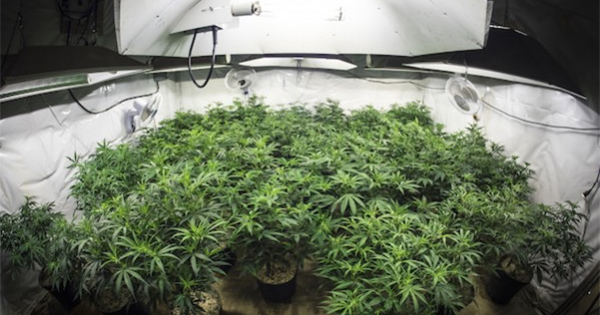
The Various forms of cannabis legalization in the United States, initiated by Oregon, Colorado, and Washington State, demonstrate a different approach to cannabis regulation, with some good examples and some not-so-good ones. As a reminder, cannabis is still illegal in the United States. However, each state has autonomy from the federal government, which allows them to legalize cannabis, same-sex marriage, and so on.
The U.S. is now paying the price for its lack of federal consistency regarding cannabis legislation: states that haven’t legalized marijuana are seeing cannabis produced in places like Colorado flood their black markets.
In Wyoming, Nebraska, or Utah, drug dealers all they have to do is take a round trip to that city in Colorado the nearest one and find good-quality weed on the black market. Dealers then source their supply from certain grow shops or from individuals who grow plants at home. Colorado is seeing the emergence of a new type of illegal market where the dealer acts as producer, retailer, and reseller, offering prices that undercut legal competition.
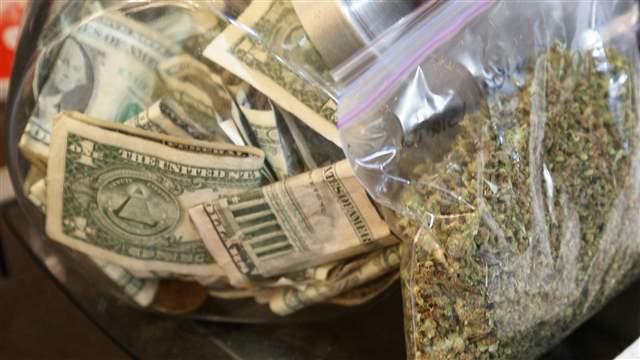
Not only do they not pay taxes, but they can also sell it online legally—it’s like a Craigslist for cannabis. Illegal cannabis is sold between 20$ and 30$: one-eighth of an ounce that is, 6 to 7 euros per gram, whereas dispensaries sell it for between 15 and 20 euros per gram. Larisa Bolivar, a pro-legalization activist, points to the excessive taxes on cannabis: «A high tax rate fuels the growth of the black market. It encourages risky behavior.».
According to former Colorado Attorney General John Suthers, the Colorado has become a legal producer across the entire U.S. black market. Products manufactured in Denver are reportedly found throughout the country. He is also concerned about young people’s easy access to weed: 38% of young smokers obtain their weed through an intermediary who buys it legally and resells it immediately afterward. The attorneys general of Nebraska and Oklahoma have filed a lawsuit against the state of Colorado for allowing a «dangerous and uncontrollable» drug trade to flourish, and were recently dismissed. The situation is much the same in Oregon, where, according to the website Newsweek, 80% of the cannabis produced is reportedly destined for export to other states.
For American proponents of legalization, the United States has only one solution to stem the massive flow of illicit cannabis: legalize cannabis at the federal level.
Theo Caillart







The Socialist Party still doesn't know how to approach the legalization of cannabis

Science in the City International: Paris at the Heart of Transatlantic Scientific and Medical Dialogue

Christine Fréchette is alienating Quebec’s cannabis industry

Rima Hassan: When «Drugs» Become a Political Weapon

From Marathons to Ultratrails: How Extreme Running Affects the Endocannabinoid System

Four days of THC may make breast cancer less aggressive, according to a new study

Medical Cannabis: 14 Organizations Finally Call for Enforcement of the Law

One year after the launch of the Dutch cannabis experiment, the first trends are emerging

High Ground: The Crash of a Plane Full of Marijuana That Made History in Yosemite

The United Kingdom Is Moving Closer to a Regulated CBD Market
-
 Cannabis and driving1 week ago
Cannabis and CBD: French Drivers Can Now Lose Their License Even Without a Positive Test Result
-
Cannabis in France2 weeks ago
Cannabis Legalization: The LFI Bill Has a Major Problem—THC
-

 Cannabis in the Netherlands3 days ago
One year after the launch of the Dutch cannabis experiment, the first trends are emerging
-
Cannabis in France4 days ago
French medical cannabis remains stalled at the Ministry of Health
-
Cannabis in Europe2 weeks ago
Andorra Paves the Way for Medical Cannabis Cultivation
-
Business3 days ago
The United Kingdom Is Moving Closer to a Regulated CBD Market
-
Cannabis in France2 weeks ago
Drought: Could Hemp Become the New Hope for French Farmers?
-
Cannabis in Quebec2 weeks ago
Cannabis in Quebec: The 21-Year-Old Age Requirement in the Spotlight













klemzer
December 7, 2016 at 11 h 07 min
Hello!
I just wanted to say that I recently came across your website, and it’s really great and interesting—well done! 😉
However, in the article above, «In the United States, the black market is also benefiting from the legalization of cannabis,» I believe (since I’m not at all bilingual) that you made a mistake: in the Washington Post video you linked to, it says (around 1:30) ’20–25 for an eighth of an ounce,» which is 1/8 of an ounce (1 oz = 28.35 g) / 8 = 3.54 grams. So $ 20-25 for 1/8 oz = 5.5 to 7 EUR per gram on the black market, whereas the legal price is 13 to 18 EUR per gram. No, because at $1 or $2 per gram, let’s not kid ourselves—this is the States, business first ^^
This article is interesting and highlights the limitations of full legalization. Maybe we should only allow personal cultivation in registered clubs that follow the rules, to avoid creating an even bigger black market ^^ Well,at least good for quality and value for money, because one of the worst dangers of repression is products heavily laced with all sorts of stuff, whereas plenty of people in France would be willing to develop the market before we let the Americans or the Spanish snatch it away from us!!
Bye, and good luck!
NewsWeed
December 7, 2016 at 18 h 01 min
Hi Klemzer,
Actually, we've fixed it 🙂
Thanks anyway for your feedback!