California: 77% cannabis clones contaminated with pesticides

While California prepares to open up legal sales of cannabis for anyone over the age of majority in January 2018, today's industry suffers from a «slight» problem: 77% of Cannabis plant clones are contaminated with pesticides, according to an recent report of Steep Hill, a cannabis testing lab.
The same laboratory had already warned last October that 84% Californian weed was «unfit for human consumption», prompting him to investigate the reason for the contamination.
Traditionally plants are contaminated by pesticides in different ways:
- inputs containing pesticides, used with full knowledge of the facts
- products used without knowing what's inside, but containing pesticides
- a crop subject to «drift» of pesticides from the neighboring field, carried by wind, water, soil, insects or animals.
«When we released our first study in October 2016, several growers contacted Steep Hill to say that they didn't use pesticides, that they only used organic fertilizers, We were told that they were doing the best they could for their patients and consumers,» explains Jmîchaeĺe Keller, CEO of Steep Hill. «After hearing this several times, we realized there was a problem in the supply chain. It just hit me: it's in the clones.».
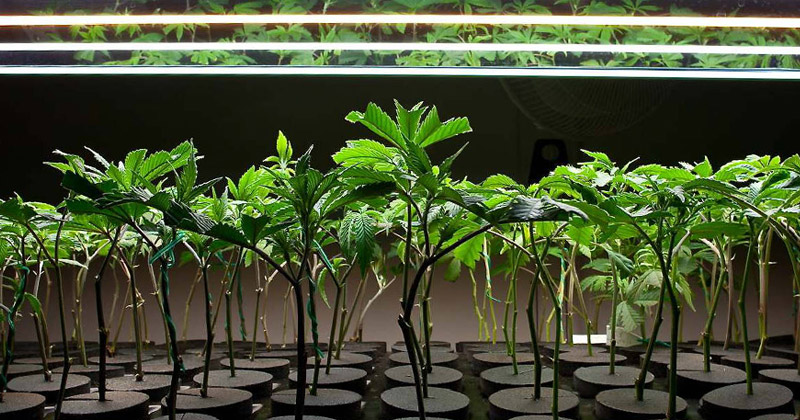
And Keller asked his lab to confirm his theory. The company purchased 124 clones from several growers around Los Angeles. Of the 124 plants, 17 contained no trace of pesticide. And only 22% of the cannabis clones complied with California's pesticide limit.
However, the report points out that some of the pesticide levels found were very low and will not be a concern once the plant has fully matured and been harvested.
According to the report, the source of the contamination could be the growing substrates, rather than the direct application of pesticides.
«In some cases, the large amount of systemic pesticide (such as myclobutanil ) in the culture medium would likely provide a long-term application reservoir if the clone culture medium were transplanted and remained in contact with with the root system »notes the report.








JIHE 2026: Japan’s Largest Trade Show Dedicated to Hemp and CBD Returns to Tokyo with More Than 100 Industry Players

New Caledonia: The Courts Clear the Way for the Return of CBD

The Brazilian medical cannabis market continues to grow

Morocco: Three Cannabis-Based Medications Approved for the Treatment of Epilepsy

Canopy Growth Receives New EU-GMP Certification to Strengthen Its Presence in Europe

Three years after legalizing medical cannabis, Albania continues to establish regulations for it

The first plant-based medical THC spray arrives in the United Kingdom

Medical Cannabis in Germany: THC Prices Vary by a Factor of 12

France already has 3,000 cannabis retail outlets. None of them are legal.

Morocco's exports of legal cannabis have expanded to 15 countries
-
 Business2 weeks ago
The legal cannabis market in New York exceeds 4 billion $ in revenue
-

 Cannabis in France4 weeks ago
Which countries legalized medical cannabis before France?
-
Business4 weeks ago
South Korea is preparing to begin local production of medical cannabis to meet rising demand
-
Cannabis in France4 days ago
France already has 3,000 cannabis retail outlets. None of them are legal.
-
Cannabis in Thailand4 weeks ago
From the boom in dispensaries to a purely medical approach: Thailand is revising its cannabis policy
-
Cannabis in the U.S.5 days ago
A DEA report confirms that there are no fatal cannabis overdoses
-
Cannabis and driving3 weeks ago
Medical Cannabis and Driving: New South Wales Ends Automatic Penalties for THC
-
Cannabis in France3 weeks ago
France’s Drug Policy Chief Defends Cannabis Prohibition... and Runs Into the Facts

















You must be logged in to post a comment Login