Big Sur Holy Weed: when legalization threatens California's cannabis myths

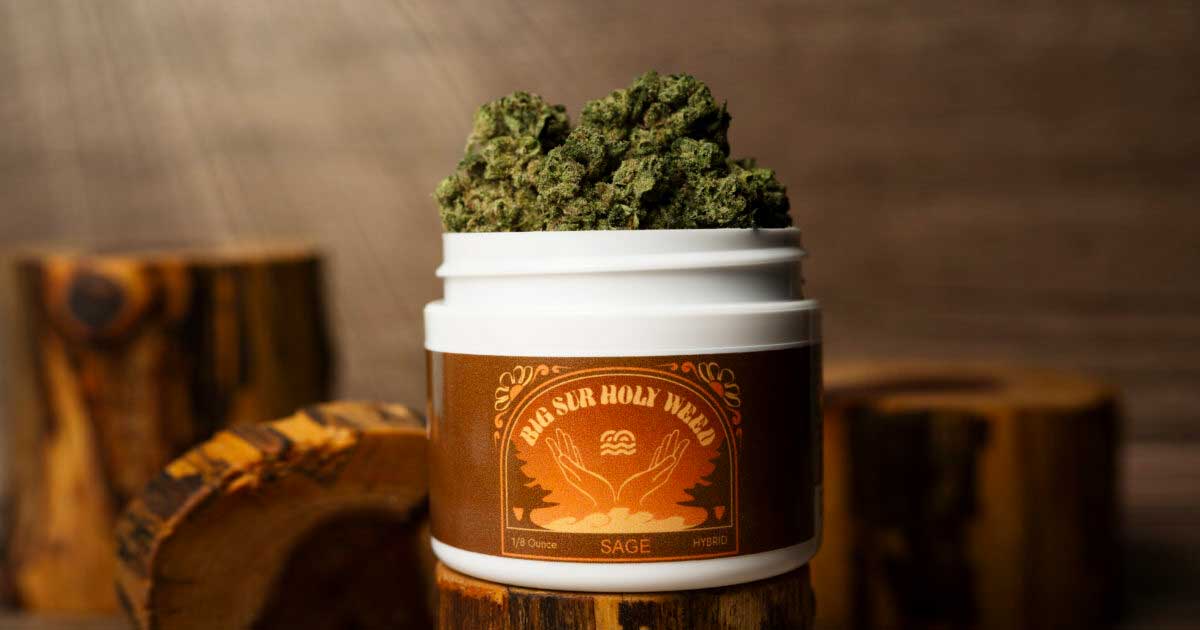
Is California in danger of losing what made it a cannabic legend?
In a long survey published by SFGATE, journalist Lester Black went in search of a mythical variety: the Big Sur Holy Weed. An herb born, according to legend, in the 1960s on the wild cliffs of Big Sur, perhaps cultivated by a reclusive monk named Perry. A fascinating tale of Mexican surfers, mystical hippies and revolutionary sinsemilla, it tells the story of both cannabis and the American counterculture.
But as he investigates, the myth cracks. And a deeper question emerges: what remains of historic varieties in the age of legalization?
A plant born of the chaos of the 1960s
Big Sur isn't just any territory. This ribbon of rugged coastline south of Monterey has long attracted outsiders, writers and spiritual seekers. In the 1960s, as San Francisco overflowed with psychedelic utopias, hippie communities settled in these rugged mountains.
At the same time, the Richard Nixon launches the “War on Drugs”. Operation Intercept in 1969 temporarily blocked the Mexican border, making it more risky to import cannabis. As a result, local production exploded.
Seeds from Mexico, Afghanistan and Thailand are crossed. Growers experiment with the sinsemilla, the elimination of male plants to produce more resinous, seedless flowers. Big Sur became one of the open-air laboratories of modern cannabis.
The Big Sur Holy Weed was born in this context: a hybrid, energizing and, according to some accounts, almost spiritual blend.
The problem: variety may not exist
Lester Black soon discovered a major difficulty: there was no scientific evidence to support the existence of a stable line called “Big Sur Holy Weed”. Breeder Mojave Richmond, born in Big Sur into a farming family, explains that in the 1960s, it was virtually impossible to genetically stabilize a strain. Hippies allowed their plants to pollinate freely. Each generation produced variations.
In other words, the Holy Weed would never have been a cannabis variety in the strict botanical sense, but rather a “class” of cannabis grown in a given place at a given time.
Monk Perry? Local religious institutions, including the New Camaldoli Hermitage, deny any involvement. The story is said to have evolved over the decades, fueled by word-of-mouth and nostalgia.
Legalization, an unexpected threat
This is where the investigation takes on a more political dimension. Since the legalization in California in 2016, small historical producers are struggling to survive. Licenses are expensive. Standards are heavy. Taxes are high. Many are closing.
Kodiak Greenwood, presented as Big Sur's last legal grower, loses his license shortly after the journalist's interview. If no one grows legally in Big Sur anymore, what's become of the local identity? It's a cruel paradox: Prohibition destroyed archives (no one kept notes to avoid jail), but legalization could destroy terroirs.
California is working on a system of geographical designations., inspired by the wine-growing model. The idea is to protect regions such as Humboldt County or Big Sur, in the same way that Champagne protects its name.
The problem is that cannabis is still illegal at federal level, which makes it difficult to set up a scientific certification system comparable to that for wine or wagyu beef. With no recognized genetic standard, any company can grow a plant indoors thousands of miles away and label it “Big Sur Holy Weed”.
Beyond the specific case of Big Sur, the article highlights a global trend: the standardization of the legal market. Dispensaries favor :
- the highest THC levels
- maximum yields
- the lowest costs
The result: historical genetic diversity replaced by standardized hybrids. Many so-called “heritage” varieties (legacy or landrace) are disappearing for lack of profitability. Industrial logic crushes plant memory.
Myth or heritage?
At the end of his investigation, Lester Black admits that it may be impossible to prove the existence of a “real” Big Sur Holy Weed. But the question goes beyond botany.
Even if Monk Perry never existed, Big Sur was a major crucible for modern cannabis. The crosses made in these mountains have influenced generations of growers, right up to the seed banks of Amsterdam in the 1990s.
Myth is part of identity. And this is perhaps the central issue: should we protect a stable gene pool or a collective memory?
A lesson for Europe
For Europe's legal cannabis players, this story is a warning. If we want preserving terroirs (Morocco, Lebanon, Switzerland, Italy...), you need :
- document practices now
- stabilizing genetics
- legal protection of origins
- bringing together historians, biologists and growers
Otherwise, legalization risks erasing what prohibition had paradoxically preserved: underground diversity. With a final question: «What do we want to save from the past before it disappears?»



















«Vincy Gold»: Humboldt Seed Company on the Hunt for Saint Vincent Sativas

Cronos Completes the Acquisition of CanAdelaar for 57.5 million euros

Cannabis with a "bloody" twist: Discover Sensi True Blood and Sensi Sangria, the two new strains from Sensi Seeds

Hemp: The Council of the EU Takes a Stand on New Production and Marketing Rules

Missouri's legal cannabis market accounts for 93 % of consumer spending

THC Gummies: How to Read a Certificate of Analysis Before Buying

British patients now have access to THCV-rich cannabis flowers

Spain: Medical Cannabis Is Coming to About 50 Hospitals

JIHE 2026: Japan’s Largest Trade Show Dedicated to Hemp and CBD Returns to Tokyo with More Than 100 Industry Players

New Caledonia: The Courts Clear the Way for the Return of CBD
-
 Business3 weeks ago
The legal cannabis market in New York exceeds 4 billion $ in revenue
-

 Cannabis in France4 weeks ago
Which countries legalized medical cannabis before France?
-
Cannabis in France1 week ago
France already has 3,000 cannabis retail outlets. None of them are legal.
-
Cannabis in the U.S.1 week ago
A DEA report confirms that there are no fatal cannabis overdoses
-
Cannabis in Thailand4 weeks ago
From the boom in dispensaries to a purely medical approach: Thailand is revising its cannabis policy
-
Cannabis and driving4 weeks ago
Medical Cannabis and Driving: New South Wales Ends Automatic Penalties for THC
-
Cannabis in France3 weeks ago
France’s Drug Policy Chief Defends Cannabis Prohibition... and Runs Into the Facts
-
Studies on cannabis2 weeks ago
Cannabis Oil and Endometriosis: A Promising Study for Pain Relief















You must be logged in to post a comment Login