
South Australia is working to identify more water-efficient hemp varieties

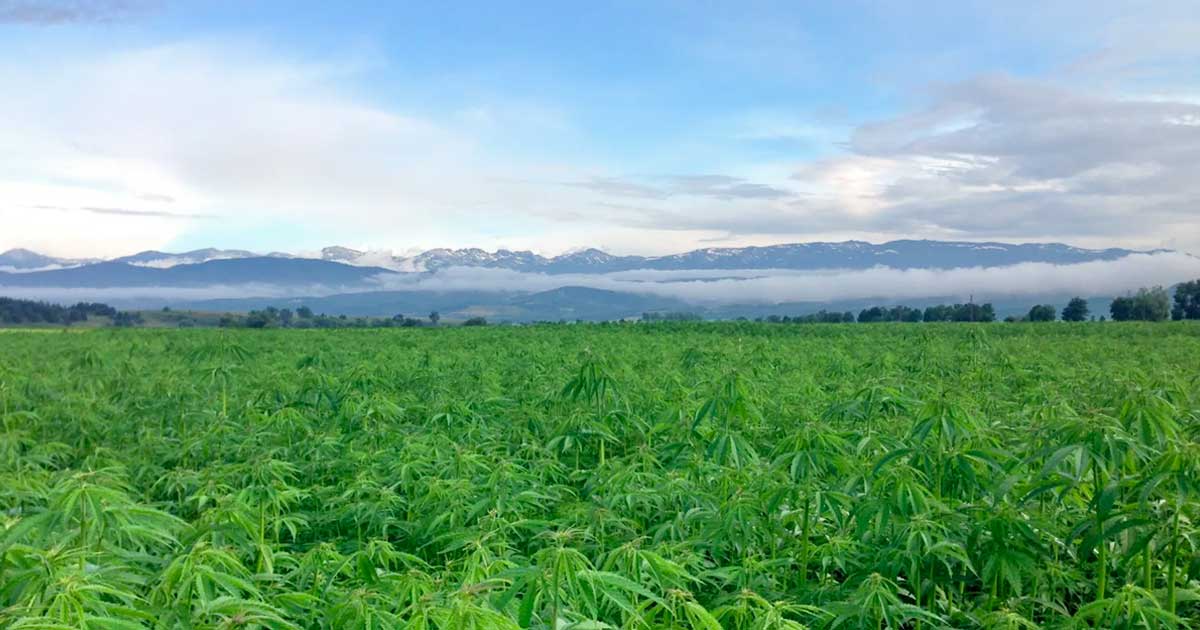
The government of the’South Australia is launching a new phase of trials to identify hemp varieties capable of thriving with reduced water requirements, according to HempToday.
Supported by public funding of 500,000 Australian dollars (approximately 300,000 euros), this initiative combines field trials with small infrastructure grants for producers.
This new research reflects growing concerns about water scarcity in one of Australia's driest agricultural regions. Although the hemp Although it has repeatedly demonstrated its potential under local conditions, the expansion of its cultivation will depend largely on the identification of cultivars capable of maintaining high yields while requiring less irrigation.
Research on hemp varieties suited to water scarcity
Although the’South Australia Although the state benefits from conditions favorable to agricultural production, rainfall remains a limiting factor across much of the state. Most agricultural activities take place between 34 and 38 degrees south latitude, in a climate comparable to that of several well-established hemp-producing regions in the Northern Hemisphere. Mediterranean winters and relatively mild summers provide favorable growing conditions, but water availability remains a major challenge.
The latest tests will aim to identify varieties of industrial hemp capable of producing good results despite limited water availability, particularly in the region of Riverland. Located along the Murray River, Riverland is a semi-arid agricultural region where irrigation plays a central role in farming.
By selecting genetic varieties that are more drought-resistant, researchers hope to make the hemp cultivation sustainable in areas where water resources are under increasing pressure.
Drawing on years of research
Previous studies have shown that the Hemp could be successfully grown in several Australian regions, while research conducted on the Limestone Coast have identified southeastern South Australia as particularly well-suited for commercial production.
Despite these encouraging results, the crop remains relatively small in scale. According to the latest available figures, approximately 330 hectares from industrial hemp were grown in South Australia during the growing season 2023-24, compared with 23,600 hectares in France, which covers a smaller area.
The state’s agricultural landscape remains dominated by traditional crops such as wheat, barley, canola, and legumes, as well as livestock farming. In total, South Australia has approximately 4 million hectares of arable land.
Rather than encouraging rapid expansion, the authorities have consistently taken a measured approach, relying on pilot projects and scientific research to reduce uncertainties before supporting larger-scale commercial development.
Long-Term Goals for the Hemp Industry in Australia
The government's interest in the industrial hemp goes beyond agricultural research. Since the legalization of hemp cultivation in South Australia in 2017, policymakers are increasingly viewing this crop as an opportunity to diversify agricultural production and create new economic opportunities.
Early research conducted by the’South Australian Research and Development Institute (SARDI) led to, in 2018, based on projections suggesting that industrial hemp could generate approximately 3 million Australian dollars in annual production value within five years.
More recently, the government's ambitions have become closely linked to Australia's growing interest in the hemp fibre in the field of construction and sustainable building materials. A 2024 report published by the’Australian Hemp Council highlighted several major projects that combine hemp production with initiatives in the housing and construction sectors across the country.
The same report also highlighted promising agronomic performance, noting that the hemp seeds can achieve yields of up to 2 metric tons per hectare under favorable growing conditions.
Although these figures depend heavily on local climate and farming practices, they reinforce the idea that the industrial hemp could become an increasingly valuable crop as Australia seeks more sustainable agricultural systems and alternative raw materials.












CBD is said to promote athletic recovery, without improving performance

294 cannabis clubs in Chile: a booming movement with uneven distribution

Chronic Sciatica: New York Approves First Clinical Trial of a THC-Based Medication

United States: The DEA is accelerating the integration of medical cannabis at the federal level

Florida is nearing one million patients using medical cannabis

Uruguay Revives Its Plan to Allow Tourists to Legally Access Cannabis

In Brazil, researchers are developing an innovative CBD eye drop

Autism: Medical Cannabis Is Linked to Reduced Anxiety

The $28 billion U.S. hemp market remains under threat

Jamaica Eases Small Farmers' Access to the Cannabis Market
-
 Business5 days ago
The legal cannabis market in New York exceeds 4 billion $ in revenue
-
Cannabis and driving4 weeks ago
Cannabis and CBD: French Drivers Can Now Lose Their License Even Without a Positive Test Result
-

 Cannabis in France2 weeks ago
Which countries legalized medical cannabis before France?
-
Business2 weeks ago
South Korea is preparing to begin local production of medical cannabis to meet rising demand
-
Cannabis in the Netherlands4 weeks ago
One year after the launch of the Dutch cannabis experiment, the first trends are emerging
-
Cannabis in Thailand2 weeks ago
From the boom in dispensaries to a purely medical approach: Thailand is revising its cannabis policy
-
Cannabis in France4 weeks ago
French medical cannabis remains stalled at the Ministry of Health
-
Cannabis in Argentina3 weeks ago
Argentina Opens Its Market to Hemp Flowers Containing 1% of THC












You must be logged in to post a comment Login