
19 associations ask the Constitutional Council to censure the fixed fine for the offence of drug use

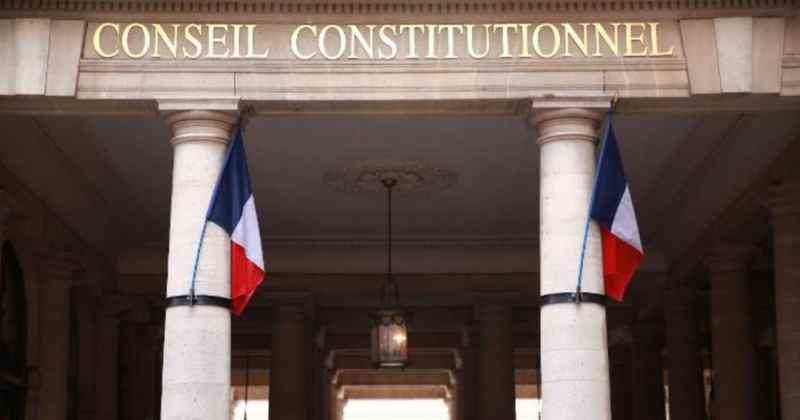
Last February 18, the French National Assembly voted the bill (2018-2022), article 58 of which provides for the extension of the fixed fine to the offence of drug use, the famous fine Poulliat. On February 21, certain parliamentary groups in the French Assembly and Senate (PS, France Insoumise, les Républicains) referred the entire text to the Constitutional Council. On this occasion, 19 associations submitted an external contribution to request the censure of article 58 deemed contrary to certain constitutional principles.
The dubious constitutionality of article 58
When a case is referred to the Constitutional Council by members of parliament, civil society organizations can submit an external contribution. This is a text drafted by legal experts for the Constitutional Council. The text in question was drafted by NORML France, the Syndicat de la Magistrature and AIDES. It is supported by 16 other organizations, some of which had already collaborated on the drafting of an inter-association white booklet entitled «l'échec annoncé de l'amende forfaitaire délictuelle étendue au délit d'usage de stupéfiants».
The organizations denounce an attack on constitutional principles in several places:
- Infringement of the principle of the separation of powers and the separation of prosecuting and adjudicating authorities With the lump-sum fine, the police - who are answerable to the executive - will be responsible for recording the offence, prosecuting it and passing judgment. As payment of the fine is tantamount to a conviction, the police authorities are thus discharging a prerogative reserved for the judicial authorities. It should also be pointed out that, by virtue of the principle of separation of powers enshrined in the Declaration of the Rights of Man and of the Citizen, the legislator does not have the requisite authority to effect this transfer of power.
- Infringement of the principle of equality before the law The organizations point out that only the judiciary is competent to judge individual cases in relation to the generality of the law, without infringing the principle of equality before the law. As the repression of drug use is in fact unequal and often discriminatory (control au faciès, over-repression in «priority security zones»), article 58, by transferring sentencing power to the police authorities, will allow these inequalities to be reflected in the application of the law, thus violating the principle of Equality before the law.
- Infringement of the constitutional objective of accessibility and legibility of the law The Code of Criminal Procedure stipulates that the fixed fine does not apply to repeat offences. However, parliamentarians felt that this principle would restrict the scope of the measure in the case of drug-use offenses. The bill therefore provides for the fixed fine to apply even in the event of a repeat offence, making an exception of the general principle. The organizations consider that this undermines the principle of legibility of the law.
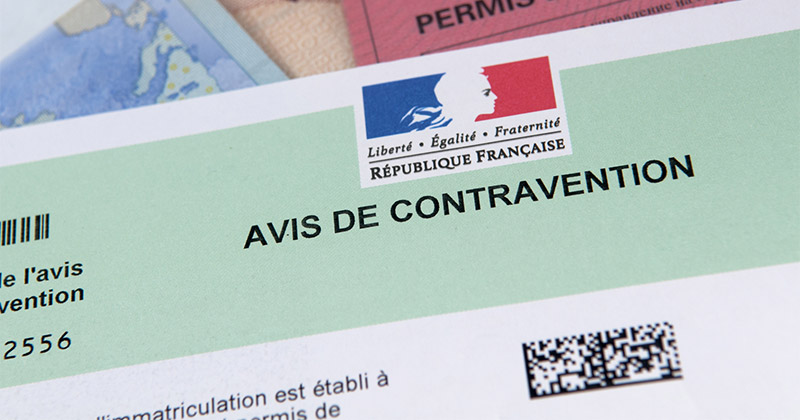
- Infringement of the principle of the right to a fair trial The "amende forfaitaire délictuelle" is normally applied only to traffic offences. The system provides for the possibility of making a claim to contest the fine and to appeal to a criminal court if this claim is declared inadmissible. At this trial, the public prosecutor must present a notice of offence, which must be able to provide proof of the offence. However, this notice of offence is not adapted to the offence of drug use, and recourse to the courts seems to have been rendered obsolete in this case, since it will consist of pitting the police officer's word against that of the offender.
- Infringement of the constitutional principle of individualization of penalties Constitutional law provides for penalties to be individualized according to the individual's situation. A derogation is possible for low-level offenses - up to class 4 contraventions equivalent to a €135 fine. The justice reform project plans to extend this derogation to class 5 contraventions (which by definition carry a higher fine) and misdemeanors. So, regardless of an individual's social and financial situation, all offenders will be subject to the same fine of several hundred euros. Even more importantly, the French Public Health Code stipulates that, in cases of drug use, the individualization of penalties must be reflected in the provision of health care, or at least referral to health care. However, the police do not have the skills or resources to profile drug users. As a result, users who are repeat offenders because of their addiction may have to pay several fines of several hundred euros, without any consideration for the problematic nature of their use.
For all these reasons, the civil organizations call for the censure of article 58. Most of these arguments have been taken up by parliamentarians and included in their referral. The Council will therefore be obliged to take a position on certain elements. As regards the elements not included, the Council's response is optional. Enactment of the law has been suspended pending the Council's verdict, which is scheduled for March 16.












CBD is said to promote athletic recovery, without improving performance

294 cannabis clubs in Chile: a booming movement with uneven distribution

Chronic Sciatica: New York Approves First Clinical Trial of a THC-Based Medication

United States: The DEA is accelerating the integration of medical cannabis at the federal level

Florida is nearing one million patients using medical cannabis

Uruguay Revives Its Plan to Allow Tourists to Legally Access Cannabis

In Brazil, researchers are developing an innovative CBD eye drop

Autism: Medical Cannabis Is Linked to Reduced Anxiety

The $28 billion U.S. hemp market remains under threat

Jamaica Eases Small Farmers' Access to the Cannabis Market
-
 Business5 days ago
The legal cannabis market in New York exceeds 4 billion $ in revenue
-

 Cannabis in France2 weeks ago
Which countries legalized medical cannabis before France?
-
Business2 weeks ago
South Korea is preparing to begin local production of medical cannabis to meet rising demand
-
Cannabis in the Netherlands4 weeks ago
One year after the launch of the Dutch cannabis experiment, the first trends are emerging
-
Cannabis in Thailand2 weeks ago
From the boom in dispensaries to a purely medical approach: Thailand is revising its cannabis policy
-
Cannabis in France4 weeks ago
French medical cannabis remains stalled at the Ministry of Health
-
Cannabis in Argentina3 weeks ago
Argentina Opens Its Market to Hemp Flowers Containing 1% of THC
-
Cannabis and driving2 weeks ago
Medical Cannabis and Driving: New South Wales Ends Automatic Penalties for THC

















You must be logged in to post a comment Login