United States: Republican lawmakers introduce a bill to legalize cannabis

Hitherto the preserve of the Democrats, the legalization of cannabis now enjoys consensus on both sides of the political divide in the United States.
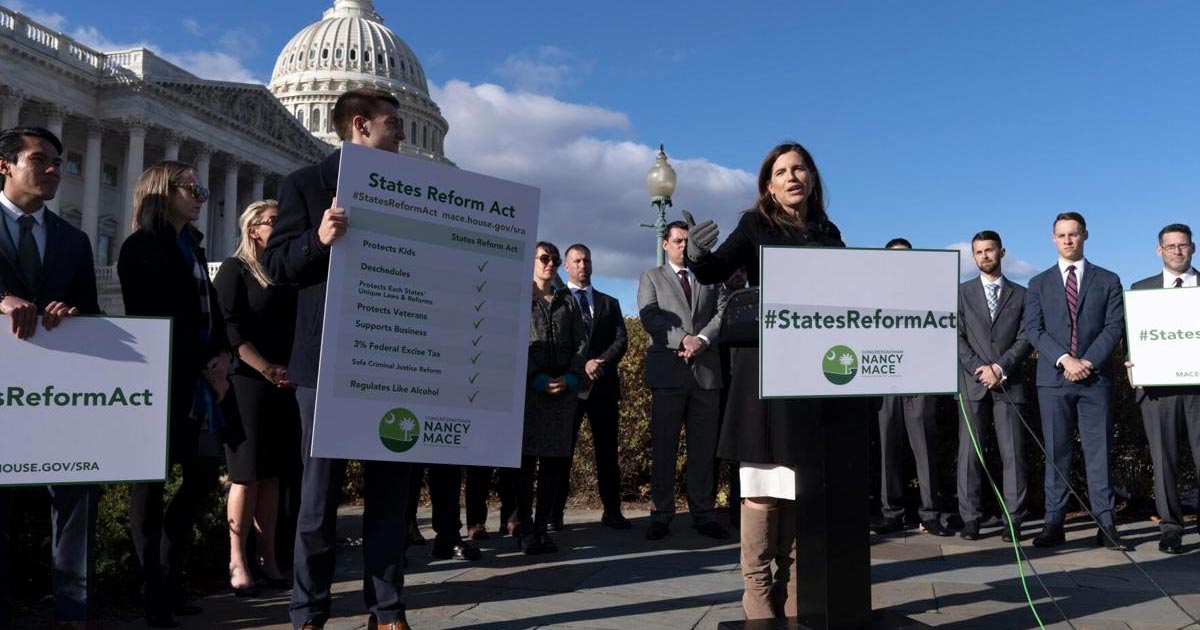
Several Republican members of Congress introduced a bill last Monday to legalize cannabis at the federal level, in response to the ambitious reform proposals underway led by Democrats and reduced GOP legislation on the decriminalization of cannabis.
Republican Representative Nancy Mace carries the bill entitled States Reform Act with a handful of Republican co-sponsors. The text seeks to end federal prohibition of cannabis a while taking specific measures to ensure that businesses present in existing state markets can continue to operate unhindered by changing federal rules.
Unlike more modest measures previously championed by some Republicans, this legislation represents an attempt to bridge a partisan divide. It does so by incorporating certain fairness provisions such as expunging the criminal records of individuals with non-violent cannabis-related convictions and imposing an excise tax, the revenues from which would support community reinvestment, law enforcement and Small Business Administration (SBA).
«This bill supports veterans, law enforcement, farmers, businesses, people with serious illnesses, and it's good for criminal justice reform,» Mace said in a statement Monday. «The State Reform Act takes special care to keep Americans and their children safe while ending federal interference with state cannabis laws.»
Today, I intro'd the #StatesReformAct a turnkey federal tax and regulate framework for existing state laws. SC has CBD, FL medical, CA adult-use; this bill allows these differences while protecting kids, vets, businesses and those w serious illness. WATCH https://t.co/F9SbPAwciJ pic.twitter.com/maZLxlVa1Z
- Rep. Nancy Mace (@RepNancyMace) November 15, 2021
«Washington needs to provide a framework that allows states to make their own decisions about cannabis moving forward,» the congresswoman said. «This bill does that.».
Outline of the bill
As part of the legalization project The federal government would treat cannabis in the same way as alcohol. Cannabis would be removed from the Controlled Substances Act, with retroactive effects for those previously sanctioned.
Previous federal cannabis convictions would have to be expunged within one year. Individuals affiliated with cartels or who have been convicted of DUI, however, would not be eligible for this relief. Mace's office estimates that approximately 2,600 people will be released from federal incarceration under this provision.
The bill calls for a federal excise tax of 3 % on cannabis, significantly lower than taxes proposed in Democrat-led cannabis bills.
The Treasury Department's Office of Alcohol and Tobacco Tax and Trade (TTB) - renamed the Office of Alcohol, Tobacco and Cannabis Tax and Trade - would be the primary regulator of the cannabis market for interstate and international commerce. The agency would create a cannabis tracking and tracing system, and federal officials would be authorized to issue product packaging and labeling requirements.
The regulatory authority of the Food and Drug Administration (FDA) would be limited, the aim being that it would have no more control over cannabis than it does over alcohol, except in the case of medical cannabis. The agency would be able to implement dosage limits (e.g. 10mg THC per serving, and no more than 10 servings per package), certify state-designated medical cannabis products and approve and regulate cannabis-derived pharmaceuticals, but would not be able to prohibit the use of cannabis or its derivatives in non-medicated applications, such as state-designated medical cannabis products, dietary supplements, foods, beverages, non-medicated topical products or cosmetics.
The enforcement authority would be transferred from the Drug Enforcement Administration to a newly renamed Bureau des alcools, tabacs, cannabis, armes à feu et explosifs.
Raw cannabis would be considered a regulated agricultural product by the US Department of Agriculture (USDA). The plant would be treated like «alcoholic beverage crops» such as barley, hops and grains.
A federal license would be required to operate a cannabis business, and certain prior cannabis convictions could make a person ineligible to obtain such a license.
The legislation provides for the integration of state-licensed cannabis operators into the federal system, to ensure continued access for patients and encourage participation in the legal market.
Revenues from federal marijuana taxes would go to a newly created fund, the Law Enforcement Retraining and Successful Second Chances Fund, and distributed to various veterans' mental health programs, state opioid addiction programs and youth cannabis prevention efforts.
A national age limit of 21 would be set for legal cannabis products, to be enforced by withholding funds from any state seeking to lower this age. This limit would not apply to medical cannabis. Advertising that targets minors or is misleading would be prohibited.
The Treasury Department would be required to conduct periodic studies on the characteristics of the cannabis industry and issue recommendations to improve cannabis regulation and tax administration. The Bureau of Labor Statistics would also be responsible for providing regular data on ownership and employment in the cannabis industry.
Military veterans wouldn't be able to be discriminated against in hiring for federal jobs because of their cannabis use, and VA doctors would be authorized to issue recommendations on medical cannabis.
All references to «marijuana» or «marihuana» in federal laws and regulations would be replaced by «cannabis».






















«Vincy Gold»: Humboldt Seed Company on the Hunt for Saint Vincent Sativas

Cronos Completes the Acquisition of CanAdelaar for 57.5 million euros

Cannabis with a "bloody" twist: Discover Sensi True Blood and Sensi Sangria, the two new strains from Sensi Seeds

Hemp: The Council of the EU Takes a Stand on New Production and Marketing Rules

Missouri's legal cannabis market accounts for 93 % of consumer spending

THC Gummies: How to Read a Certificate of Analysis Before Buying

British patients now have access to THCV-rich cannabis flowers

Spain: Medical Cannabis Is Coming to About 50 Hospitals

JIHE 2026: Japan’s Largest Trade Show Dedicated to Hemp and CBD Returns to Tokyo with More Than 100 Industry Players

New Caledonia: The Courts Clear the Way for the Return of CBD
-
 Business3 weeks ago
The legal cannabis market in New York exceeds 4 billion $ in revenue
-

 Cannabis in France4 weeks ago
Which countries legalized medical cannabis before France?
-
Cannabis in France1 week ago
France already has 3,000 cannabis retail outlets. None of them are legal.
-
Business4 weeks ago
South Korea is preparing to begin local production of medical cannabis to meet rising demand
-
Cannabis in the U.S.1 week ago
A DEA report confirms that there are no fatal cannabis overdoses
-
Cannabis in Thailand4 weeks ago
From the boom in dispensaries to a purely medical approach: Thailand is revising its cannabis policy
-
Cannabis and driving4 weeks ago
Medical Cannabis and Driving: New South Wales Ends Automatic Penalties for THC
-
Cannabis in France3 weeks ago
France’s Drug Policy Chief Defends Cannabis Prohibition... and Runs Into the Facts
















You must be logged in to post a comment Login