U.S. Supreme Court to rule on gun ownership rights for cannabis users

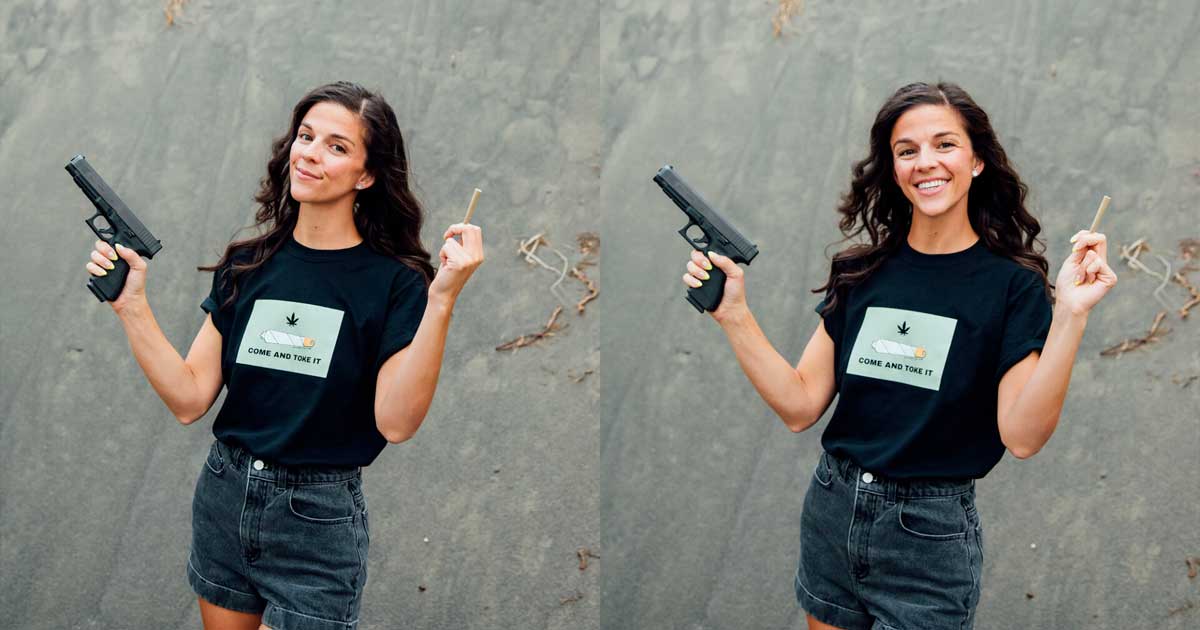
The United States Supreme Court is set to vote on a surprising question from a European perspective: can the federal government continue to prohibit cannabis users from legally possessing firearms?
On October 20, 2025, the judges agreed to hear the case. U.S. v. Hemani, which could redefine the way in which the’section 922(g)(3) of the gun control act of 1968 applies to millions of Americans who consume cannabis, even in states where it is legal.
The decision could either reaffirm the federal government's power to restrict firearms based on drug use, or invalidate a key element of the national gun control framework, marking a historic shift in the treatment of users of cannabis and other illegal drugs under federal law.
Federal law under fire
Section 922(g)(3) makes it illegal for any «person unlawfully using or addicted to a controlled substance» to purchase or possess firearms or ammunition. This includes cannabis, which remains a Category I controlled substance on the same level as substances such as heroin and LSD.
The Ministry of Justice has long defended this law, arguing that it «targets a class of people who present a clear danger of firearms misuse». In its brief filed with the Court in June, the American Solicitor General D. John Sauer, appointed by the Chairman Donald Trump, said the law «complies with the Second Amendment» and aims to protect public safety by disarming «habitual users of illegal drugs».
However, legal analysts have pointed out that the word «habitual» does not appear in the law. The vague wording of the law means that anyone who admits to using cannabis, even just once, could technically lose their right to own or buy a firearm. This contradiction is a growing source of legal conflict in a country where 24 states have legalized recreational cannabis for adults and nearly 40 authorize its medical use.
The Hemani case
The case Hemani was carefully selected by the Department of Justice from a number of similar cases. The defendant, an American and Pakistani citizen accused of using cannabis and cocaine and having alleged links with Iranian entities, presents a complex profile. Legal observers suggest that the government chose this case because it presents a less sympathetic defendant, which might make it easier to defend the law.
In recent years, lower courts have rendered contradictory decisions, Some declared the ban unconstitutional, while others upheld it as being in line with public safety objectives.
In 2023, the 5th U.S. Court of Appeals ruled that citizens cannot be disarmed «solely on the basis of their past drug use», arguing that such a policy had no historical basis. Similarly, in September 2025, the 11th Circuit Court of Appeal considered that the federal ban did not apply to patients using cannabis for medical purposes in accordance with the laws of the State.
In another important decision, the Tenth Circuit Court of Appeal ruled in favor of an Oklahoma man whose gun was seized after police found cannabis in his car. The court found that the government had failed to demonstrate that unintoxicated cannabis users presented a risk of future violence, stating that the investigation was «more properly within the jurisdiction of the district court».
Elsewhere, a three-judge panel of the Eighth Circuit Court of Appeals overturned a defendant's conviction and remanded the case, questioning whether cannabis consumption in itself makes a person «dangerous». At the same time, the third circuit stressed the need for «individualized judgments» when applying the law, pointing out that a uniform ban could violate constitutional protections.
Legal tensions between federal and state law
In states where cannabis is legal, responsible consumers who possess firearms still risk prosecution under federal law. For example, anyone who buys a firearm from a licensed dealer must fill out a federal form (ATF 4473) that asks questions about illegal drug use. Admitting cannabis use, even in a state where the sale is legal, is an admission of a federal crime.
This discrepancy has fueled the frustration of gun owners, veterans and of medical patients who depend on cannabis for therapeutic purposes. Several legislators, including some Republican senators, have publicly criticized this inconsistency, arguing that if the alcohol consumers can legally possess firearms, the cannabis consumers should be treated in the same way.
Future constitutional issues
In recent years, the conservative majority on the Supreme Court has increased the level of restrictions on right to bear arms. In its 2022 decision in the New York State Rifle & Pistol Association v. Bruen, the Court ruled that the regulation of firearms must conform to the «historic tradition» of the ratification of the Second Amendment in 1791.
Since then, this precedent has led lower courts to invalidate statutes that lack a clear historical analogue, casting doubt on whether section 922(g)(3) can withstand scrutiny.
The fact that the Ministry of Justice is based on outdated examples, such as the restrictions imposed on Catholics, slaves and Native Americans in the 18th century, and has been widely criticized as legally and morally inadequate.
If the U.S. Supreme Court upholds the law, it would affirm the federal government's power to restrict gun ownership to all illegal drug users, regardless of legalization at the state level.
But if it invalidates or restricts the law, the decision could grant tens of millions of cannabis users new access to their second amendment rights, and forced the government to rethink the broader criminalization of cannabis use.
The outcome of the case U.S. v. Hemani, is expected in 2026.

















Medical Cannabis in Germany: THC Prices Vary by a Factor of 12

France already has 3,000 cannabis retail outlets. None of them are legal.

Morocco's exports of legal cannabis have expanded to 15 countries

Aurora Cannabis Doubles Its Production Capacity in Germany

Tilray is accelerating its operations in Europe thanks to a license in Portugal

Boston will host the 10th annual State of the Cannabis Industry Conference on October 26

A DEA report confirms that there are no fatal cannabis overdoses

A British patient is challenging the NHS's refusal to reimburse medical cannabis

October 2026 CBD Highlights: 10 Strains and Hash to Discover from 5 French Producers

CBD in France: Traceability, Retail Stores, THC and Driving… What the New Bill Proposes
-
 Business2 weeks ago
The legal cannabis market in New York exceeds 4 billion $ in revenue
-

 Cannabis in France3 weeks ago
Which countries legalized medical cannabis before France?
-
Business3 weeks ago
South Korea is preparing to begin local production of medical cannabis to meet rising demand
-
Cannabis in Thailand3 weeks ago
From the boom in dispensaries to a purely medical approach: Thailand is revising its cannabis policy
-
Cannabis and driving3 weeks ago
Medical Cannabis and Driving: New South Wales Ends Automatic Penalties for THC
-
Autism3 weeks ago
Autism and Cannabis: Results from the First Placebo-Controlled Trial of NTI164
-
Cannabis in France2 weeks ago
France’s Drug Policy Chief Defends Cannabis Prohibition... and Runs Into the Facts
-
CBD1 week ago
In Brazil, researchers are developing an innovative CBD eye drop

















You must be logged in to post a comment Login