Trinidad and Tobago publishes its plan to regulate medical cannabis

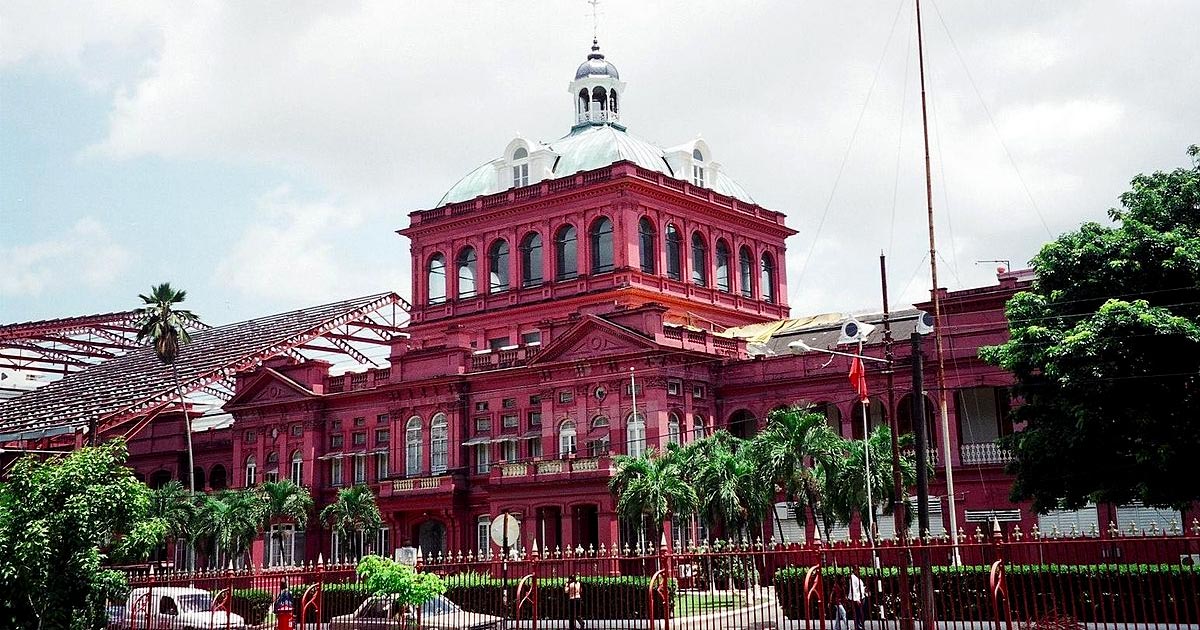
After many delays, Trinidad and Tobago's legislators have published their plan to legalize and regulate cannabis for medical, research and religious purposes.
The bill establishes a legislative framework for Cannabis Licensing Authority of Trinidad and Tobago, the body that would regulate licenses for the cultivation, distribution, sale, import and export of cannabis for medicinal use.
The committee, a joint parliamentary select committee, and made up of members of both the House of Representatives and the Senate, was set up to review the cannabis control bill, which was first introduced by the country's Attorney General, Faris Al-Rawi, in 2019. Committee members cited «the complexity of the bill» and the need to engage in «consultations with the region's cannabis authorities» as reasons for the lengthy delay. The legislative group thus recommended that a list of 25 amendments be made to the control bill.
The main recommendation is to focus on regulatory compliance and transparency within the industry. The amended bill also includes a special category of license, which would govern the cultivation, distribution and transportation of cannabis for religious purposes.
Nevertheless, advocates of the reform have expressed concern about certain recommendations, notably the penalties proposed in the bill for licensees who fail to comply with the law or the conditions of their license. They could be subject to heavy fines and imprisonment.
Given privacy concerns, activists are also uncomfortable with the recommendation that the Authority establish and maintain a public register of licensees. Activists are also concerned that the amended bill still falls short when it comes to social justice for those affected by cannabis prohibition, and have called for policies that would ensure that the most heavily impacted groups can participate in the nascent industry.
One point did, however, pass in the final report: licenses would be open to people who have already been charged under the country's Dangerous Drugs Act and have since successfully applied to have their convictions expunged. Earlier interpretations of the bill excluded this group from participation.
The central idea behind the committee's recommendations is «clear», according to Al Rawi, who chaired the committee. This makes the law relevant to citizens and necessary for the future of Trinidad and Tobago, said Al Rawi is to «make sure we diversify our economy».
«This cannabis control bill is great news for us,» he said, «because it will introduce the concept of commercialization from seed to product.»
According to Al Rawi, the emphasis on compliance and transparency is intended to enable licensees to rely heavily on «the availability of genetic patents and plant varieties under the country's intellectual property laws» to carve out a niche in this nascent industry. Trinidad and Tobago's laws, such as the Plant Variety Protection and Patents Act, as well as copyright, geographical indications and trademark laws, have long been used by international companies to obtain trademark and patent rights before transferring them to countries such as members of the European Union and the United States.
At the same time, the commission did not recommend any amendments to one of the bill's most controversial provisions, which allows foreign nationals to become majority shareholders in companies licensed by the Authority. As currently worded, the bill authorizes up to 70 % of foreign participation in local cannabis companies, one of the highest participation quotas in the region.
Activists such as Nazma Muller, who favor stronger local representation, want the limits to be similar to those in Jamaica, which limits foreign ownership of cannabis companies to 49 %.
According to Trinidadian cannabis legalization campaigner Nazma Muller, stricter ownership provisions will guarantee the rights of indigenous farmers and give locals greater control over the fledgling industry. According to activists, reducing foreign ownership will protect the sector from future shocks to the global market - such as those that have prompted several Canadian cannabis companies to divest from the region in order to save money - while creating more jobs and investment opportunities domestically.
«We don't want international companies coming in with their pocket money and taking over our industry,» said Nazma Muller in an interview with Cannabis Wire. Without provisions that encourage and protect local ownership, «it feels like the Trinidad and Tobago industry is just going to be auctioned off to whoever has the money to come in.».
Nazma Muller also argues that regulators need to provide clearer pathways for smallholders, or for those leaving the illegal market, by creating micro-licenses for cultivation and processing, such as Jamaica's sub-1000$ licenses aimed specifically at indigenous growers.
In this respect, Mr. Al Rawi believes that the wording of the bill, which requires local ownership of at least 30% of all licenses granted, with the exception of research and development and laboratory licenses, will limit the problems highlighted by critics of the legislation. However, he argues that if Trinidad and Tobago wants to be competitive in exporting its cannabis and products derived from the plant, large foreign players may have the necessary expertise.
«We accept that there are big players around the industry who would like to come in,» said Al-Rawi, arguing that if the industry is to be developed for export to the international market, it must be done «in a safe environment where you're not fighting with bacteria, mold and mildew and you're actually producing high-quality, premium varieties.».
Several civil society groups, such as All Mansions of Rastafari, The recommendations fail to create a space in the industry for those historically affected by prohibition.
The next stage of the bill will take place in the coming weeks, when the House of Representatives will debate and vote to adopt all or part of the committee's recommendations, and amend the cannabis control bill accordingly. If approved, the bill will be sent to the Senate.
























JIHE 2026: Japan’s Largest Trade Show Dedicated to Hemp and CBD Returns to Tokyo with More Than 100 Industry Players

New Caledonia: The Courts Clear the Way for the Return of CBD

The Brazilian medical cannabis market continues to grow

Morocco: Three Cannabis-Based Medications Approved for the Treatment of Epilepsy

Canopy Growth Receives New EU-GMP Certification to Strengthen Its Presence in Europe

Three years after legalizing medical cannabis, Albania continues to establish regulations for it

The first plant-based medical THC spray arrives in the United Kingdom

Medical Cannabis in Germany: THC Prices Vary by a Factor of 12

France already has 3,000 cannabis retail outlets. None of them are legal.

Morocco's exports of legal cannabis have expanded to 15 countries
-
 Business2 weeks ago
The legal cannabis market in New York exceeds 4 billion $ in revenue
-

 Cannabis in France4 weeks ago
Which countries legalized medical cannabis before France?
-
Business4 weeks ago
South Korea is preparing to begin local production of medical cannabis to meet rising demand
-
Cannabis in France4 days ago
France already has 3,000 cannabis retail outlets. None of them are legal.
-
Cannabis in Thailand4 weeks ago
From the boom in dispensaries to a purely medical approach: Thailand is revising its cannabis policy
-
Cannabis in the U.S.5 days ago
A DEA report confirms that there are no fatal cannabis overdoses
-
Cannabis and driving3 weeks ago
Medical Cannabis and Driving: New South Wales Ends Automatic Penalties for THC
-
Cannabis in France3 weeks ago
France’s Drug Policy Chief Defends Cannabis Prohibition... and Runs Into the Facts

















You must be logged in to post a comment Login