

Study: the impact of cannabis legalization on crime reduction is underestimated

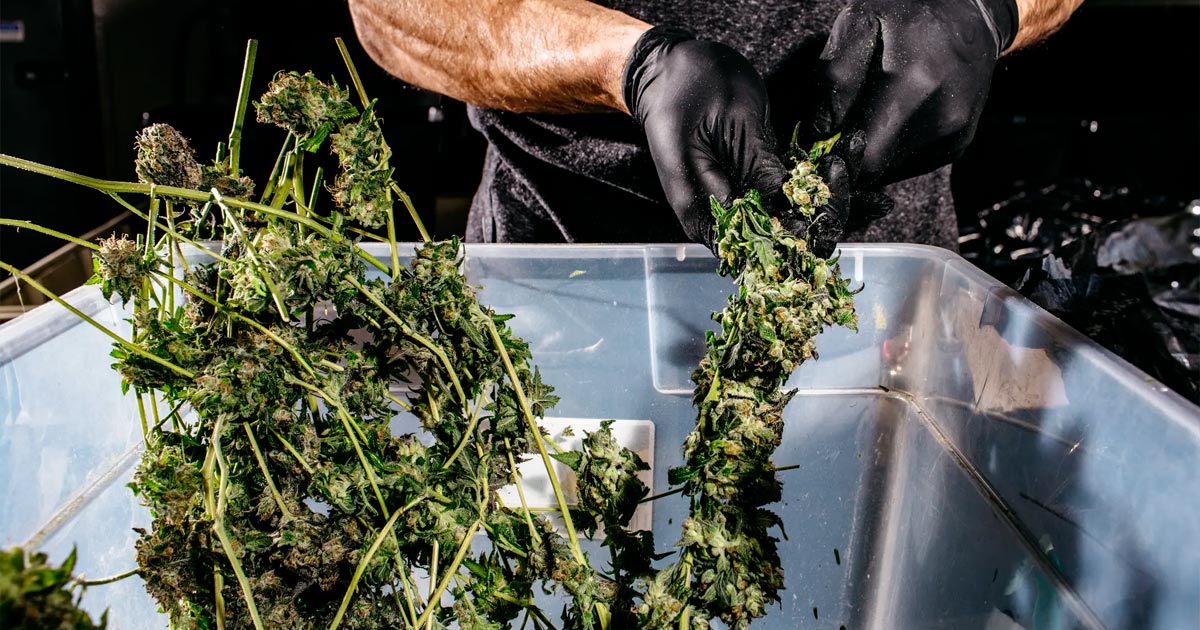
On several occasions, studies have established a link between Cannabis legalization and crime reduction, but the impact of this policy change is significantly underestimated due to limitations in the research methodology, according to a new paper co-authored by a U.S. federal official.
Researchers from the Economic Research Service of the U.S. Department of Agriculture (USDA) and Appalachian State University published a working paper this month presenting their findings.
They claim that most studies on crime and cannabis in the United States rely on FBI data provided by local police departments across the country. However, reporting this data to the federal agency is entirely voluntary, leaving gaps in our understanding that have underestimated the extent to which the legalization of medical cannabis reduces violent crimes and property offenses.
«U.S. drug policy assumes that prohibition reduces crime. Some states have recently passed medical cannabis laws, thereby creating a natural experiment to test this hypothesis, but the analysis is hampered by serious measurement errors in the available data,» the abstract states.
To address these shortcomings, the researchers developed «a new imputation procedure that reduces measurement error bias and estimates significant reductions in rates of violent crime and property crime, with heterogeneous effects across and within states and crime types, which contradicts drug prohibition policy.».
«We demonstrate that uncorrected measurement error or the assumption of homogeneous policy effects leads to an underestimation of the reduction in crime resulting from the end of cannabis prohibition,» the authors stated in the paper, which is titled « Smoke and Fears: The Effects of Marijuana Prohibition on Crime » (Smoke and Fear: The Effects of Marijuana Prohibition on Crime).
In order to improve upon existing research, the study’s authors stated that they used a «multiple imputation procedure for agency-level crime data to fill in data gaps [Uniform Crime Reporting] that takes into account the uncertainty inherent in these imputed values in the subsequent statistical analysis.
«Our findings indicate that [medical cannabis laws] lead to significant reductions in rates of violent crime and property crime, with more significant impacts in the states bordering Mexico«,« they wrote. »While these findings regarding violent crime rates are consistent with previously reported evidence, ours is the first study to report such an effect on property crimes as well. Furthermore, the estimated effects of medical cannabis laws on property crime rates are significantly larger, which is not surprising given that property crimes are more prevalent.”
Other data have also called into question the notion that drug prohibition reduces crime.
In 2020, researchers examined the impact of the legalization of recreational cannabis in Washington and Colorado on crime rates in neighboring states, and the resulting study found that the adoption of laws on recreational cannabis may in fact have reduced certain serious crimes in neighboring jurisdictions.
In 2018, researchers from Victoria University of Wellington and Harvard University found that medical cannabis laws have essentially no effect on crime rates, with one exception: a nearly 20% reduction in violent crimes and property crimes in California following the legalization of medical cannabis in that state.
A study published by the Cato Institute in 2018 also revealed that «the legalization of cannabis at the state level has significantly reduced marijuana smuggling.»






















The «cannabis» fine raised to 500 euros under the RIPOST Act

Sacha Baron Cohen Brings Ali G Back to Life During a Surprise Appearance at Wimbledon

Botswana Paves the Way for Commercial Hemp Cultivation

The First Authorized Medical Cannabis Cultivation in the Canary Islands

Germany Ends Public Health Insurance Coverage for Medical Cannabis Flowers

Cannabis Legalization in Pennsylvania Once Again on Hold

Democratic senators are reviving a bill to legalize cannabis at the federal level in the United States

A THC:CBD oil shows promising results in reducing agitation in people with dementia

San Francisco Allows «Cannabis Cafés»

Kenya Denies Rastafarians the Right to Use Cannabis
-

 Cannabis in Europe4 weeks ago
Bosnia and Herzegovina Continues to Roll Out Medical Cannabis Following Its Legalization
-
Cannabis in France4 weeks ago
France Submits the Long-Awaited Decree on the Reimbursement of Medical Cannabis to the Council of State
-
Cannabis in the U.S.4 weeks ago
The DEA Begins Hearings on the Federal Rescheduling of Cannabis
-
Business3 weeks ago
China Invests $10 Million in Medical Cannabis in Lebanon
-
Cannabis in Thailand4 weeks ago
Thailand Threatens Cannabis Shops with Severe Penalties
-
Cannabis in Australia3 weeks ago
South Australia is working to identify more water-efficient hemp varieties
-
Exchange4 weeks ago
Glass House will be the second U.S. cannabis company to list on the New York Stock Exchange
-
Cannabis in Africa2 weeks ago
Kenya Denies Rastafarians the Right to Use Cannabis














You must be logged in to post a comment Login