Durban Poison is one of the world's most famous sativa landraces.
Native to the Durban region on South Africa’s east coast, in the province of KwaZulu-Natal, it stands out for a profile that is extremely rare for a pure sativa: a fast flowering time of 56 to 63 days, which makes it much easier to grow than most of its cousins.
With a THC content of 16 to 20 percent, an aromatic profile featuring licorice, anise, and pine, and euphoric, productive, and long-lasting effects, it has won over consumers, growers, and breeders alike.
In particular, it is a direct parent of Girl Scout Cookies (GSC) through a cross with OG Kush, making it one of the most influential landraces in the genealogy of contemporary California cannabis.
Origin and History: Durban Dagga
Cannabis in Southern Africa
Before it became known as «Durban Poison,» this sativa was simply a local variety of cannabis that the people of Southern Africa have referred to for centuries as dagga. As early as 1975, ethnobotanist B. M. Du Toit documented the historical presence of cannabis in this region, its routes of dissemination, and its ritual, medicinal, and recreational uses in his seminal work Dagga: The History and Ethnographic Context of Cannabis sativa in Southern Africa. People in the Durban region have been cultivating and using dagga for generations, within cultural and spiritual contexts specific to Southern Africa.
Transmission to the United States and the Netherlands
The commonly accepted story in the cannabis community goes like this: in the late 1970s, American journalist and activist Ed Rosenthal reportedly brought back South African cannabis seeds from a trip to Durban. These seeds were then reportedly passed on to breeder Mel Frank, and then to Sam «Skunkman» Watson, the same Sam the Skunkman who developed the Skunk #1, who is said to have subsequently brought the strain to Amsterdam, in the Netherlands, in the 1980s. It was within Dutch breeding circles that the strain is said to have been stabilized and distributed under the name «Durban Poison,» in reference to its city of origin.
A note on academic rigor
It is important to be honest about one thing: as existing genetic studies indicate—notably Sawler et al. (2015)—the genetic identity of a commercial variety cannot be reliably inferred from its name or its reported pedigree. The story of Ed Rosenthal, Mel Frank, and Sam the Skunkman is widely told, but it relies more on oral tradition and breeders« catalogs than on direct primary scientific documentation. What is certain is that cannabis has been cultivated and used in Durban and throughout the province of KwaZulu-Natal for generations. What is plausible but not formally proven: that the plants marketed today under the name »Durban Poison” are direct descendants of a specific historical population from that region. This caution in no way diminishes the quality or appeal of the strain but simply reflects the actual state of the available documentation on African landraces.
Is Durban Poison a sativa or an indica?
Durban Poison is a 100% pure sativa, derived from a non-hybridized landrace strain. Like the Thai or the Colombian strain; no indica genetics have ever been introduced into it throughout its commercial history.
This Sativa purity is evident throughout its entire profile: a slender build with elongated buds that are less dense than those of Indicas, thin leaves with long fingers, and exclusively cerebral effects. But it has one major distinction: unlike Thai (84–120 days) or Haze (84–112 days), Durban Poison flowers in just 56 to 63 days—an exceptional feat for a pure Sativa. This is one of the reasons for its popularity among growers: it offers the genetics and effects of a pure sativa with the fast flowering time of a hybrid.
Appearance, Aromas, and Terpenes
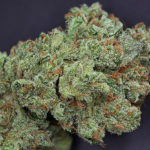
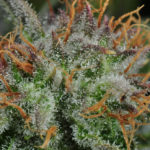
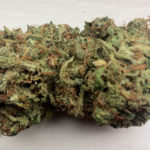
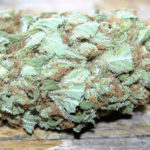
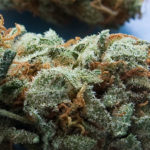
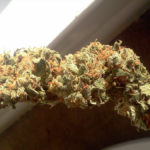
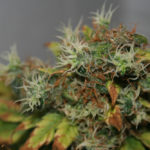
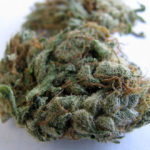
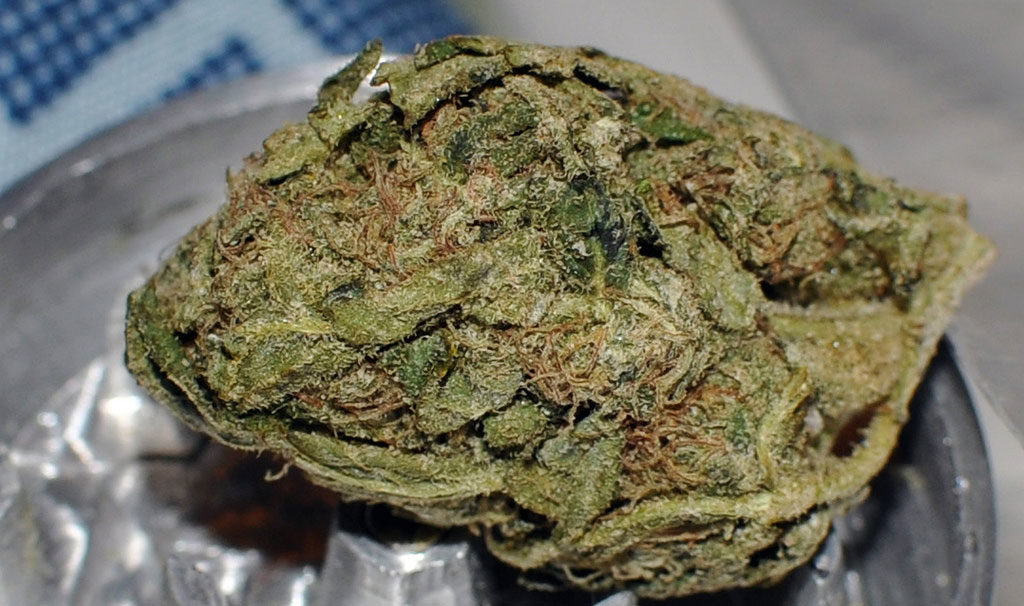
Durban Poison has a distinctive appearance. Its buds are round and plump, densely covered with trichomes, with a layer of resin thicker than one would expect from a pure sativa. This abundance of resin is one of its most distinctive visual hallmarks and the reason for its popularity among concentrate producers.
On the nose: an immediately recognizable profile of licorice and anise, with woody notes of pine and a hint of sweetness in the background. Some phenotypes develop slightly menthol-like or herbaceous aromas. The overall impression is smooth and fresh, very different from the diesel or skunk profiles of modern hybrids.
On the palate: a smooth, aromatic smokiness, with notes of anise and sweetness that come to the fore on the exhale.
Its dominant terpenes :
- Terpinolene : the dominant terpene in pure African sativas, responsible for its floral, herbaceous, and slightly fruity notes. It is this terpene that gives Durban Poison its distinctive profile. The high concentration of terpinolene is one of Durban Poison’s most well-documented characteristics; it is regularly cited as one of the commercial sativa strains richest in this terpene.
- Myrcene : adds earthy depth and a creamy, light, soothing base note.
- Ocimene : sweet, fruity, and herbaceous notes that round out the overall profile.
What are the effects of Durban Poison?
The effects of Durban Poison mirror its terpene profile: lively, clear, and productive.
The onset is rapid. The effects come on with a distinct euphoric rush that sets in within a few minutes. Unlike Thai or Haze While the effects of [name] build gradually, Durban Poison hits harder and more immediately.
The main phase is a state of active, functional euphoria. Thoughts are clear and rapid, and motivation and energy are boosted. It is one of the most «productive» sativas on the market: it makes you want to take action, create, and socialize without the almost psychedelic distortions of the Purple Haze or the Thai pure.
Main effects :
- Active and Long-Lasting Euphoria
- Energy and motivation
- Enhanced creativity and concentration
- Sociability, ideal in social settings
- Slight stimulation of appetite
Possible side effects:
- Dry mouth and dry eyes
- Severe anxiety or paranoia, particularly among users who are not accustomed to pure sativas
- Insomnia if consumed too late at night
Best time to use: Durban Poison is the quintessential daytime strain. Its reputation as a «morning sativa» makes it ideal for the morning or early afternoon—it’s often recommended for medical patients who need to stay productive during busy days.
Medical uses
Durban Poison is particularly valued for therapeutic use due to its active, non-sedating effect profile:
- Depression and Fatigue : Its long-lasting euphoria and burst of energy make it one of the best sativas for mild to moderate depression
- Attention disorders : Improved concentration and mental clarity are effects frequently reported by patients
- Mild anxiety : In moderate doses, the euphoric effect calms ruminative thoughts without causing sedation
- Nausea : particularly those related to intensive medical treatments
- Chronic fatigue : The energy boost helps you get through periods of fatigue during the day
THCV: Durban Poison is one of the few strains with documented levels of THCV (tetrahydrocannabivarin), a minor cannabinoid being studied for its potential appetite-suppressing and blood-sugar-regulating properties. This is one of the reasons why it is receiving particular attention in medical research circles.
Growing Durban Poison
Durban Poison is known for being one of the easiest sativa landraces to grow, precisely because of its unusually fast flowering time.
Indoors :
- Flowering time: 56–63 days, a record for a pure sativa
- Height: 120–180 cm, manageable with LST
- Output: 400-500 g/m².
- High resin content: particularly suitable for solventless extraction
- Good resistance to mold and pests, a result of its adaptation to Durban's coastal climate
Outdoor :
- Harvest: mid-October, depending on climate
- Thrives in temperate to warm climates
- An early harvest (for a sativa) reduces the risk of frost in northern latitudes
For European growers, Durban Poison is often recommended as a «first pure sativa»—its flowering performance is similar enough to that of hybrids that it won’t discourage growers accustomed to indicas.
The Genetic Heritage of Durban Poison
Durban Poison is one of the landraces the most influential strains in the lineage of contemporary California cannabis.
Direct adult descendants:
- Girl Scout Cookies (GSC) : OG Kush x Durban Poison. This is the most important lineage. GSC itself is the parent of the Wedding Cake, the Sunset Sherbet, the Gelato and dozens of other hybrids from the Cookies family. Durban Poison is therefore the genetic great-grandmother of a large portion of today's Cookies market.
Durban Poison’s unique contribution to the GSC is its terpinolene-dominant terpene profile, which is found in many of its descendants—even when diluted in second- and third-generation hybrids, Durban Poison’s «special something» remains detectable to connoisseurs.
Durban Poison and African Landraces
Durban Poison isn’t the only African sativa landrace to have influenced the global market, but it is by far the best known and most widely sold. It is part of a broader group of African landraces that deserve attention:
- Swazi Gold (Swaziland): a sativa variety that is geographically very close, with similar effects, but less well-known commercially
- Malawi Gold : Sativa from Malawi, with a more pronounced psychedelic effect
- Mozambican Poison : the Mozambican variant, about which less is known
- Zamal (Meeting) : the only African island landrace, used in the famous Zamal sticks
These varieties are all threatened by the same dynamics as the Thai In Asia: The introduction of hybrid strains with short flowering times and high yields is gradually replacing local landraces in their regions of origin. A few seed banks specializing in the preservation of landraces—notably ACE Seeds—are working to document and preserve these African strains before they disappear.