Measuring THC levels via saliva is not effective, according to a study by the University of Marseille

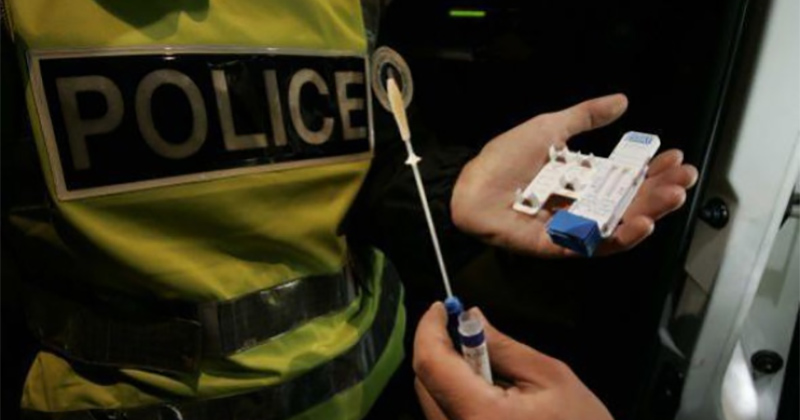
The legalization of cannabis raises many questions regarding road safety, including the need to set a blood THC limit—similar to the limit for alcohol—while taking into account the fact that a given THC level does not necessarily mean that the driver is under the direct influence of cannabis.
Not all countries agree on this so-called threshold level, by the way. Australia penalizes any detectable level of THC, while Switzerland defines the offense as a level of 1.5 ng/mL in saliva. In the United States, the limits range from 0 to 5 ng/mL, and in France, a The THC test will come back positive starting at 1 ng/mL. .
The arguments in favor of a zero-tolerance policy are based, in particular, on the fact that it is not possible to accurately measure cannabis levels in the blood due to the wide variability in THC metabolism among individuals, in addition to the fact that even very low levels can impair driving.
On the other hand, proponents of specific limits are more focused on the fact that THC and other cannabis metabolites remain detectable for nearly a week, long after the psychotropic effects have worn off.
A recent study conducted at Aix-Marseille University provides important data for this debate. The research team, led by Dr. Amélie Marsot, describes in great detail the pharmacokinetic profiles of THC and its metabolites in saliva, blood plasma, and urine during the first 72 hours. Their report is available for free at the Journal of Pharmacy and Pharmaceutical Sciences.
Study Methodology
Eighteen tobacco and cannabis smokers, aged 20 to 45, took part in this study. Each participant underwent two treatments:
- a tobacco cigarette for testing
- a tobacco cigarette containing 0.5 g of cannabis (20 mg of THC)
They were also asked to abstain from cannabis for 28 days before the study and during the study (except for the prescribed treatment).
Saliva and blood samples were collected from each participant 16 times, and urine samples were collected 6 times. The samples were tested for the presence of THC, 11-OH-THC (the main psychoactive metabolite of THC), and THC-COOH (an inactive metabolite), with a minimum detection limit of 1 ng/mL.
Study Results
The analyses revealed a wide range of results. Maximum THC concentrations ranged from 55.4 to an incredible 120,000 ng/mL in saliva and from 1.6 to 160 ng/mL in plasma, while concentrations of the two metabolites were 3 to 10 times lower than that.
Overall, the THC concentration in saliva was in no way indicative of the THC concentration in blood or in urine samples. Other parameters, such as the time of peak concentration or the time of the last detectable concentration, also varied among individuals.
According to the study's authors, the saliva and urine tests for THC are evidence of recent use, but fail to prove what they imply—namely, that the driver’s driving is impaired by cannabis. In the study, half of the participants fell below the minimum detectable threshold for THC in the blood after 2 hours (12 hours at the maximum) and after 18 hours in saliva (48 hours at the maximum). Urine samples remained positive for even longer; some previous studies have shown that a single joint could be detected in urine for up to 18 days.










Medical Cannabis in Germany: THC Prices Vary by a Factor of 12

France already has 3,000 cannabis retail outlets. None of them are legal.

Morocco's exports of legal cannabis have expanded to 15 countries

Aurora Cannabis Doubles Its Production Capacity in Germany

Tilray is accelerating its operations in Europe thanks to a license in Portugal

Boston will host the 10th annual State of the Cannabis Industry Conference on October 26

A DEA report confirms that there are no fatal cannabis overdoses

A British patient is challenging the NHS's refusal to reimburse medical cannabis

October 2026 CBD Highlights: 10 Strains and Hash to Discover from 5 French Producers

CBD in France: Traceability, Retail Stores, THC and Driving… What the New Bill Proposes
-
 Business2 weeks ago
The legal cannabis market in New York exceeds 4 billion $ in revenue
-

 Cannabis in France3 weeks ago
Which countries legalized medical cannabis before France?
-
Business3 weeks ago
South Korea is preparing to begin local production of medical cannabis to meet rising demand
-
Cannabis in Thailand3 weeks ago
From the boom in dispensaries to a purely medical approach: Thailand is revising its cannabis policy
-
Cannabis and driving3 weeks ago
Medical Cannabis and Driving: New South Wales Ends Automatic Penalties for THC
-
Cannabis in Argentina4 weeks ago
Argentina Opens Its Market to Hemp Flowers Containing 1% of THC
-
Autism3 weeks ago
Autism and Cannabis: Results from the First Placebo-Controlled Trial of NTI164
-
Cannabis in France2 weeks ago
France’s Drug Policy Chief Defends Cannabis Prohibition... and Runs Into the Facts

















Zwizzor
February 27, 2017 at 6:48 p.m.
It’s still a real shame that this study doesn’t take into account other methods of ingestion, such as vaporization or cooking in food.
Zwizzor
February 27, 2017 at 6:48 p.m.
It’s still a real shame that this study doesn’t take into account other methods of ingestion, such as vaporization or cooking in food.
Cathy Guimard
March 4, 2017 at 9:38 p.m.
It’s important to remember that regardless of the level: cannabis is ILLEGAL, and users will be fined on that basis. = A level of 1 no/lL or higher may result in charges for driving under the influence of narcotics, but at levels below that threshold, users will be fined for narcotics use simply because it is illegal. It would also be wise to highlight the harmful effects of cannabis in the medium and long term (increased risk of stroke, potentially leading to lifelong disability; increased risk of cardiovascular problems and thus heart attacks; increased risk of psychiatric disorders (bipolar disorder, paranoia, schizophrenia…), and lung problems… issues that people don’t want to talk about but which are nevertheless on the rise. Let’s also remember that penalties for narcotics (with maximum fines of 15,000 euros) are also much harsher than those for alcohol users (maximum 4,500 euros). No coverage in the event of an accident, insurance cancellation, or higher premiums…Let’s stop downplaying the risks of cannabis; I see too many people who aren’t aware of the consequences (I’m a road safety instructor and work with prosecutors on cases involving drivers who have tested positive for drugs and/or alcohol).
Mathieu Landrin
March 5, 2017 at 16 h 06 min
There are a lot more legal things that are more dangerous, so we need to stop and let people just live their lives. A real smoker doesn't have all the problems people make up. Please stop.
arsèèène
March 5, 2017 at 4:47 p.m.
Psychiatric problems are not caused by cannabis; you don’t become schizophrenic by smoking joints, but cannabis does promote the development of the disease in people who already have it. And the study shows that people who had a stroke and were regular cannabis users suffered a stroke due to adulterants. If the product is adulterated, it’s because it’s ILLEGAL—and therefore distributed on the black market—and is not regulated by any authority but directly by its sellers.
That is why, Ms. Guimard, your argument supports legalization.
vincent
March 6, 2017 at 0 h 40 min
Ms. Guimard, it’s easy to tell from your comment that you’re in favor of prohibition. Unfortunately, we’re seeing the same lies as those told by your colleagues, which only serve to perpetuate an unhealthy system that has never worked and never will. On the contrary, every day we see the damage caused by your anti-drug policy, which only serves to enrich mafia-like networks, to enable these networks to sell products laced with dangerous substances, and to psychologically destroy some of your fellow citizens through the justice system—even thoughthey have no problem with their drug use, to the denial of access to cannabis-based medications for patients who are also dragged through the courts for their use (a disgrace for a country that speaks of freedom), to protecting the pharmaceutical industry lobby, which doesn’t want people to know that cannabis can help reduce the doses of certain medications (such as opioids), not to mention the gang-related violence you attribute to drugs but which wouldn’t occur if cannabis were legalized, police corruption and the French government’s importation of tons of cannabis into the country, and the arrest by our police of 120,000 people for cannabis use—all just to meet quotas. The worst part of all this is that the current system no longer even helps people with drug problems, because today the French justice system treats them as criminals instead of recognizing them as people with an illness.
I say your arguments are based on falsehoods because today many international scientists have demonstrated that cannabis does not cause the mental disorders you mention, such as schizophrenia. Furthermore, the states that have legalized it serve as a good example, since, curiously, no increase in the number of schizophrenia cases has been observed.
Regarding cardiovascular and pulmonary problems or strokes, could you specify which studies your sources are based on? And under what conditions were the studies conducted? Please note that a large number of risk prevention organizations are currently doing their best, as best they can, (in a challenging context due to prohibition) to get messages across—particularly about the dangers of mixing cannabis with tobacco or of combustion—and to promote the use of vaporizers to avoid the health problems you mentioned.
As for road safety, the estimated number of deaths—if my figures are correct—is about 300 per year. I say “estimated” because these are people who were held responsible after testing positive for cannabis in their post-accident blood tests, but we can never prove that cannabis alone was responsible for the fatal accident (Moreover, we won’t even try to prove that there might be another cause due to the positive test result). This is precisely why the articleis interesting—and may unsettle you—is that it clearly states that people can test positive while still being fully capable of driving, which implies that you’re likely attributing some of these accidents to people who are completely innocent, other than having consumed cannabis at some point during the day in their private lives. Road safety remains practically your last argument to justify prohibition, but I’d like to mention another, far more striking figure: the number of deaths caused by prescription drugs, estimated at between 18,000 and 30,000 per year in France. don’t you think this figure might warrant a greater response than cannabis? Furthermore, how many of these deaths could be prevented if only medical cannabis were legalized?
Finally, I would like to remind you that the war on drugs is an attack on our country’s fundamental values, as it infringes on the right of patients to freely choose their treatment, it is an infringement on individual freedoms (people are charged and have their homes searched for personal use in their private lives), and an infringement on human rights (see the report by the National Human Rights Council). If, as one might assume from your photo in which you proudly wear the tricolor sash, you are indeed an elected official, you should fight to protect these values, which are essential for the citizens of our country to live together.
You’ll never give me the answer, but I still wonder if people like you—who always cite the same false arguments, almost word for word, to defend their position on this issue—are indoctrinated, or even naive, or if they have a personal stake in it. In either case, know that you have blood on your hands, and I hope that one day, the harm that prohibitionists have been causing for over 50 years will be exposed…
gaetan
April 17, 2017 at 9:17 a.m.
Oh, come on—if you're driving, you shouldn't smoke cannabis that contains THC, and as far as I'm concerned, a zero-tolerance policy should apply to alcohol, too! CBD cannabis has many health benefits and can treat a lot of illnesses.
gaetan
April 17, 2017 at 9:21 a.m.
CBD treats schizophrenia, relieves pain, has a calming effect, etc. …
http://www.newsweed.fr/5-choses-a-savoir-cbd/
We shouldn't lump everything together either and put all smokers and other users in the same category… thank you
Cémoi Quevla
May 5, 2017 at 2 h 19 min
On the other hand, you can take meds in all sorts of ways and drive without any problems!!! And THC or alcohol levels don’t in any way reflect a person’s level of concentration!! Personally, I smoke a lot and am capable of doing anything, but if I drink half a glass of sparkling wine at 0.7%, I’m so wasted that I have trouble walking—yet I’m still far from the legal limit for driving a vehicle!!
Elias Mimeche
March 5, 2017 at 22 h 49 min
False. It all depends on how much you use, your body type, and the amount of cannabis in the joint. Take me, for example: I smoked a joint 5 days ago, and I went to get a urine test so I could get my license back. »NEGATIVE»
Cannabis isn't dangerous for driving in small doses. As for health risks, I agree that it's dangerous—especially black-market cannabis. I'm ALL FOR setting a legal limit, just like with blood alcohol content!