Portugal extends the scope of its decriminalization of drugs

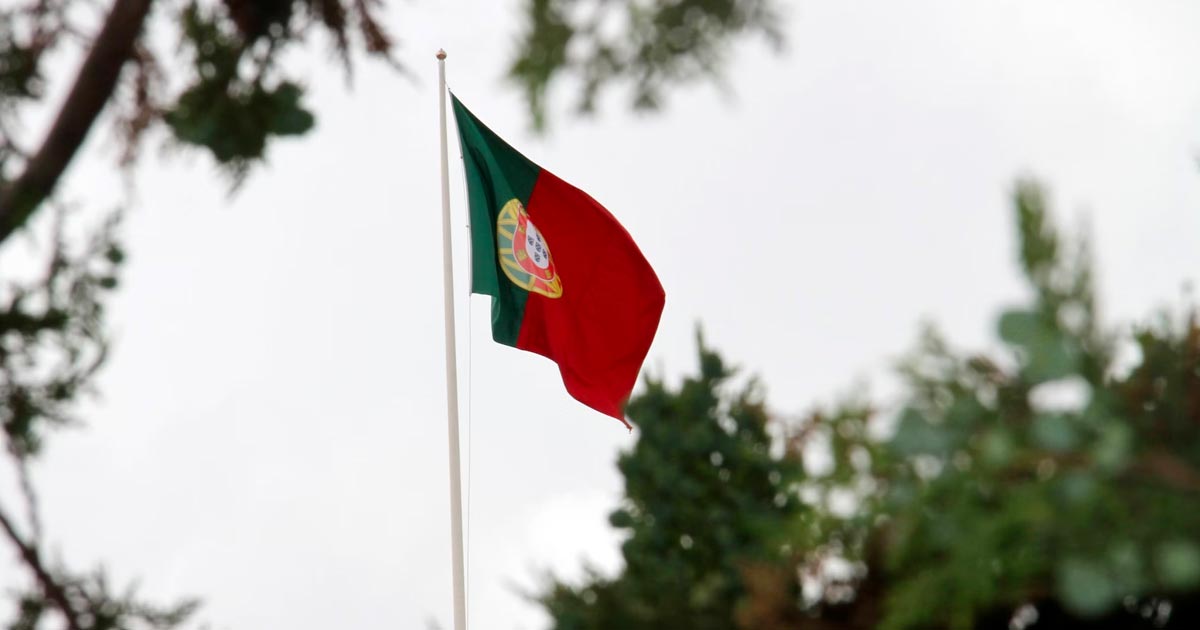
The Portuguese Parliament has approved certain amendments to the’Ordinance 94/96 of March 26, 1996, better known as the «Narcotics Act.».
The new law broadens the definition of personal use and no longer considers possession of an amount exceeding the amount authorized for 10 days« use as evidence of trafficking. This means that from now on, if the police seize substances from a user, they must prove that the substances were intended for the illicit market—and not for personal use—before charging the user with »drug trafficking.”.
The Portuguese government approved the final text of the new Narcotics Law this week, the result of a bill submitted to parliament in March by a group of lawmakers primarily from the Social Democratic Party (PSD). The law was approved by Parliament after some criticism from the judicial police and the PSD itself.
However, the final version of the text—following a lengthy review by the Committee on Constitutional Affairs, Rights, Freedoms, and Guarantees—is the result of a joint debate on the Social Democratic bill and a bill introduced in June by the Socialist Party (PS).
Expansion of the Scope of Decriminalization
The bill initially introduced by the PSD sought to correct the outdated name of the authority responsible for updating the upper limits on individual daily doses. The goal was to update the legislation to replace the now-defunct Higher Council of Forensic Medicine with the National Institute of Forensic Medicine and Forensic Sciences.
However, the parliamentary committee review and the bill proposed by the Socialist Party resulted in a final text that, in addition to updating the organization’s name, stipulates that possession of a quantity exceeding a 10-day supply is an indication that the intent may not be trafficking.
This measure is particularly important for implementing the mechanisms proposed in Ordinance No. 94/96 of March 26, 1996, which defines the diagnostic procedures and expert evaluations necessary to determine the status of substance dependence, as well as the maximum quantitative limits for each individual’s average daily dose of the plants, substances, or preparations listed in Tables I through IV appended to Decree-Law No. 15/93 of January 22, 1993, which are the most frequently consumed.






















The Brazilian medical cannabis market continues to grow

Morocco: Three Cannabis-Based Medications Approved for the Treatment of Epilepsy

Canopy Growth Receives New EU-GMP Certification to Strengthen Its Presence in Europe

Three years after legalizing medical cannabis, Albania continues to establish regulations for it

The first plant-based medical THC spray arrives in the United Kingdom

Medical Cannabis in Germany: THC Prices Vary by a Factor of 12

France already has 3,000 cannabis retail outlets. None of them are legal.

Morocco's exports of legal cannabis have expanded to 15 countries

Aurora Cannabis Doubles Its Production Capacity in Germany

Tilray is accelerating its operations in Europe thanks to a license in Portugal
-
 Business2 weeks ago
The legal cannabis market in New York exceeds 4 billion $ in revenue
-

 Cannabis in France4 weeks ago
Which countries legalized medical cannabis before France?
-
Business4 weeks ago
South Korea is preparing to begin local production of medical cannabis to meet rising demand
-
Cannabis in France4 days ago
France already has 3,000 cannabis retail outlets. None of them are legal.
-
Cannabis in Thailand4 weeks ago
From the boom in dispensaries to a purely medical approach: Thailand is revising its cannabis policy
-
Cannabis in the U.S.5 days ago
A DEA report confirms that there are no fatal cannabis overdoses
-
Cannabis and driving3 weeks ago
Medical Cannabis and Driving: New South Wales Ends Automatic Penalties for THC
-
Cannabis in France3 weeks ago
France’s Drug Policy Chief Defends Cannabis Prohibition... and Runs Into the Facts
















You must be logged in to post a comment Login