Ontario steps up efforts to combat illicit cannabis market

Ontario steps up crackdown on illegal cannabis market with an investment of $31 million over the next three years.
This funding, reaffirmed in Ontario's 2024 Economic and Fiscal Outlook, is intended to support provincial cannabis teams, the Provincial Joint Forces Cannabis Enforcement Teams (PJFCET).
Led by the Ontario Provincial Police (OPP), this specialized unit targets illegal online and offline cannabis activities, fulfilling its commitment to regulate cannabis distribution and protect licensed operators.
Earlier this year, the Toronto City Council, the capital of the Ontario province, called for an in-depth review of the provincial cannabis control act (2017) to combat the illegal cannabis trade more effectively.
The council motion explains that municipalities need increased resources and enforcement capabilities to fight these illicit operations, suggesting that new tools, stricter enforcement measures and better collaboration between municipalities and the provincial government are needed.
This demand reflects growing frustration, particularly among licensed companies who face the costs of regulatory compliance, while illegal operators benefit from fewer operational constraints.
Growth of the illicit cannabis market in Ontario
Over the past year, the Ontario market for retail sale of unlicensed cannabis has not dried up. Unlicensed stores still exist in the province, and while some of these operations have been sanctioned, enforcement efforts have been inconsistent. This disparity has sparked discontent among legal retailers, who feel that unlicensed vendors enjoy an unfair advantage.
One of these retailers, Paul McGovern, a former Toronto police officer turned cannabis entrepreneur, voiced his concerns. with Stratcann about Ontario's fragmented approach to law enforcement. He suggests that a more unified provincial strategy, similar to those of the British Columbia and New Brunswick, could help to control the illegal market more effectively.
Paul McGovern also stresses the need for public awareness, pointing out that while industry insiders and law enforcement agencies recognize the problem, the general public and the justice system may not be fully aware of the current dynamics of the illegal market.
«My sense is that not everyone in the legal system may be aware of what's going on,» says McGovern. He notes that while industry professionals are keeping a close eye on these trends, the general public and some legislators may still be looking at the situation through the lens of pre-legalization years, and not understanding the modern regulatory landscape.
Ontario's largest cannabis retailer, High Tide, which operates over 70 stores under the Canna Cabana brand, also welcomed the $31 million allocation. The CEO of High Tide, Raj Grover, expressed support for Ontario's budget commitment, anticipating that these resources will help law enforcement fight illegal cannabis advertising and promotion.
«As Canada's largest cannabis retail chain, with 72 stores and over 700 employees in Ontario, we [High Tide] welcome the commitment of the Ontario government,» tweeted Raj Grover. He added that the company was looking forward to detailed implementation plans.
This investment is also part of the company's significant revenues for Ontario from excise duty on cannabis, 75% from the federal government, or around $379 million in 2024-2025.
This source of revenue is growing steadily, from $215 million in 2021-2022 to $344 million in 2023-2024. At the same time’Ontario Cannabis Store (OCS), the province's only authorized online cannabis seller, has reported steady revenues, estimated at $225 million by 2024-2025.
An activation to raise consumer awareness
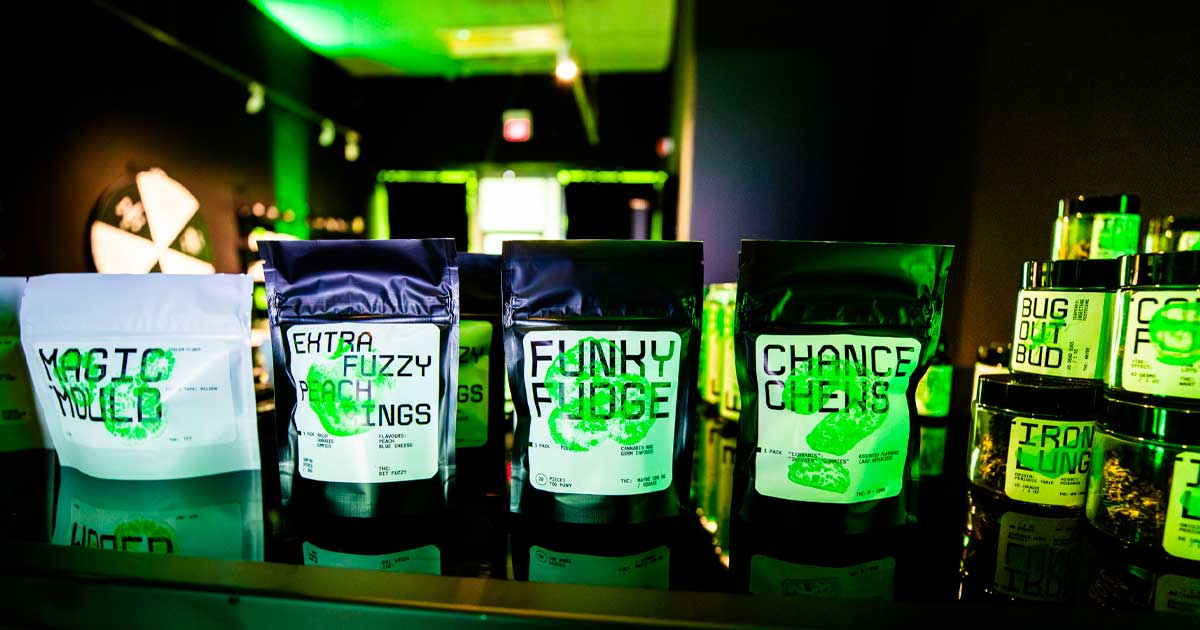
To mark the sixth anniversary of cannabis legalization, OCS and the Alcohol and Gaming Commission of Ontario (AGCO) have launched an unconventional consumer education initiative, «Buzzkill».
Designed in collaboration with Toronto agency LG2, this pop-up experience replicates an illegal dispensary, but serves only to inform the public about the risks of unregulated cannabis. Using satirical product labels such as «Pesti Cider» and «Magic Mould» (see illustration), the initiative underlines the risks of unregulated cannabis. health risks associated with illegal cannabis, which may contain contaminants such as heavy metals, toxic pesticides and inconsistent THC levels due to lack of testing.
OCS President David Lobo and AGCO CEO Karin Schnarr explained that Operation Buzzkill challenges consumer perceptions and aims to show that only licensed products are tested for safety and traceability, as indicated by Ontario's cannabis retail seal.
A recent study in Ontario found that 86% of illegal cannabis samples contained several pesticides, and 62% of Ontarians recognize that illegal products pose safety concerns. However, 46% of consumers continue to purchase cannabis from unauthorized sources, in part because of widespread confusion about where to buy illegal cannabis.
«Buzzkill» attracted attention through social media and community posters, creating a buzz around the importance of making informed choices when it comes to cannabis.























JIHE 2026: Japan’s Largest Trade Show Dedicated to Hemp and CBD Returns to Tokyo with More Than 100 Industry Players
New Caledonia: The Courts Clear the Way for the Return of CBD

The Brazilian medical cannabis market continues to grow

Morocco: Three Cannabis-Based Medications Approved for the Treatment of Epilepsy

Canopy Growth Receives New EU-GMP Certification to Strengthen Its Presence in Europe

Three years after legalizing medical cannabis, Albania continues to establish regulations for it

The first plant-based medical THC spray arrives in the United Kingdom

Medical Cannabis in Germany: THC Prices Vary by a Factor of 12

France already has 3,000 cannabis retail outlets. None of them are legal.

Morocco's exports of legal cannabis have expanded to 15 countries
-
 Business2 weeks ago
The legal cannabis market in New York exceeds 4 billion $ in revenue
-

 Cannabis in France4 weeks ago
Which countries legalized medical cannabis before France?
-
Business4 weeks ago
South Korea is preparing to begin local production of medical cannabis to meet rising demand
-
Cannabis in France4 days ago
France already has 3,000 cannabis retail outlets. None of them are legal.
-
Cannabis in Thailand4 weeks ago
From the boom in dispensaries to a purely medical approach: Thailand is revising its cannabis policy
-
Cannabis in the U.S.5 days ago
A DEA report confirms that there are no fatal cannabis overdoses
-
Cannabis and driving3 weeks ago
Medical Cannabis and Driving: New South Wales Ends Automatic Penalties for THC
-
Cannabis in France3 weeks ago
France’s Drug Policy Chief Defends Cannabis Prohibition... and Runs Into the Facts
















You must be logged in to post a comment Login