Cannabis in Ontario
Cannabis has been legal in Ontario since October 2018, when u cannabis was legalized in Canada. Canada's most populous province, Ontario initially restricted the number of cannabis dispensaries, then blew up the limitations and left cannabis entrepreneurship free, regulating it through a licensing system open to all.
Legal status of cannabis in Ontario
Legal
Cannabis is legal in Ontario for adults over 19.
Where in the world is cannabis legal?Is cannabis legal in Ontario?
In the wake of the federal legalization of cannabis in Canada, Ontario's marijuana laws are more or less in line with all national rules. Under current Ontario marijuana laws, people aged 19 and over are permitted to purchase, possess and consume cannabis for both medical and recreational purposes. Consumers are limited to 30 grams of cannabis at a time.
Under Ontario's marijuana laws, it is legal to consume cannabis in the following locations:
- Private residences
- Outdoor public places, as long as they do not violate other consumption restrictions (e.g. consuming too close to a school, hospital or care facility)
- Designated smoking areas in hotels and motels
- residential vehicles and boats, provided they meet the other legal requirements applicable to these types of vehicles
- Research laboratories and test facilities
- Other controlled and specifically designated consumption areas
However, it is still illegal to smoke or vapourize cannabis in these places:
- interior common areas
- Enclosed public spaces
- Undesignated interior spaces
- Schools or other places where children usually gather
- Hospitals, hospices, nursing homes and other care facilities
- Public spaces
- Outdoor public spaces too close to restaurants, bars, government buildings, sports and entertainment venues, recreational facilities and parks, sheltered outdoor spaces such as bus shelters, and other restricted areas.
Ontario has also instituted severe penalties for impaired driving.
Under federal guidelines, drivers face graduated penalties based on cannabis and/or alcohol concentration levels, as well as previous offenses. At the federal level, the legal limit of THC in the blood is 2 nanograms per milliliter. One nanogram corresponds to one billionth of a gram. A concentration of between 2 and 5 nanograms carries a fine of up to $1,000. A concentration of 5 nanograms or more carries a minimum fine of 1,000 $ for the first offense, imprisonment for 30 days or more for the second offense, and 120 days or more for the third offense. Penalties for drug-related accidents can range from 18 months to life imprisonment in the case of a fatal accident.
Ontario has imposed its own regulations in addition to the federal ones. These include zero tolerance for drivers 21 and under, and novice drivers of any age, for both cannabis and alcohol. Those suspected of driving under the influence or showing signs of impairment are subject to an immediate three-day suspension and a fine of 250 $. Those convicted by the court face a 30-day license suspension and fines ranging from $60 to $500, in addition to federal penalties.
Is cannabis legal in Toronto?
Yes. Since Toronto is part of Ontario, it's legal to buy, possess and consume cannabis in the city. Under Canadian marijuana laws, provinces and municipalities have the power to create their own marijuana laws. Overall, Toronto's marijuana laws comply with all Ontario marijuana laws and all national marijuana laws.
Illegal storefronts are perhaps the most notable aspect of Toronto's own rules. This is largely because the city has long been home to a large number of illegal counters that regularly sell marijuana, even though they are not legally licensed. The city's official website states that «cannabis cannot be legally purchased in any retail store in Toronto without a provincial license» and further states that the city's licensing and standards agency «continues to work in partnership with the Toronto Police Service to pursue enforcement activities against illegal cannabis stores». If you're trying to buy marijuana in Toronto, the safest bet is to buy online from the Ontario Cannabis Store or from a duly licensed brick-and-mortar marijuana store.
Where can you buy cannabis safely in Ontario?
Now that national legalization has taken effect, Ontario consumers can buy adult-use cannabis online at the Ontario Cannabis Store, a subsidiary of the Liquor Control Board. The store operates a website that explains the legalization process in Ontario.
Initially, Ontario Cannabis Store was the only legal weed retailer. But in April 2019, the first brick-and-mortar cannabis retailers went into business. As a result, it's much easier to find cannabis in Ontario than ever before. Under national rules, customers are allowed to buy a maximum of 30 grams, slightly more and one ounce, of dried cannabis at one time.
Where is it safe to consume cannabis?
Smoking recreational cannabis is permitted wherever smoking tobacco is allowed. It is legal to consume marijuana in private residences, including porches and backyards. Tenants may smoke inside units or on balconies, unless prohibited by lease or property agreements.
Failure to comply with these rules is punishable by a fine of $1,000 for a first offence and $5,000 for subsequent offences.
Universities are currently considering their approach, although many already have anti-smoking and anti-vaping policies that will extend to cannabis.
Owners and supporters of existing medical marijuana lounges hope to be allowed to license recreational marijuana.
It is illegal to consume cannabis in a vehicle or boat for all occupants, whether the vehicle is in motion or not. In a vehicle, cannabis must be stored in a sealed container that is not accessible to drivers or passengers during transport.
Possession of cannabis
Adult use
The legal age to purchase or possess cannabis in Ontario is 19, which is the same as the legal age for alcohol and tobacco. Consumers are limited to 30 grams per transaction.
The province allows adults to possess up to 30 grams, or just over an ounce, of cannabis in a public place. The national government has established equivalents for one gram of dried cannabis, or five grams of fresh cannabis; 15 grams, or half an ounce of edibles; 70 milliliters, or 2.35 fluid ounces, of liquid; 0.25 grams of concentrate; and one plant seed. There is no limit to the amount of marijuana that can be stored in a home.
Cannabis for medical purposes
Under federal law, medical marijuana patients are allowed up to 150 grams, or 5.3 ounces, of dried marijuana or its equivalent, or 30 times the daily dose prescribed by a licensed health care professional.
Is home growing permitted in Ontario?
Ontario follows federal guidelines and allows residents to grow up to four plants per household, regardless of the number of adult occupants. These limits are distinct from approved and licensed medical marijuana home cultivation, which is governed by national laws.
Medical cannabis in Ontario
Thousands of Canadians are authorized by the federal government to possess and consume cannabis for medical purposes. Canadians wishing to use marijuana for medical purposes must qualify for the Access to Cannabis for Medical Purposes Regulations (ACMPR), which came into effect on August 24, 2016.
Recipients must provide medical documentation confirming diagnosis by a medical professional. Patients must not be convicted of a marijuana-related offense and can only be registered once at a time.
Eligibility requirements
In general, patients can benefit from medical marijuana in two categories. The first is compassionate end-of-life care, the relief of pain symptoms associated with illness and injury, or the treatment of side effects from cancer or HIV/AIDS drugs.
The second category concerns patients with persistent debilitating symptoms. Among the illnesses listed by Health Canada as potentially eligible are the following:
- Alzheimer's disease
- Anxiety
- Arthritis
- Attention deficit disorder and attention deficit hyperactivity disorder (ADD/ADHD)
- Back and neck disorders
- Brain damage
- Cancer
- Chronic nausea
- Chronic pain
- Colitis
- Crohn's disease
- Depression
- Eating disorders
- Epilepsy
- Fibromyalgia
- Gastrointestinal disorders
- Hepatitis C
- HIV/AIDS
- Irritable bowel syndrome
- Renal insufficiency, including patients on dialysis
- Migraines
- multiple sclerosis
- Muscle spasms
- Muscular dystrophy
- Parkinson's disease
- Post-traumatic stress disorder (PTSD)
- Sexual dysfunction
- Sleep disorders
- Road accidents
Application procedure
Information on eligibility and application is available on the Canadian government's medical marijuana website.
Orderlies
Licensed caregivers may possess fresh or dried cannabis or cannabis oil, and may transfer or administer the substance. They may also transfer substances to a person who is responsible for the patient under their professional treatment.
Latest news on Cannabis in Ontario
-

 2 years ago
Ontario steps up efforts to combat illicit cannabis market
Ontario is stepping up its crackdown on the illegal cannabis market with an investment of $31 million over the next three years. The funding,...
-

 Business3 years ago
Ontario allows retailers to own up to 150 cannabis stores
Ontario plans to double the number of cannabis stores a retailer can operate, from 75 to 150, and proposes to ban the cultivation...
-

 Business3 years ago
Ontario Cannabis Store to reduce margins to better combat illicit trade
The Ontario Cannabis Society (OCS), the cannabis regulatory body of the Canadian province of Ontario, wholesaler and exclusive distributor of private...
-

 Business4 years ago
Canadians bought 3.1 billion euros worth of «recreational» cannabis in 2022
Cannabis retail sales in Canada hit a new monthly record in December, totaling over 295 million euros across the country....
-

 Cannabinoids4 years ago
Two Canadian provinces halt sales of delta-8-THC products
Ontario and British Columbia, Canada's two largest cannabis markets, have decided to suspend the sale of products containing delta-8 THC. Ontario...
-

 Recreational cannabis4 years ago
4 years ago, Canada legalized cannabis
If there was one figure to remember from the 4 years of cannabis legalization in Canada, it would probably be that 68% of consumers are now...
-

 Business4 years ago
Uber Eats and Leafly team up to deliver cannabis to Torontonians
Uber Eats will begin offering cannabis deliveries for three Toronto cannabis stores starting Monday, October 17. The announcement, made on...
-

 Cannabis in the U.S.4 years ago
German health commission goes on a weed tour of the U.S. and Canada
According to a very official press release, the German Bundestag is sending eight members of the Committee on Public Health from all the Bundestag's parliamentary groups to...
-

 Cannabis in New York4 years ago
Quick Hit August 2022: what we've missed in recent weeks
As regular Newsweed consumers will have noticed, we've been on hiatus for the past 2 weeks. But since there's no news to wait for us, here's a...
-

 4 years ago
Ontario Cannabis Store suffers data breach
Following various online comments from cannabis vendors in Ontario published in April, the Ontario Cannabis Bureau (OCS), the only...
-

 Recreational cannabis5 years ago
Study: The price of weed is lower in US states with legal retail outlets
Researchers at the University of Waterloo in Ontario, the University of Southern California in Los Angeles and the RAND Corporation have studied the prices...
-

 Recreational cannabis5 years ago
Ontario makes home delivery of cannabis permanent
The Alcohol and Gaming Commission of Ontario (AGCO) has announced that the provincial government has given the green light for tobacco retailers to...
-

 Business5 years ago
Ontario: Nearly 50 % of cannabis purchased was on the legal market in 2021
'Tis the season to take stock in Canada. After Quebec, which released a report stating that 70% of cannabis sales are now made on...
-
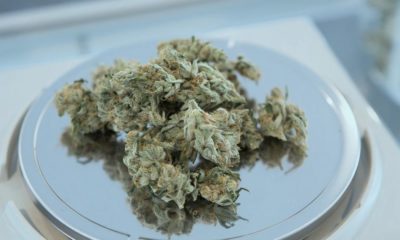
 Business6 years ago
Ontario to double its number of cannabis stores again
The Alcohol and Gaming Commission of Ontario (AGCO) has announced that it will once again double the pace at which its retail stores open...
-

 Autism6 years ago
Study: cannabis use during pregnancy associated with autism
A recent study in Canada has found a link between cannabis use during and a child's risk of developing autism. «Women who...
-
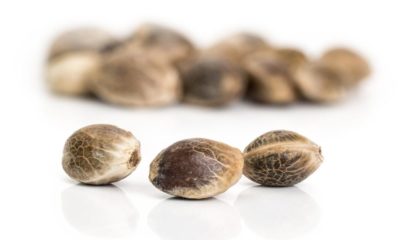
 Business6 years ago
Ontario wants to sell more cannabis seeds
The Ontario Cannabis Store (OCS), Ontario's state-run cannabis retailer, has announced its intention to sell a wide variety of cannabis...
-

 Business7 years ago
Canada: the federal government comes to the rescue of cannabis companies
Canadian cannabis companies affected by the consequences of the coronavirus pandemic will be eligible for federal emergency assistance. The Business Development Bank of Canada...
-

 7 years ago
Ontario will no longer limit the number of cannabis stores in 2020
After two rounds of lottery licensing and a number of delayed cannabis store openings, Ontario has finally decided to move on to a...
-

 7 years ago
Canada: 908 million $ of cannabis purchased since legalization one year ago
Canadians spent an estimated $908 million (€620 million) on non-medical cannabis, or 31$ per Canadian major, in the first...
-
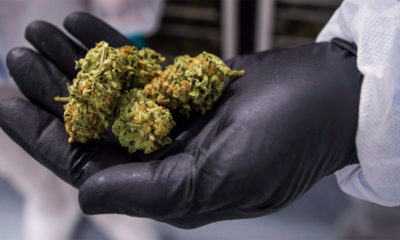
 Business7 years ago
Ontario lost $42 million selling cannabis last year
According to official documents released last Friday, the Ontario Cannabis Retail Corp. (OCRC), Ontario's cannabis regulator, lost $42 million during...





JIHE 2026: Japan’s Largest Trade Show Dedicated to Hemp and CBD Returns to Tokyo with More Than 100 Industry Players

New Caledonia: The Courts Clear the Way for the Return of CBD

The Brazilian medical cannabis market continues to grow

Morocco: Three Cannabis-Based Medications Approved for the Treatment of Epilepsy

Canopy Growth Receives New EU-GMP Certification to Strengthen Its Presence in Europe

Three years after legalizing medical cannabis, Albania continues to establish regulations for it

The first plant-based medical THC spray arrives in the United Kingdom

Medical Cannabis in Germany: THC Prices Vary by a Factor of 12

France already has 3,000 cannabis retail outlets. None of them are legal.
