
The Marie-Jeanne of Colorado

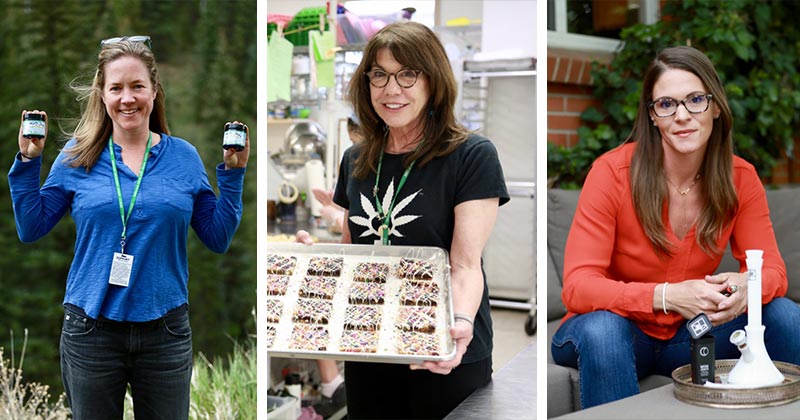
In the United States, where cannabis is legal in several states, many women have started their own small businesses. A report from Colorado.
In Colorado, everyone knows Jane West. At least everyone in the cannabis industry does. When the state became one of the first two in the U.S. to legalize marijuana in 2012, this mother, who worked in event planning, began organizing paid parties in her spare time where cannabis replaced alcohol. The media rushed to cover the events.
But a success story often begins with a setback: after seeing Jane West smoking on television, her boss fired her. Now unemployed, she reached out to other women in this burgeoning industry to launch what has become the world’s largest network of female entrepreneurs in the marijuana industry: Women Grow. «More than 15,000 people have attended our conferences,» she says.
This network is crucial, especially given that the cannabis industry in the United States has the highest level of gender parity. Women hold leadership positions in 36% of companies, compared to 22% in other sectors, according to a 2015 study published in Marijuana Business Daily magazine.
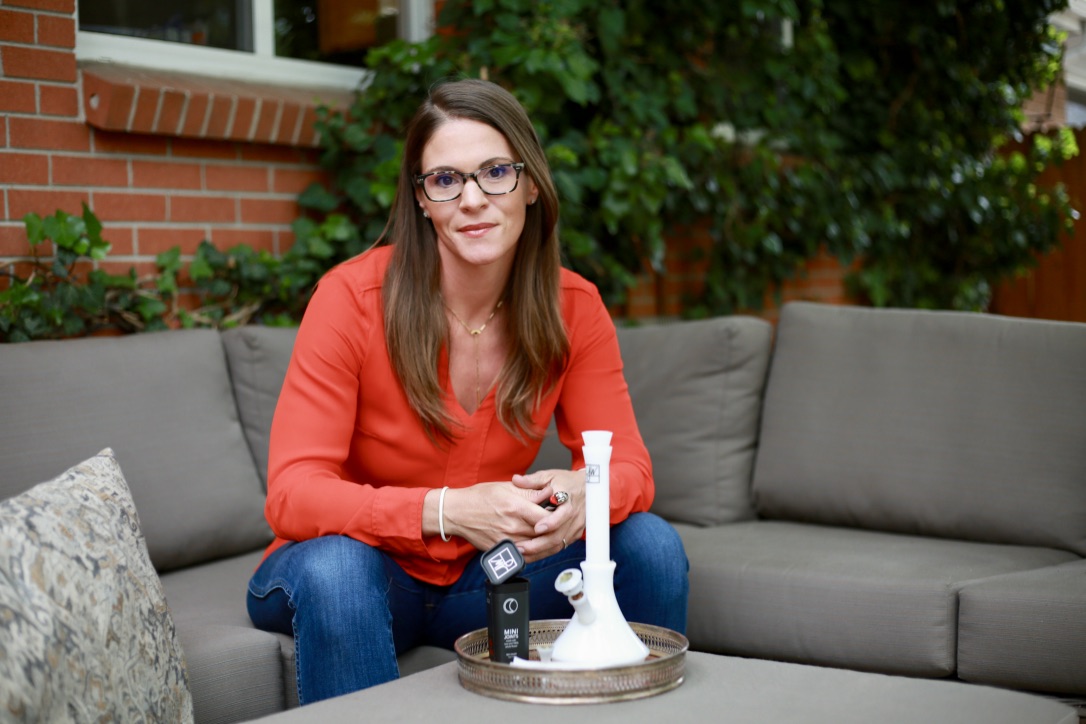
Years went by, and Jane West, seeing her friends start their own businesses, decided to do the same. From her home in Denver, she created a brand of all kinds of accessories: pipes, bongs, and small kits for personal use. The brand’s name? Jane West, of course. Her target audience: «Myself!» That is, women who want to replace alcohol with recreational cannabis.
That’s why her product lines are so chic and minimalist, with «total functionality» in mind. «The bong is just the right size for your throat,» she points out. «And it’s discreet—you can even put it on the mantel as a decoration!»
Jane West also plans to sell CBD-infused coffee. She has already raised $1.2 million for her new product line, which will be distributed as far as Canada. And she is keen to point out that 80% of her investors are women or members of minority groups.
«We cannot live in a country where 50% of the people are women and 25% are members of racial minorities without the latter being represented in positions of power.»
Jane West is ambitious: «My goal is to build a billion-dollar company,» she says. She even sees herself writing a book or a TV series to recount her adventures as a pioneer. «I’m kind of like the Anthony Bourdain of weed,» she jokes.
$1.5 billion in revenue in 2017
In Colorado, the cannabis industry has boomed in recent years, generating $1.5 billion in revenue in 2017 (two-thirds from recreational use, one-third from medical use). This has been a real windfall for the state, which collected $247 million in taxes.
In Telluride, Dahlia Mertens, the owner of Mary Jane’s Medicinals, has seen her revenue grow by an average of 40% per year solely through word of mouth: «We’re one of the most popular brands on the market. We’ve won numerous awards.»
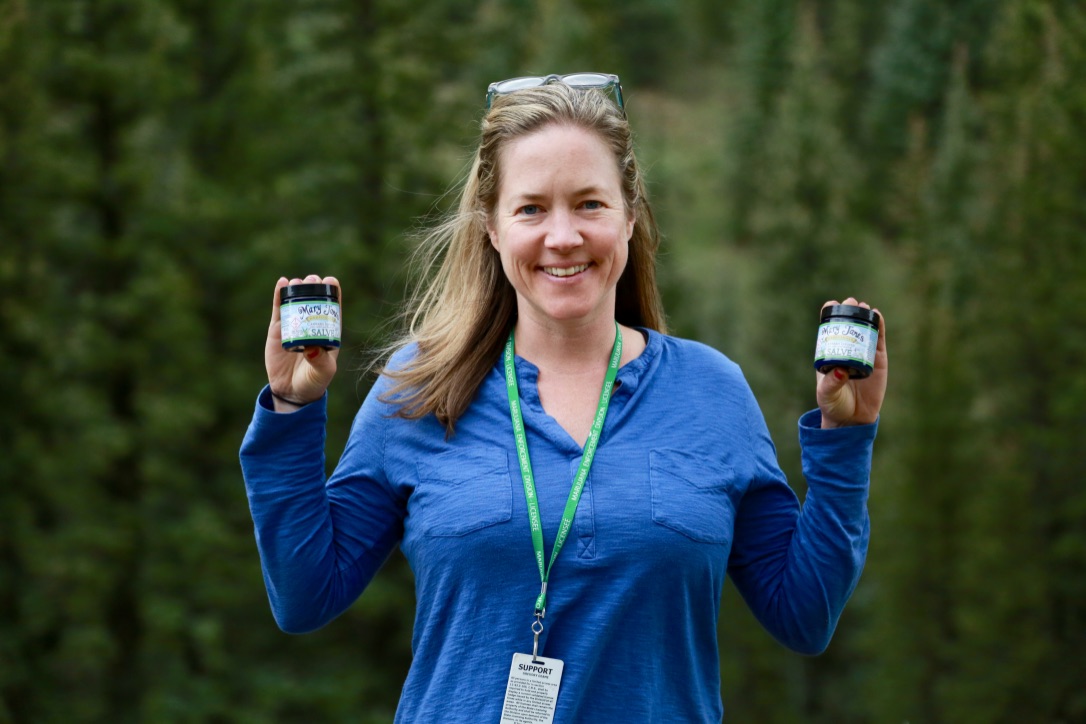
She, too, started out with almost nothing—just a few thousand dollars in savings. Her company makes skincare products that relieve pain and soothe burns. Dahlia knows Jane West well because she, too, is part of Women Grow, a network that helped her a great deal when she was just starting out.
«This industry is brand-new and therefore hasn’t historically been dominated by men. Women are writing the rules of the game,» she explains. They all dream of seeing cannabis legalized at the national level one day so they can expand their market.
But that day is still a long way off. Even in Colorado, there are still economic obstacles, particularly the constantly changing regulations. It’s also still difficult for companies to find a bank. That’s why you see the little signs that say «cash only»found in most stores.".
Karin Lazarus, owner of Sweet Mary Jane in Boulder, explains that she is on the waiting list of a bank that is willing to do business with the industry but charges very high fees. Together with her daughter and ten employees, she makes marijuana-infused cakes and candies.
«I got started with an oven I bought for $600 at the Salvation Army. I was good at baking, but I didn’t know how to measure out the cannabis at first. I was surprised that success came so quickly!»
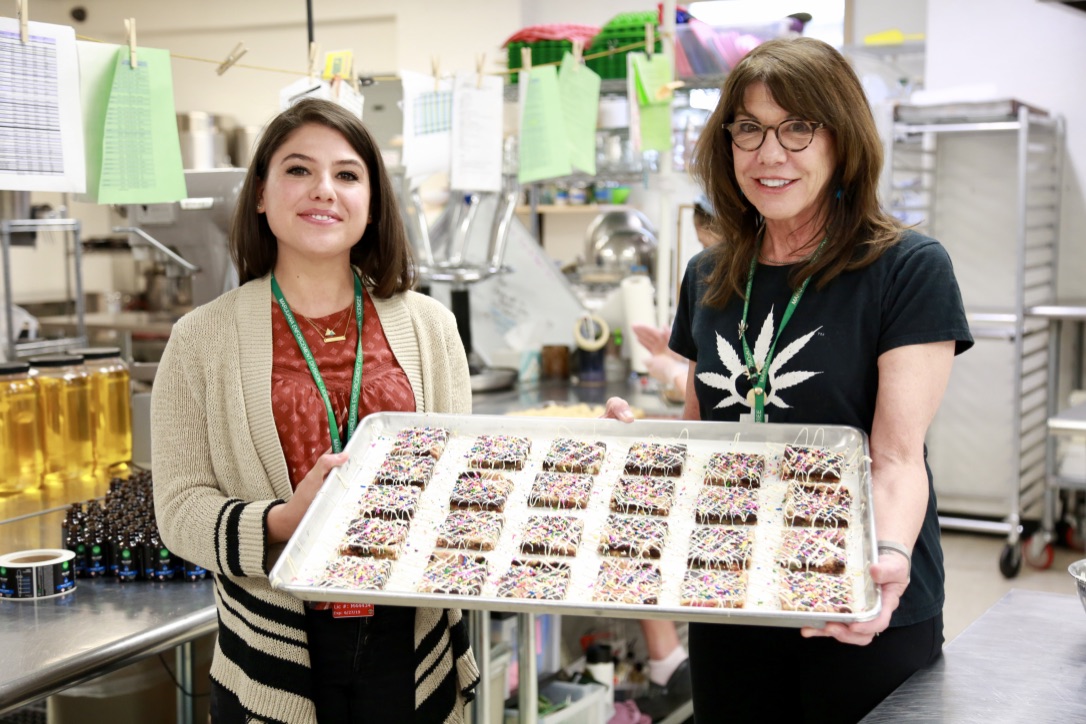
Some 300 dispensaries now sell her cookies and candies. She also delivers prescription products. While she may not necessarily realize in her day-to-day life just how significant a role women play in this industry, she has a theory about how they do business.
«I get the impression that women are a little more compassionate—not that men aren’t. But I always try to help my sick clients who can’t afford to pay me, for example. It might also be less intimidating to deal with a woman: for my generation, cannabis still has a dangerous reputation.»
Yona Helaoua, in Colorado







CBD is said to promote athletic recovery, without improving performance

294 cannabis clubs in Chile: a booming movement with uneven distribution

Chronic Sciatica: New York Approves First Clinical Trial of a THC-Based Medication

United States: The DEA is accelerating the integration of medical cannabis at the federal level

Florida is nearing one million patients using medical cannabis

Uruguay Revives Its Plan to Allow Tourists to Legally Access Cannabis

In Brazil, researchers are developing an innovative CBD eye drop

Autism: Medical Cannabis Is Linked to Reduced Anxiety

The $28 billion U.S. hemp market remains under threat

Jamaica Eases Small Farmers' Access to the Cannabis Market
-
 Business5 days ago
The legal cannabis market in New York exceeds 4 billion $ in revenue
-

 Cannabis in France2 weeks ago
Which countries legalized medical cannabis before France?
-
Business2 weeks ago
South Korea is preparing to begin local production of medical cannabis to meet rising demand
-
Cannabis in the Netherlands4 weeks ago
One year after the launch of the Dutch cannabis experiment, the first trends are emerging
-
Cannabis in Thailand2 weeks ago
From the boom in dispensaries to a purely medical approach: Thailand is revising its cannabis policy
-
Cannabis in France4 weeks ago
French medical cannabis remains stalled at the Ministry of Health
-
Cannabis in Argentina3 weeks ago
Argentina Opens Its Market to Hemp Flowers Containing 1% of THC
-
Cannabis and driving2 weeks ago
Medical Cannabis and Driving: New South Wales Ends Automatic Penalties for THC
















You must be logged in to post a comment Login