
Emmanuel Macron announces increase in fixed fine for drug use to €500

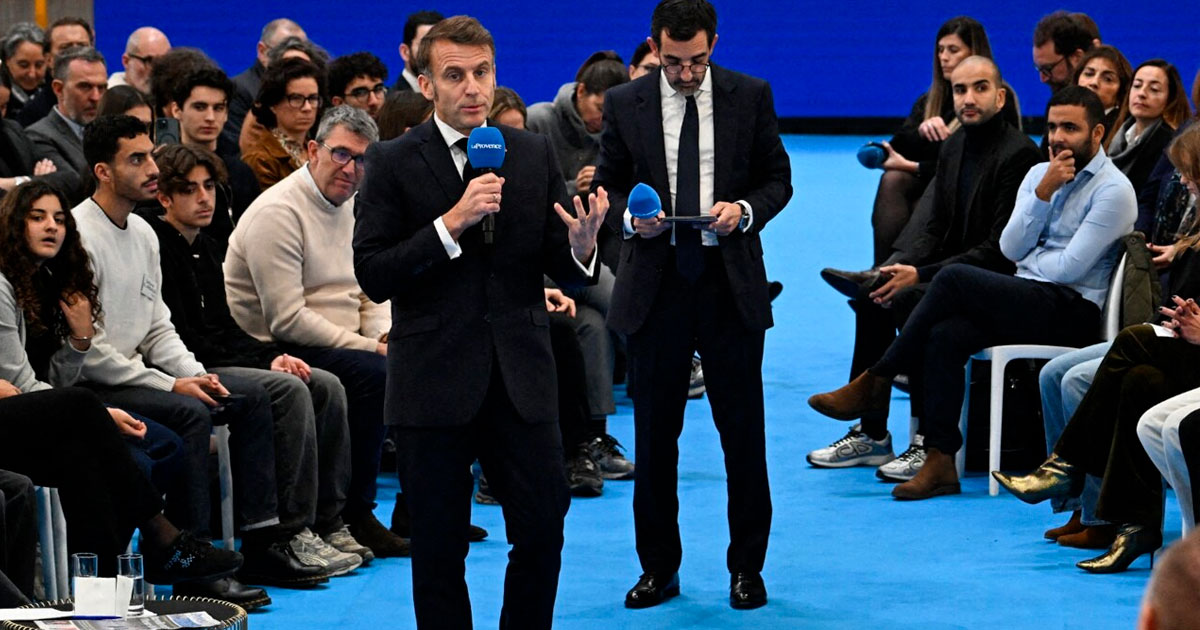
During a visit to Marseille, Emmanuel Macron announced a significant tightening of French policy toward drug users, revealing that the’fine forfaitaire délictuelle (AFD) would go from €200 to €500.
The announcement was made on Tuesday, December 16, during a discussion with readers of the regional newspaper Provence, against a backdrop of heightened tensions stemming from drug trafficking and violence in the city.
«500 euros, because we have to hit them where it hurts—in their wallets—because taking drugs is no laughing matter,» said the President of the Republic. This measure represents a significant increase compared to the current framework, under which the fine can be reduced to 150 euros for prompt payment or raised to 450 euros for late payment. The new cap aims to strengthen the policy’s deterrent effect.
The Link Between Consumers and Urban Violence
For Emmanuel Macron, the responsibility for the drug-related violence is not solely the responsibility of criminal networks. He explicitly identified drug users as one of the driving forces behind the violence affecting certain neighborhoods.
«None of this would happen if there weren’t people buying cocaine and hashish,» he said, adding: «I’m tired of seeing, on the one hand, young people we mourn for, and on the other, young people who think it’s fun to use drugs—usually from different social backgrounds.»
The president emphasized the symbolic significance of the measure, repeating, «Using drugs is no fun,» and warning that drug use fuels criminal networks «that are destroying our cities and neighborhoods.».
The announcement was made on a highly symbolic day. Before his public engagements, Emmanuel Macron went at Mehdi Kessaci's grave at the Saint-Henri Cemetery, north of Marseille. The 20-year-old man was shot six times in November in what investigators believe was likely a «crime of intimidation» intended to silence his brother, an anti-drug trafficking activist Amine Kessaci.
The president said he was acting with a «fighting spirit,» noting that the fight against the drug trafficking had been promoted to the rank of national priority, just as much as the fight against terrorism. He emphasized the Increased government funding for Marseille, including the Establishment of the Office for the Fight Against Drug Trafficking (OFAST), in an attempt to make people forget the OCRTIS scandal, and the deployment of additional police forces.
According to the head of state, efforts in the area of security have already borne fruit. «We have increased our resources,» he said, citing the 500 additional police officers assigned to Marseille in recent years and noting that the number of drug dealing spots has been cut in half, while surveillance rates have tripled.
At the top of the criminal hierarchy, the president promised to step up efforts.
«We’re shaking up the top of the network by working together to apprehend the leaders,» he said, also referring to the high-security prison wings designed to isolate major traffickers. He also announced upcoming international visits to seek cooperation from countries where the network’s leaders are located, with the aim of seizing assets and extraditing suspects.
While France is stepping up its enforcement efforts, the debate remains open: stricter financial penalties, even as that the AFDs are not paid, Can measures targeting consumers truly curb drug trafficking, or will they merely add another layer to an already strained relationship between public authorities and vulnerable populations?




















France’s Drug Policy Chief Defends Cannabis Prohibition... and Runs Into the Facts

Cannabis and the Adolescent Brain: French Scientists Make a Key Discovery

EFSA Gives Initial Approval for Synthetic CBD; Natural Extracts Still Pending

Federal Cannabis Reform Once Again on Hold in the United States

Contest: Win a trip to Quebec to experience the hemp harvest firsthand

Bedrocan on Hold Amid Uncertainty Over Medical Cannabis

Newsweed Launches Its Own AI
A new tax of 0.5% could disrupt the hemp industry in Canada

Medical Cannabis and Driving: New South Wales Ends Automatic Penalties for THC

China's Yongji Health Takes Control of Tasmanian Botanics
-
 Cannabis and driving3 weeks ago
Cannabis and CBD: French Drivers Can Now Lose Their License Even Without a Positive Test Result
-

 Cannabis in France1 week ago
Which countries legalized medical cannabis before France?
-
Cannabis in France4 weeks ago
Cannabis Legalization: The LFI Bill Has a Major Problem—THC
-
Cannabis in the Netherlands3 weeks ago
One year after the launch of the Dutch cannabis experiment, the first trends are emerging
-
Business1 week ago
South Korea is preparing to begin local production of medical cannabis to meet rising demand
-
Cannabis in Thailand1 week ago
From the boom in dispensaries to a purely medical approach: Thailand is revising its cannabis policy
-
Cannabis in Argentina2 weeks ago
Argentina Opens Its Market to Hemp Flowers Containing 1% of THC
-
Cannabis in France3 weeks ago
French medical cannabis remains stalled at the Ministry of Health












You must be logged in to post a comment Login