
The British medical cannabis market is expected to exceed 140,000 patients by 2026


The medical cannabis in the UK continues to expand, with the number of patients expected to exceed 140,000 by the end of 2026.
According to the latest UK Medical Cannabis Market Update 2026 According to a report published by Prohibition Partners, imports, product availability, and patient access all reached record levels in 2025, further solidifying the United Kingdom’s position as one of the medical cannabis markets the fastest-growing in Europe, after Germany.
The report highlights a market that has developed largely outside the public healthcare system, driven instead by private clinics and telemedicine platforms. At the same time, the growing use of imported products—particularly those from Canada—is reshaping the competitive landscape for domestic producers.
Medical cannabis imports double again
In 2025, the United Kingdom imported 30,061 kilograms of cannabis-based medical products (CBPM), or more than double the 14,992 kilograms imported in 2024.
This marks the second consecutive year in which imports have more than doubled, reflecting the growing number of patients seeking access to medical cannabis treatments and the increasing availability of products.
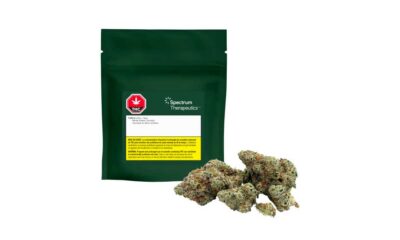
According to Prohibition Partners, the number of medical cannabis products available to patients has risen from 374 to 818 in just one year. This expansion includes dried flowers, extracts, and vaporizer products, giving patients access to a wider range of formulations and price points.
Dried flowers remain the dominant product format, accounting for about 80% of available products, although spray products have seen particularly strong growth as suppliers seek to differentiate themselves in an increasingly competitive market.
More than 140,000 patients are expected this year
Prohibition Partners estimates that the number of patients using medical cannabis in the United Kingdom will exceed 140,000 in 2026, up from approximately 100,000 patients the previous year.
"It is no longer a niche, marginal market," said Alexander Khourdaji, a senior analyst at Prohibition Partners and the report's lead author.
“In the space of two years, the United Kingdom has become one of the fastest-growing medical cannabis markets in the world, and most people have no idea that this is happening on such a scale. Canada now supplies the vast majority of the cannabis prescribed to British patients, and the number of people with access to treatment is growing faster than almost anyone had anticipated.”
Unlike many European healthcare systems, access to medical cannabis in the United Kingdom remains largely concentrated in the private sector. More than 40 private clinics operate across the country, with telemedicine playing a central role in patient recruitment and care, where few conventional doctors have been trained.
The report estimates that approximately 80% of prescriptions are now issued by fewer than a dozen major telemedicine platforms, reflecting trends already observed in countries such as Germany, Poland, and Australia.
Canada Dominates the British Supply Chain
Canadian exports to the United Kingdom increased by more than 560% between 2024 and 2025, rising from 2.58 metric tons to 17.07 metric tons. When including products shipped via intermediary countries such as Portugal, Prohibition Partners estimates that Canada now supplies between 70% and 80% of all medical cannabis entering the British market.
The rise of Canadian producers has largely come at the expense of other exporting countries. Spain, which still supplied more than half of the British market in 2023 had fallen to just 11% of imports by the end of 2025. Other established exporters, notably Australia and North Macedonia, also saw their market shares decline.
Canada’s dominant position can be attributed in large part to its large-scale production capacity, its low costs, and the international expansion strategies implemented by legal producers facing stiff competition in their domestic market.
National culture is struggling to keep up
As the UK farming sector continues to grow, domestic producers are losing market share to the faster growth of imports.
According to the report, medical cannabis grown in the United Kingdom accounted for approximately 14% of the total supply in 2025. Although production volumes are expected to more than triple by 2030, the domestic market share could decline to about 9% as imports continue to rise.
“British growers are increasing their production year after year,” explained Mr. Khourdaji. “The reason this percentage is declining is simply that imports are growing faster than domestic production—and from a much larger base. It’s possible to significantly increase production volumes while still seeing one’s share of the total supply decline.”
One of the main obstacles facing British growers is processing capacity. Although companies such as Glass Pharms, Dalgety, and Celadon are expanding their cultivation operations, no domestic producer currently holds all the necessary authorizations to process its harvest directly into finished medical products.
Growers therefore depend on a small number of specialized processors to convert the raw materials listed in Annex 1 into the medicines listed in Annex 2, which results in additional costs and operational constraints.
"The challenge lies in the fact that obtaining regulatory approvals for these facilities and then bringing them online takes time and is costly," said Mr. Khourdaji.
Prices continue to fall
As competition intensifies, prices across the market continue to fall. The average price of medical cannabis flowers has dropped from £7.10 per gram to £6.80 per gram over the past year. Vaping products have seen even steeper declines, with prices falling by more than 20%.
Prohibition Partners expects this trend to continue through the end of the decade, forecasting that average flower prices could be around £6 per gram by 2030.
For producers, the combination of falling prices and increasing competition is putting growing pressure on margins. Companies able to integrate their growing and processing operations should be better positioned to maintain profitability as the market matures.
Regulatory oversight is intensifying
The rapid expansion of the medical cannabis sector in the United Kingdom is also drawing increased attention from regulatory authorities.
The Care Quality Commission (CQC) has already expressed concerns about oversight and prescribing practices at certain private clinics. Meanwhile, the Advisory Council on the Misuse of Drugs (ACMD) is expected to conduct a formal review of the sector in 2026 or 2027.
Telemedicine practices should be at the heart of this review, given their central role in patients' access to care.
The findings of this review could prove decisive for the future development of the market. Other countries have demonstrated just how significantly changes to prescribing rules can impact patient numbers and sales volumes.
For now, however, the United Kingdom remains one of the most dynamic medical cannabis markets in Europe. With a rapidly growing patient population, steadily rising imports, and an increasingly wide range of products, the sector appears poised for continued growth, even as issues related to regulation, domestic production, and long-term sustainability take on greater importance.






















Newsweed Launches Its Own AI

A new tax of 0.5% could disrupt the hemp industry in Canada

Medical Cannabis and Driving: New South Wales Ends Automatic Penalties for THC

China's Yongji Health Takes Control of Tasmanian Botanics

Autism and Cannabis: Results from the First Placebo-Controlled Trial of NTI164

Which countries legalized medical cannabis before France?

From the boom in dispensaries to a purely medical approach: Thailand is revising its cannabis policy

South Korea is preparing to begin local production of medical cannabis to meet rising demand

In the United States, cannabis use among high school students has reached an all-time low

Medical cannabis use surges by 64 % in Denmark
-
 Cannabis and driving3 weeks ago
Cannabis and CBD: French Drivers Can Now Lose Their License Even Without a Positive Test Result
-

 Cannabis in France3 days ago
Which countries legalized medical cannabis before France?
-
Cannabis in France3 weeks ago
Cannabis Legalization: The LFI Bill Has a Major Problem—THC
-
Cannabis in the Netherlands2 weeks ago
One year after the launch of the Dutch cannabis experiment, the first trends are emerging
-
Business3 days ago
South Korea is preparing to begin local production of medical cannabis to meet rising demand
-
Cannabis in France2 weeks ago
French medical cannabis remains stalled at the Ministry of Health
-
Cannabis in Argentina1 week ago
Argentina Opens Its Market to Hemp Flowers Containing 1% of THC
-
Business2 weeks ago
The United Kingdom Is Moving Closer to a Regulated CBD Market













You must be logged in to post a comment Login