
The Ethics Committee of the Ligue contre le Cancer declares itself in favor of medical cannabis

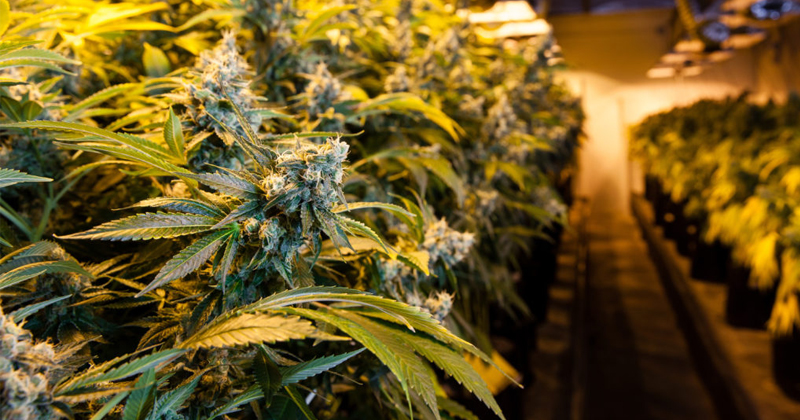
In places where medical cannabis is legal (and available), one of the conditions that commonly warrants its prescription is cancer—specifically, the side effects of cancer treatment, such as nausea, cachexia, and chronic pain.
After a member of the public raised the issue with the Ethics and Cancer Committee, ruled that The fact that cancer patients in France were unable to use cannabis for medical treatment was not ethically justified. The Ethics and Cancer Committee is an independent advisory body created by the Ligue contre le Cancer in 2008. It is composed of a panel of experts that may be consulted or may take up on its own initiative «any ethical issue related to cancer.».
The Committee had received a case from a 27-year-old woman who had been diagnosed with cancer and had undergone all kinds of treatments and invasive procedures that left her with numerous aftereffects, including severe chronic pain. Since she had difficulty tolerating traditional painkillers, the medical community was unable to relieve her pain. She therefore turned to cannabis, which reportedly led to a significant improvement in her quality of life: relief from pain and nausea, and an increased appetite. She thus questioned the Committee about the ethical nature of the ban on medical cannabis in France, which she personally views as a denial of care by the authorities.
Medical Cannabis in France
Medical cannabis isn’t strictly illegal in France, but it might as well be. Law No. 70-1320 of December 31, 1970, made cannabis illegal, but its therapeutic use has been legal since 2013. Sativex was thus granted marketing authorization (MA) in 2014 for the treatment of multiple sclerosis. However, it is not available in France due to a disagreement over the price between the government and the pharmaceutical company that markets the drug.
Another medication, dronabinol, may be granted a temporary use authorization (ATU) on a patient-specific basis for neuropathic pain after all other treatments have failed, for nausea and vomiting associated with cancer chemotherapy, and for anorexia in patients with HIV. Between 2006 and 2013, only 508 ATUs were issued.
Recently, the National Agency for the Safety of Medicines and Health Products (ANSM), an agency affiliated with the Ministry of Health convened a temporary specialized scientific committee (CSST) tasked with assessing «the relevance and feasibility of making medical cannabis available in France.» The committee in question is to review the existing scientific literature on medical cannabis and gather testimonials from patients and patient advocacy groups who use cannabis for treatment. The committee will issue a preliminary report by the end of the year; if it determines that making medical cannabis available is appropriate, it will then have to define the legal framework governing access to it.
The case for
At present, the scientific evidence on medical cannabis is limited, inconsistent, and generally based on observational studies rather than controlled clinical trials. Despite these methodological challenges, a 2017 report by the U.S. National Academies of Sciences, Engineering, and Medicine that lists more than 10,000 studies on the subject concluded that there is substantial evidence of cannabis’s therapeutic efficacy in the treatment of chronic pain and as an antiemetic. According to the report, there is insufficient evidence to conclude that it is effective in treating cachexia but a recent study on rats suggests that cannabis triggers the hormone responsible for the feeling of hunger and can therefore be used to regulate eating behaviors.
From an ethical standpoint, the Committee concluded that there was «no reason to oppose the use of cannabis by patients who report benefiting from it, even if that benefit has not been demonstrated using the most rigorous scientific methodologies .» As for patients’ testimonials, the Committee notes that, although they have no scientific value, they must be heard and taken into account.
Arguments against
The arguments against cannabis use relate to its psychoactive properties, which can cause, among other things, cognitive, motor, or psychiatric disorders. The Committee notes, however, that these disorders are generally observed when cannabis is consumed in its smokable form. The toxicity of the smoke is another factor that speaks against this method of consumption. Another argument is that the therapeutic use of cannabis may encourage its recreational use and misuse by people who are not ill. However, according to the Committee: «This does not negate the benefits reported by patients who use cannabis.».
According to the Committee, these arguments are not sufficient to justify banning the therapeutic use of cannabis: «None of the possible arguments against such use appeared to the Committee to be sufficient to warrant continuing the ban. In particular, it could not identify any proven adverse effects serious enough to justify opposing such use by adults suffering from a serious, potentially life-threatening illness who report deriving benefit from it.».
Finally, the Committee recommends that health authorities conduct evaluations to more rigorously verify whether cannabis has therapeutic properties in the treatment of cancer and to determine the most appropriate doses and methods of use (route of administration, dosage). In a sense, the Committee is appealing to the ethical responsibility of health authorities to regulate a practice that currently relies on criminal networks and exposes patients to the constant risk of criminal prosecution.














CBD is said to promote athletic recovery, without improving performance

294 cannabis clubs in Chile: a booming movement with uneven distribution

Chronic Sciatica: New York Approves First Clinical Trial of a THC-Based Medication

United States: The DEA is accelerating the integration of medical cannabis at the federal level

Florida is nearing one million patients using medical cannabis

Uruguay Revives Its Plan to Allow Tourists to Legally Access Cannabis

In Brazil, researchers are developing an innovative CBD eye drop

Autism: Medical Cannabis Is Linked to Reduced Anxiety

The $28 billion U.S. hemp market remains under threat

Jamaica Eases Small Farmers' Access to the Cannabis Market
-
 Business6 days ago
The legal cannabis market in New York exceeds 4 billion $ in revenue
-

 Cannabis in France2 weeks ago
Which countries legalized medical cannabis before France?
-
Business2 weeks ago
South Korea is preparing to begin local production of medical cannabis to meet rising demand
-
Cannabis in the Netherlands4 weeks ago
One year after the launch of the Dutch cannabis experiment, the first trends are emerging
-
Cannabis in Thailand2 weeks ago
From the boom in dispensaries to a purely medical approach: Thailand is revising its cannabis policy
-
Cannabis in France4 weeks ago
French medical cannabis remains stalled at the Ministry of Health
-
Cannabis in Argentina3 weeks ago
Argentina Opens Its Market to Hemp Flowers Containing 1% of THC
-
Cannabis and driving2 weeks ago
Medical Cannabis and Driving: New South Wales Ends Automatic Penalties for THC

















You must be logged in to post a comment Login