USA: Epidiolex is no longer a controlled substance

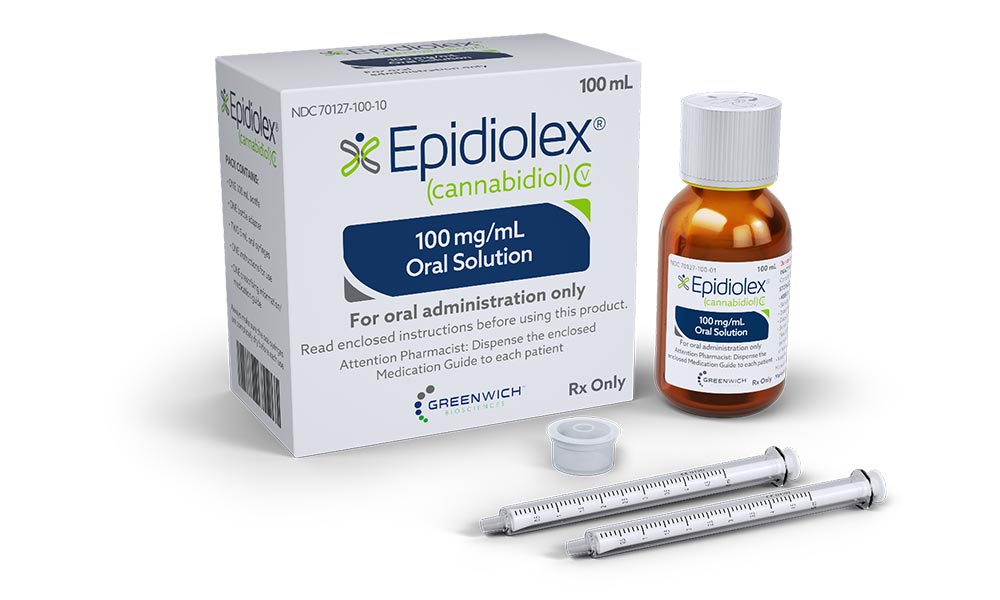
GW Pharmaceuticals announced on Monday that Epidiolex, a cannabidiol (CBD) used in the treatment of epilepsy, had been removed from Schedule V of the U.S. Controlled Substances Act. Drug Enforcement Administration (DEA).
People who could benefit from it will now be able to obtain it more easily. GW said in its press release that it «will now begin the process of implementing these changes at state level and via the EPIDIOLEX distribution network».
As with many non-controlled drugs, patients or their legal representatives will still need to obtain a prescription from a doctor, but these prescriptions will be valid for up to a year, and can be transferred between pharmacies.
«This DEA notification fully establishes that EPIDIOLEX, the only FDA-approved CBD medication, is no longer a controlled substance under the federal Controlled Substances Act,» said Justin Gover, CEO of GW Pharmaceuticals, in a press release. «We would like to thank the DEA for confirming the uncontrolled status of this drug.»
«Importantly, the declassification of EPIDIOLEX will facilitate patient access to this important therapy for patients living with Lennox-Gastaut syndrome and Dravet syndrome, two of the most disabling forms of epilepsy,» he said.
The Food and Drug Administration (FDA) approved the use of Epidiolex in 2018. DEA classified it in Appendix V from the list of controlled substances, unlike cannabis and its derivatives listed in Annex I, the most restrictive.
The FDA strongly encouraged the DEA to remove Epidiolex from controlled substances, arguing that CBD poses minimal risks, has established health benefits and should not be controlled at all. The DEA replied that international treaty obligations justified its control, albeit in the least restrictive category, Schedule V. The FDA felt that if CBD's international status changed, the DEA should «promptly» review its status as a controlled substance.
Last year, the World Health Organization (WHO) specified that preparations containing CBD, with no more than 0.2% THC, should not be «under international control».
In the meantime, the FDA has reworked its regulations for hemp-based products in response to its legalization at the federal level as part of the Farm Bill 2018. CBD should soon be considered a dietary supplement, which would open up a regulatory pathway for all CBD products already on the US market.























Germany: Pharmacists Propose a Pilot Program to Sell Recreational Cannabis in Pharmacies

France Is More Reluctant to Legalize Cannabis Than the EU Average, According to a New EUDA Survey

Scientists Create Cannabinoid-Free Hemp

MediPharm is preparing to launch its cannabis inhaler in Europe

Sensi Seeds and High Times are teaming up to launch five new cannabis strains

Brains Bioceutical is aiming for the Nasdaq with a valuation of $750 million

CBD in French Polynesia: Sublingual Oils Soon to Be Available Over the Counter

Cannabis legalization in Mexico returns to the Senate after five years of political deadlock

Massachusetts Gives the Green Light to Drive-Thru Cannabis Sales

Finland Wants to Legalize Cannabis Based on the German Model
-
 Cannabis in Quebec4 weeks ago
Cannabis: What France Could Learn from Quebec, Eight Years After Legalization
-
Cannabis in New Zealand4 weeks ago
Chronic Pain: New Zealand Is Testing Cannabis to Improve Sleep
-
Cannabis in France4 weeks ago
Dr. Pascal Douek, a tireless advocate for medical cannabis in France, has died
-
Cannabis in France4 weeks ago
Medical cannabis: The Greens introduce two amendments to accelerate its widespread adoption
-
Cannabis in Canada4 weeks ago
A Canadian study reveals the pleasant psychotropic effects of high-dose CBD
-
Studies on cannabis4 weeks ago
More THC, barely any additional effects: A new study challenges common assumptions about the potency of cannabis
-
Cannabis in Argentina4 weeks ago
The Argentine province of Chubut is creating its own framework for medical cannabis
-
Cannabis in France3 weeks ago
Medical Cannabis: Patients Issue a Formal Notice to the Government to Break the Deadlock
















You must be logged in to post a comment Login