United States: Congress considers federal decriminalization of cannabis

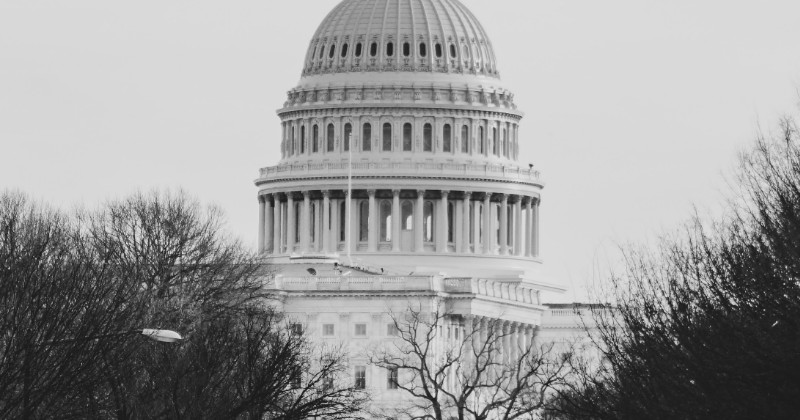
A Congress Committee met on Wednesday July 10 to study the question of decriminalizing cannabis at the federal level. According to a survey dated 2018, 61% of Americans favor legalization. During the hearing, Republicans and Democrats alike agreed on the need for further reform.
A surprising classification?
Ted Lieu, a California elected official in the House of Representatives, believes that «penalizing marijuana is a tremendous waste of federal resources. It's time we took it off the Controlled Substances Act ! »
He questioned the Committee on the dangerousness of cannabis, which is currently classified in Annex I, considered to be the most harmful, of the Controlled Substances Act, The same applies to heroin, ecstasy and LSD. By comparison, drugs such as opium and cocaine are classified in Schedule II, even though they are recognized as having highly addictive properties, unlike cannabis.
Dr. David Nathan, Chairman of the Board of Directors of the Pro-Legalization Group Doctors for Cannabis Regulation believes that «cannabis should never have been made illegal for consenting adults. It is less harmful to adults than alcohol and tobacco, and prohibition has done far more harm to our society than adult cannabis use itself».
A law that increases inequality
The illegality of cannabis at the federal level does not allow banks to grant loans to start a cannabis business, even in states where it is legal. As a result, launching this type of business requires considerable personal funds, which increases the initial inequalities.
Cannabis is decriminalized or legalized in 26 states, with 31 of the 50 states and 2 territories having legalized cannabis. legalized a form of medical cannabis. Yet access to this new market for entrepreneurs remains highly uneven, according to Malik Burnett, a physician and former Washington policy officer at the Drug Policy Alliance.
«In one America, there are men and women, mostly wealthy, white and well-connected, who are creating cannabis companies, creating jobs and amassing considerable personal wealth, and generating billions of dollars in taxes for states that sanction cannabis programs.»
«In the other America, there are men and women, mostly poor, people of color who are arrested and suffer the collateral consequences associated with a criminal conviction,» he declares. «Drug policy in America is, and always has been, a policy based on racial and social control.»
Hakeem Jeffries, a New Yorker elected to the House of Representatives, reminded us that cannabis policy in America is fundamentally racist, as it was created in the United States in a climate of segregation., which aimed to demonize people of color.
Karen Bass, a Californian elected member of the House of Representatives, analyzes: «The war on drugs was racially biased from the outset and was conducted in a discriminatory manner, with disastrous consequences for hundreds of thousands of people of color and their communities».
Further hearings are scheduled for July, with a possible change in legislation in the offing.







«Vincy Gold»: Humboldt Seed Company on the Hunt for Saint Vincent Sativas

Cronos Completes the Acquisition of CanAdelaar for 57.5 million euros

Cannabis with a "bloody" twist: Discover Sensi True Blood and Sensi Sangria, the two new strains from Sensi Seeds

Hemp: The Council of the EU Takes a Stand on New Production and Marketing Rules

Missouri's legal cannabis market accounts for 93 % of consumer spending

THC Gummies: How to Read a Certificate of Analysis Before Buying

British patients now have access to THCV-rich cannabis flowers

Spain: Medical Cannabis Is Coming to About 50 Hospitals

JIHE 2026: Japan’s Largest Trade Show Dedicated to Hemp and CBD Returns to Tokyo with More Than 100 Industry Players

New Caledonia: The Courts Clear the Way for the Return of CBD
-
 Business3 weeks ago
The legal cannabis market in New York exceeds 4 billion $ in revenue
-

 Cannabis in France4 weeks ago
Which countries legalized medical cannabis before France?
-
Cannabis in France1 week ago
France already has 3,000 cannabis retail outlets. None of them are legal.
-
Business4 weeks ago
South Korea is preparing to begin local production of medical cannabis to meet rising demand
-
Cannabis in the U.S.1 week ago
A DEA report confirms that there are no fatal cannabis overdoses
-
Cannabis in Thailand4 weeks ago
From the boom in dispensaries to a purely medical approach: Thailand is revising its cannabis policy
-
Cannabis and driving4 weeks ago
Medical Cannabis and Driving: New South Wales Ends Automatic Penalties for THC
-
Cannabis in France3 weeks ago
France’s Drug Policy Chief Defends Cannabis Prohibition... and Runs Into the Facts
















You must be logged in to post a comment Login