New York State decriminalizes possession of small amounts of cannabis

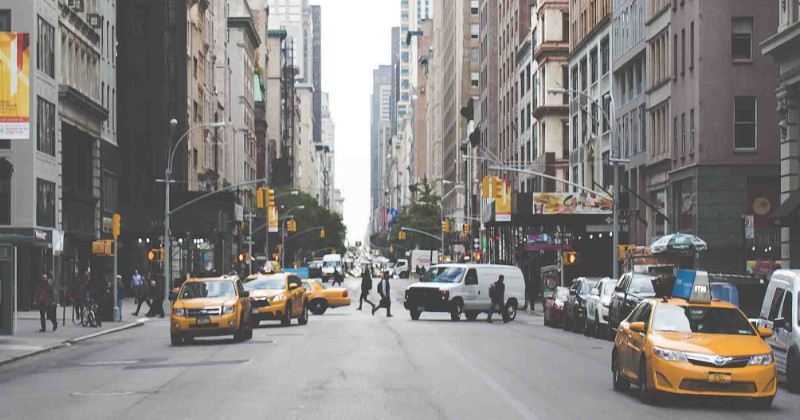
The State of New York has announced the decriminalizing cannabis possession, This is because we have not succeeded in legalizing the substance by 2019, as planned. This law will be retroactive, which should enable some 24,000 people to have their criminal records cleared, making it easier for them to find employment or housing. The law removes the prison sentence for illegal possession of cannabis, which will only be punishable by a fine, in the same way as speeding. Under the new law, the maximum penalty is $50 for possession of less than one ounce (28.35 grams of cannabis) and $200 maximum for one to two ounces (28.35 to 56.7 grams). Penalties may apply for possession of more than two ounces. The law is due to take effect in August.
Reducing inequality
«Cannabis laws have disproportionately impacted communities of color for too long, and today we're putting an end to that injustice once and for all,» a said Governor Andrew Cuomo. «By offering people who have suffered the consequences of an unjust cannabis conviction a way to have their criminal records expunged, and by reducing the draconian penalties incurred, we are taking a decisive step forward in addressing our broken and discriminatory criminal justice system.»
Senator Jamaal T. Bailey also welcomed the measure. He said, «Cannabis possession gives convicts a criminal record that will follow them throughout their lives, potentially limiting their access to higher education, and affecting their ability to obtain employment, and therefore likely to be unable to provide for their families.».
Crystal D. Peoples-Stokes, who works with Cuomo, highlights America's «double standard» «For too long, communities of color have been the target of discriminatory criminal justice policies and have suffered serious consequences for possessing small amounts of marijuana, while others have never been arrested or charged.».
Charity begins at home
This comes shortly after elected Democrats introduced a bill to legalize cannabis federally across the country. Thus, the issue of the inherent injustice of the war on drugs, which targets mostly ethnic minorities, has returned to the forefront. It has become a recurring campaign theme. Andrew Cuomo was not initially a fervent supporter of decriminalization, but he had to reconsider his position in the New York State gubernatorial election. His competitor, Cynthia Nixon, was more open on the question. She therefore had the support of pro-legalization activists. This forced Cuomo to change course, which now explains his positioning and re-election.
It's also a hot topic for the 2020 presidential elections. Jerrold Nadler, a Democrat from New York, and Kamala Harris, a Democrat from California and 2020 election candidate, last week introduced the bill Marijuana Opportunity Reinvestment and Expungement (MORE), which aims to remove cannabis from the Controlled Substance Act. New Jersey Senator Corey Booker has also proposed the Marijuana Justice Act, which would remove cannabis from the Controlled Substances Act. Elizabeth Warren, Democratic Senator from Massachusetts and also a presidential candidate, has proposed her STATES Act, which would strengthen the Tenth Amendment to ensure that federal authorities cannot interfere with state-approved cannabis programs.
Not insignificantly, in parallel with the actions launched to reduce injustice, a hearing called «Challenges for cannabis and banks: external perspectives» was held last week. Legalization would bring considerable profits.
Their Canadian neighbor legalized cannabis last October, which has not been without consequences for the country's economy. The Province of Alberta collected 30 million Canadian dollars from cannabis taxes, less than a year after legalization. Across the country, Canada has earned a total of almost C$186 million. More and more people are admitting to taking cannabis, and a recent study in Canada revealed that the typical consumer profile tomorrow's cannabis users won't fit the long-held cliché, paving the way for a new category of voters. The rise of medical cannabis in the United States has undoubtedly changed many people's minds about the substance.
Experts estimate that legalization at the federal level could result in gains of more than 80 billion by 2030. In the run-up to the 2020 elections, decriminalization, with its focus on minorities, is less a question of social justice than a campaign issue.











Medical Cannabis in Germany: THC Prices Vary by a Factor of 12

France already has 3,000 cannabis retail outlets. None of them are legal.

Morocco's exports of legal cannabis have expanded to 15 countries

Aurora Cannabis Doubles Its Production Capacity in Germany

Tilray is accelerating its operations in Europe thanks to a license in Portugal

Boston will host the 10th annual State of the Cannabis Industry Conference on October 26

A DEA report confirms that there are no fatal cannabis overdoses

A British patient is challenging the NHS's refusal to reimburse medical cannabis

October 2026 CBD Highlights: 10 Strains and Hash to Discover from 5 French Producers

CBD in France: Traceability, Retail Stores, THC and Driving… What the New Bill Proposes
-
 Business2 weeks ago
The legal cannabis market in New York exceeds 4 billion $ in revenue
-

 Cannabis in France3 weeks ago
Which countries legalized medical cannabis before France?
-
Business3 weeks ago
South Korea is preparing to begin local production of medical cannabis to meet rising demand
-
Cannabis in Thailand3 weeks ago
From the boom in dispensaries to a purely medical approach: Thailand is revising its cannabis policy
-
Cannabis and driving3 weeks ago
Medical Cannabis and Driving: New South Wales Ends Automatic Penalties for THC
-
Cannabis in Argentina4 weeks ago
Argentina Opens Its Market to Hemp Flowers Containing 1% of THC
-
Autism3 weeks ago
Autism and Cannabis: Results from the First Placebo-Controlled Trial of NTI164
-
Cannabis in France2 weeks ago
France’s Drug Policy Chief Defends Cannabis Prohibition... and Runs Into the Facts

















You must be logged in to post a comment Login