
How does cannabis affect sleep?

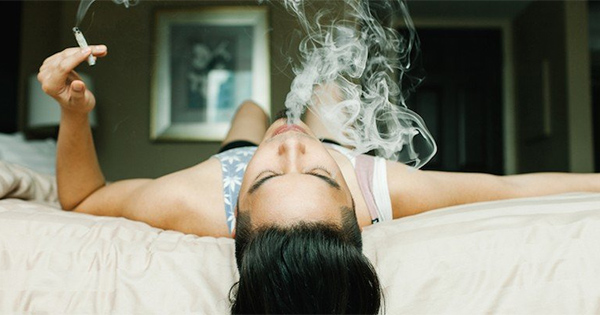
Cannabis is often used before going to sleep. «Somnisplif» is said to help users fall asleep, promote deep sleep, and wake up without a hangover. In fact, when users stop smoking, they report having trouble falling asleep and experiencing more vivid dreams.
Beyond individual experiences, what are really the Effects of Cannabis on Sleep ? Here are 5 studies that have identified the effects of cannabis use on your sleep.
Helps you fall asleep
One of the earliest modern studies on cannabis shows that THC, the main active ingredient in cannabis, can significantly reduce the time it takes to fall asleep, both in people with insomnia and in those without sleep disorders.
L’1973 study concludes that THC reduces the time it takes to fall asleep by one hour in nine subjects with insomnia. However, when the dose was increased to 30 mg of THC, the study participants experienced the effects of THC absorption the following day, resulting in residual «high» sensations. This side effect is not present at lower doses.
This ability to fall asleep was also reported in a 2013 study in subjects without sleep disorders who use THC. It also shows that a certain degree of tolerance to the sedative effect may develop in heavy users.
Longer sleep
Cannabis could thus lead to longer periods of sleep, whether through the administration of THC or CBD. At least, that is what patients initially treated for epilepsy reported as part of their’a study on the effects of CBD.
Deeper sleep
Some interesting effects of cannabis on sleep involve its impact on sleep cycles. A study A study on the effects of illicit recreational drugs on sleep shows that THC can increase the amount of slow-wave sleep, also known as deep sleep.
This effect can be very beneficial. Deep sleep is believed to play a major role in the restorative process that occurs during the night. Experts also believe that the most harmful effects of sleep deprivation result from a lack of deep sleep. For example, reduced deep sleep can be a factor in high blood pressure among older men (study).
Shorter REM sleep
Another way cannabis affects sleep is by decrease in REM sleep. Many people who smoke before going to bed report not having dreams, which occur only during the REM stage of sleep.
While this decrease in REM sleep might be seen as a negative effect, scientists are still unsure of the actual purpose of REM sleep.
However, people who stop using cannabis on a regular basis experience an increase in REM sleep, accompanied by a return of dreams and restlessness during sleep. These effects tend to subside more or less quickly depending on the individual (from a few days to a few weeks).
Better breathing
When it comes to therapeutic use, cannabis improves sleep in 25% of men and 9% of women suffering from sleep apnea.
Sleep apnea is characterized by pauses in breathing during sleep and has been linked to serious conditions such as diabetes and heart problems. Most people with sleep apnea remain undiagnosed and therefore untreated.
The most common treatment is wearing a breathing mask at night. Researchers are currently studying THC as an alternative, with initial conclusive results.





EFSA Gives Initial Approval for Synthetic CBD; Natural Extracts Still Pending

Federal Cannabis Reform Once Again on Hold in the United States

Contest: Win a trip to Quebec to experience the hemp harvest firsthand

Bedrocan on Hold Amid Uncertainty Over Medical Cannabis

Newsweed Launches Its Own AI
A new tax of 0.5% could disrupt the hemp industry in Canada

Medical Cannabis and Driving: New South Wales Ends Automatic Penalties for THC

China's Yongji Health Takes Control of Tasmanian Botanics

Autism and Cannabis: Results from the First Placebo-Controlled Trial of NTI164

Which countries legalized medical cannabis before France?
-
 Cannabis and driving3 weeks ago
Cannabis and CBD: French Drivers Can Now Lose Their License Even Without a Positive Test Result
-

 Cannabis in France6 days ago
Which countries legalized medical cannabis before France?
-
Cannabis in France3 weeks ago
Cannabis Legalization: The LFI Bill Has a Major Problem—THC
-
Cannabis in the Netherlands2 weeks ago
One year after the launch of the Dutch cannabis experiment, the first trends are emerging
-
Business6 days ago
South Korea is preparing to begin local production of medical cannabis to meet rising demand
-
Cannabis in Thailand6 days ago
From the boom in dispensaries to a purely medical approach: Thailand is revising its cannabis policy
-
Cannabis in Argentina2 weeks ago
Argentina Opens Its Market to Hemp Flowers Containing 1% of THC
-
Cannabis in France2 weeks ago
French medical cannabis remains stalled at the Ministry of Health















You must be logged in to post a comment Login