
In Delaware, cannabis is legal but public consumption is not. Until now, that is.

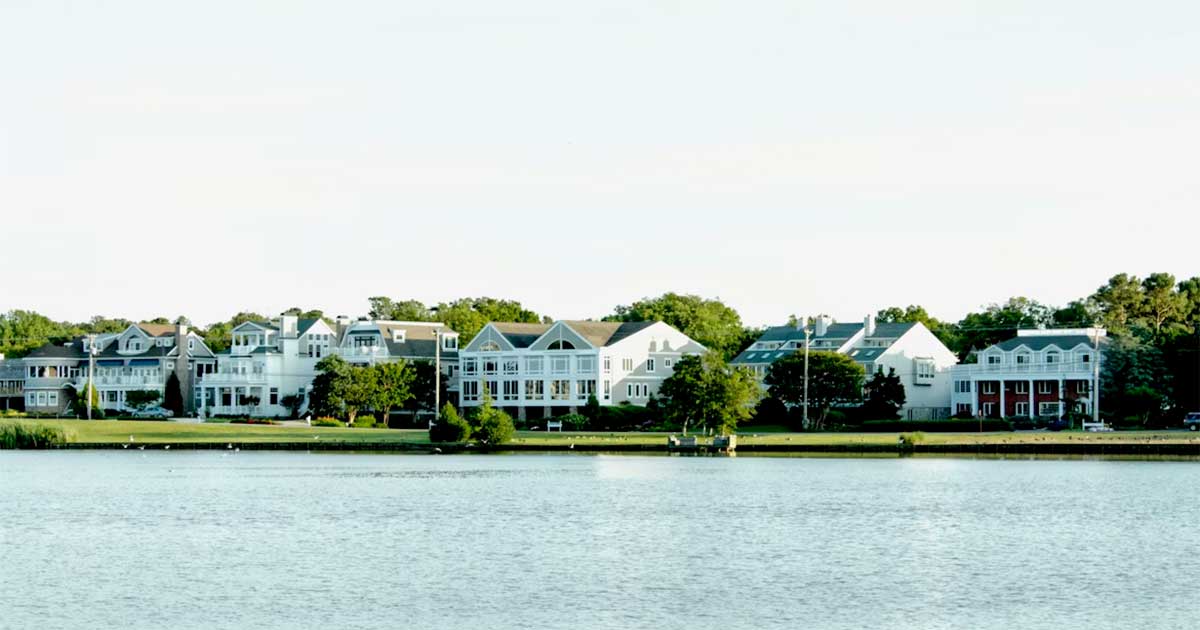
Delaware lawmakers are trying to ease one of the most restrictive aspects of the state’s cannabis legalization.
A bill approved by the House of Representatives’ Committee on Health and Human Development would eliminate the risk of imprisonment for people caught using cannabis in public, replacing criminal penalties with fines.
If adopted, this reform would bring Delaware in line with the vast majority of U.S. states that have already legalized it or have decriminalized cannabis and no longer consider public use to be a crime punishable by imprisonment.
The End of an Exception Among States Where Cannabis Is Legal
Despite the legalization of sales to adults, Delaware is currently the only state where public consumption of cannabis can still lead to incarceration. While states such as the Colorado or the’Ohio While these countries maintain penalties for cannabis use in public spaces, those penalties generally do not include imprisonment.
The proposed HB 252 bill would change that. Introduced by Representative Eric Morrison, this bill would reclassify public consumption as a civil offense, punishable by a $50 fine for a first offense and a $100 fine for subsequent offenses.
«It makes sense that if we have decided to decriminalize cannabis, we should also decriminalize its public use,» Mr. Morrison told his fellow lawmakers during the committee hearing.
A Question of Proportionality
Supporters of the bill argue that the current system is disproportionate and out of step with broader public health and criminal justice goals. Mr. Morrison emphasized that the reform does not condone public consumption, but rather aligns the penalty with the offense.
«This change does not mean that it is acceptable to use cannabis in public,» he said. «It is simply a matter of updating the current penalty for public use so that it is proportionate to the offense.»
Advocacy groups have taken up this argument. The Marijuana Policy Project (MPP) pointed out that Delaware treats secondhand tobacco smoke as a civil matter, whereas public use of cannabis—even outdoors—can still result in arrest and incarceration.
«One of the main objectives of legalization »is to put an end to the destruction of lives caused by cannabis! It's time to finish this task," the organization said in a recent call to action.
Reducing the Impact of Criminal Records
Beyond the fines themselves, supporters highlighted the broader consequences of enforcing the criminal law. Lawmakers have emphasized that prison sentences and criminal records can have repercussions on employment, housing, and family stability—consequences they consider excessive for an offense involving public consumption.
«A criminal record has negative consequences,» Mr. Morrison noted, citing job loss, barriers to housing, and the social cost of incarceration.
The adult market in Delaware was officially launched less than two years ago after the law on legalization was signed by former Governor John Carney. Initial figures show a strong commercial start, with $7.4 million in sales reported during the first month of legal business operations.
The launch was not without controversy. Medical operators were allowed to enter the adult market before other licensees, a decision that frustrated some applicants still awaiting regulatory approval.
In total, regulators plan to issue 125 commercial licenses for cannabis, covering retail sales, cultivation, manufacturing, and testing.
The bill to decriminalize public consumption is part of a broader debate on how Delaware should refine its cannabis laws now that legalization is a reality. Other proposals under consideration include allowing terminally ill patients to use medical cannabis in hospitals and healthcare facilities, a decision recently proposed in Pennsylvania.



















CBD is said to promote athletic recovery, without improving performance

294 cannabis clubs in Chile: a booming movement with uneven distribution

Chronic Sciatica: New York Approves First Clinical Trial of a THC-Based Medication

United States: The DEA is accelerating the integration of medical cannabis at the federal level

Florida is nearing one million patients using medical cannabis

Uruguay Revives Its Plan to Allow Tourists to Legally Access Cannabis

In Brazil, researchers are developing an innovative CBD eye drop

Autism: Medical Cannabis Is Linked to Reduced Anxiety

The $28 billion U.S. hemp market remains under threat

Jamaica Eases Small Farmers' Access to the Cannabis Market
-
 Business5 days ago
The legal cannabis market in New York exceeds 4 billion $ in revenue
-
Cannabis and driving4 weeks ago
Cannabis and CBD: French Drivers Can Now Lose Their License Even Without a Positive Test Result
-

 Cannabis in France2 weeks ago
Which countries legalized medical cannabis before France?
-
Business2 weeks ago
South Korea is preparing to begin local production of medical cannabis to meet rising demand
-
Cannabis in the Netherlands4 weeks ago
One year after the launch of the Dutch cannabis experiment, the first trends are emerging
-
Cannabis in Thailand2 weeks ago
From the boom in dispensaries to a purely medical approach: Thailand is revising its cannabis policy
-
Cannabis in France4 weeks ago
French medical cannabis remains stalled at the Ministry of Health
-
Cannabis in Argentina3 weeks ago
Argentina Opens Its Market to Hemp Flowers Containing 1% of THC

















You must be logged in to post a comment Login