
Spanish researchers revolutionize THC detection in saliva with innovative system


The universities of Córdoba and Valencia have collaborated to create a revolutionary technique for THC detection in saliva.
This technique is not only more effective than current methods, but it requires only a tiny saliva sample—a significant advance in cannabis detection technology.
A simplified and effective analytical method
Researchers from the group at Affordable and sustainable sample preparation the’University of Córdoba (UCO) and GICAPC Group the’University of Valencia (UV) have collaborated on the development of a technique that simplifies the sample processing procedure.
The main innovation lies in reducing the number of steps required for the analysis from five to two, which significantly speeds up the process. As explained by Marisol Cárdenas, a professor at UCO, said, «We’re reducing a process that would normally take five steps to just two.».
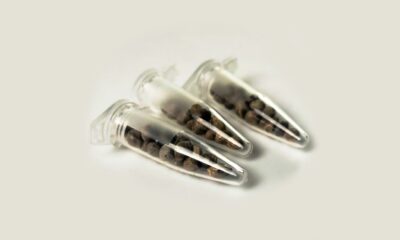
The technique uses the dispersive sorption microextraction using a miniaturized stirring bar, a method that employs a material with magnetic properties to extract THC saliva.
According to Jaime Millán Santiago, a researcher at UCO, explains that the process «involves adding a material capable of extracting the analytes from the sample (in this case, tetrahydrocannabinol from saliva) that possesses magnetic properties.».
When a small magnet is placed in the saliva sample, magnetic agitation creates a vortex that disperses the particles, which then interact with the THC molecules. When the agitation stops, the THC-laden particles are once again attracted to the magnet, allowing them to be extracted.
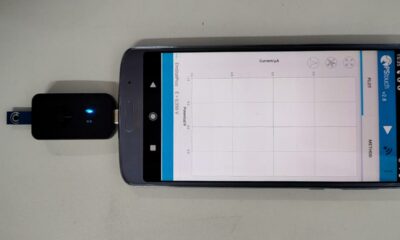
After the initial sample preparation, the next step is to transfer the magnet coated with THC particles to a stainless steel needle, a readily available and inexpensive material. A high voltage is applied, and an organic solvent breaks the bond between the extraction material and the THC, creating an electrospray that is then introduced into a mass spectrometer. This method enables accurate and sensitive detection of THC in just a few minutes.
The teacher Rafael Lucena, from UCO, notes that «this technology could already be integrated into routine laboratory analysis methods.».
The system stands out for its sensitivity, precision, and accuracy, making it a reliable tool for detecting cannabis.
The study was published in the journal Analytical Chemistry.




















CBD is said to promote athletic recovery, without improving performance

294 cannabis clubs in Chile: a booming movement with uneven distribution

Chronic Sciatica: New York Approves First Clinical Trial of a THC-Based Medication

United States: The DEA is accelerating the integration of medical cannabis at the federal level

Florida is nearing one million patients using medical cannabis

Uruguay Revives Its Plan to Allow Tourists to Legally Access Cannabis

In Brazil, researchers are developing an innovative CBD eye drop

Autism: Medical Cannabis Is Linked to Reduced Anxiety

The $28 billion U.S. hemp market remains under threat

Jamaica Eases Small Farmers' Access to the Cannabis Market
-
 Business5 days ago
The legal cannabis market in New York exceeds 4 billion $ in revenue
-
Cannabis and driving4 weeks ago
Cannabis and CBD: French Drivers Can Now Lose Their License Even Without a Positive Test Result
-

 Cannabis in France2 weeks ago
Which countries legalized medical cannabis before France?
-
Business2 weeks ago
South Korea is preparing to begin local production of medical cannabis to meet rising demand
-
Cannabis in the Netherlands4 weeks ago
One year after the launch of the Dutch cannabis experiment, the first trends are emerging
-
Cannabis in Thailand2 weeks ago
From the boom in dispensaries to a purely medical approach: Thailand is revising its cannabis policy
-
Cannabis in France4 weeks ago
French medical cannabis remains stalled at the Ministry of Health
-
Cannabis in Argentina3 weeks ago
Argentina Opens Its Market to Hemp Flowers Containing 1% of THC

















You must be logged in to post a comment Login