Japanese company to develop CBD oil from orange peel

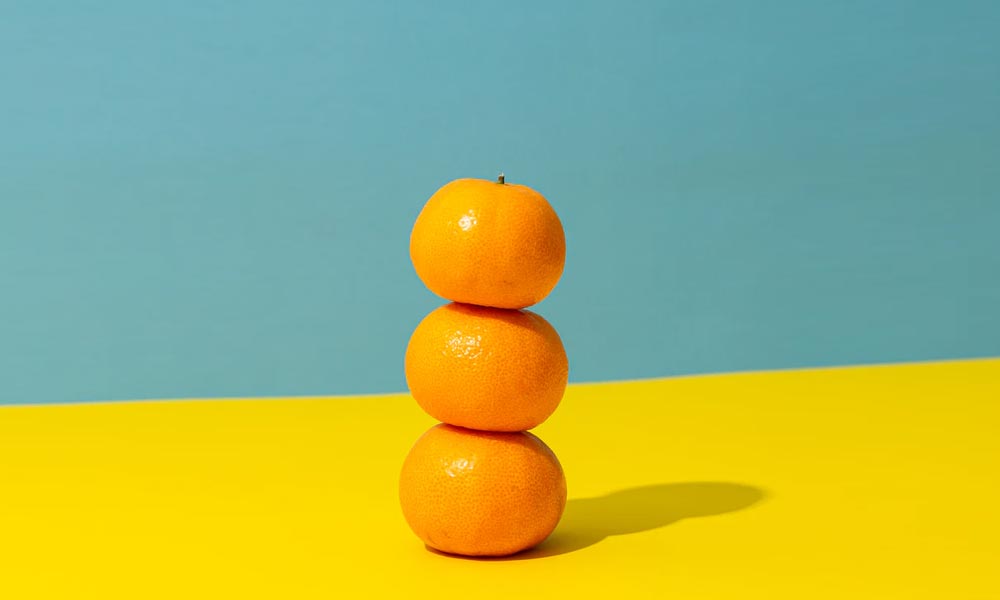
Over the past few days, a strange piece of news has been spreading: a Japanese company has reportedly presented prototypes of its oil CBD orange peel extract.
Hiro International specializes in importing fruit and fruit juices for the Japanese market, as well as developing and distributing banana extract, horse placenta extract and kidney bean extract for the food, pharmaceutical and cosmetics industries, would have presented at the Cosme Tokyo trade show in January 2020, a line of CBD oil derived from orange peel.
Hiro International spokesman Ryosuke Koseki is quoted as saying that 'Orange CBD» would be structurally identical to hemp-derived CBD, offering the same relaxing and skin-nourishing benefits. »With Orange CBD, you get the same ingredient, the same effects and there's no danger in terms of legality. It also provides a different CBD story for the consumer that sounds better than being derived from the cannabis plant.«.
He reportedly added that there have been no studies to compare Orange CBD to hemp-derived CBD, but that the company may be thinking about it soon.
Contacted by us, the company has not yet replied. However, there is no mention of the product on their website, and apart from a few press releases dated February, the only news item to mention this strange product was a recent article in Hanf Magazine.
Can CBD be extracted from citrus fruit?
If the CBD can be found in other plants than Cannabaceae and in lesser quantities, we have found no studies to date documenting the presence of CBD in oranges.
Nevertheless, the peels could have been used to synthesize CBD.
The American company Citrus CBD, founded in 2018 in Oregon, markets synthesized CBD, for example. from citrus peels, an evergreen tree and 'a proprietary scientific process» they call Cyclic Terpene Assembly (CTA). In simple terms, CBD is recreated from orange and pine terpenes.
These citrus-derived CBD molecules are theoretically identical to the CBD molecules derived from cannabis.
What's in it for me? Certainly not the price. Extracting CBD from hemp is relatively inexpensive. Conversely, synthesizing CBD is expensive, both in terms of R&D and operational costs. The advantage of CBD not extracted from hemp is the molecule's legality, as it falls outside the international cannabis regime, and the absence of THC.
«Some companies have run into huge problems because THC has been detected in their products,» explains Koseki.
Japan's cannabis legislation, despite a history of hemp that permeates the whole country, is still one of the strictest in the world. Synthetic CBD thus avoids potential regulatory worries.















Medical Cannabis in Germany: THC Prices Vary by a Factor of 12

France already has 3,000 cannabis retail outlets. None of them are legal.

Morocco's exports of legal cannabis have expanded to 15 countries

Aurora Cannabis Doubles Its Production Capacity in Germany

Tilray is accelerating its operations in Europe thanks to a license in Portugal

Boston will host the 10th annual State of the Cannabis Industry Conference on October 26

A DEA report confirms that there are no fatal cannabis overdoses

A British patient is challenging the NHS's refusal to reimburse medical cannabis

October 2026 CBD Highlights: 10 Strains and Hash to Discover from 5 French Producers

CBD in France: Traceability, Retail Stores, THC and Driving… What the New Bill Proposes
-
 Business2 weeks ago
The legal cannabis market in New York exceeds 4 billion $ in revenue
-

 Cannabis in France3 weeks ago
Which countries legalized medical cannabis before France?
-
Business3 weeks ago
South Korea is preparing to begin local production of medical cannabis to meet rising demand
-
Cannabis in Thailand3 weeks ago
From the boom in dispensaries to a purely medical approach: Thailand is revising its cannabis policy
-
Cannabis and driving3 weeks ago
Medical Cannabis and Driving: New South Wales Ends Automatic Penalties for THC
-
Cannabis in Argentina4 weeks ago
Argentina Opens Its Market to Hemp Flowers Containing 1% of THC
-
Autism3 weeks ago
Autism and Cannabis: Results from the First Placebo-Controlled Trial of NTI164
-
Cannabis in France2 weeks ago
France’s Drug Policy Chief Defends Cannabis Prohibition... and Runs Into the Facts
















You must be logged in to post a comment Login