The Secret History of Cannabis in Japan

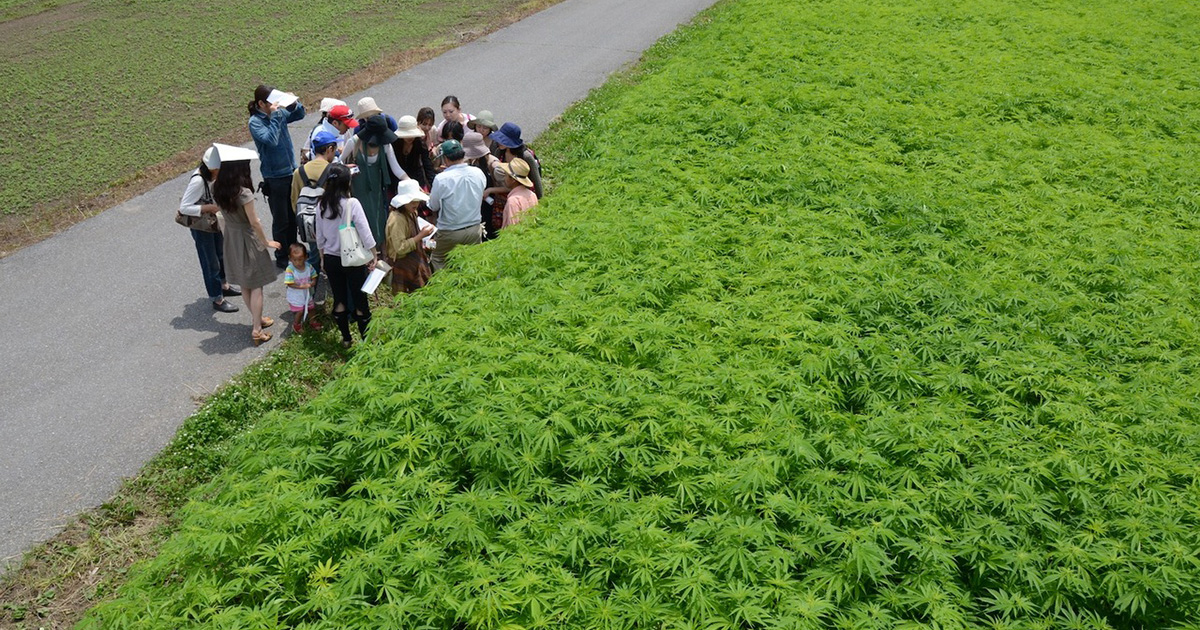
Japan currently has some of the strictest anti-cannabis laws in the world.
Possession of cannabis is punishable by up to five years in prison, and illegal cultivation by up to seven years. Every year, approximately 2,000 people are prosecuted under these laws; their names are splashed across the media, and their careers are ruined forever. The prohibition that underpins these laws also hinders research on medical cannabis, forcing Japanese scientists to move abroad to conduct their studies.
For decades, these laws were never questioned. But a growing number of Japanese people are now speaking out against the ban, while also working to educate everyone about the long-forgotten history of cannabis in Japan.
«Most Japanese people view cannabis as a subculture in Japan. But for thousands of years, cannabis has been at the heart of Japanese culture,» explains Junichi Takayasu, one of Japan’s leading experts on the subject.
According to Takayasu, the earliest traces of cannabis found in Japan are seeds and woven fibers discovered in the western part of the country, dating back to the Jōmon period (15,000 to 300 BCE). Archaeologists suggest that hemp fibers were used for clothing, bowstrings, and fishing lines. These plants were part of the sativa, known for their strong fibers. This theory is supported by prehistoric paintings discovered in a cave depicting a large plant with leaves characteristic of cannabis.
«Cannabis was the most important substance for prehistoric people in Japan. But today, many Japanese people have a very negative view of the plant,» says Takayasu.
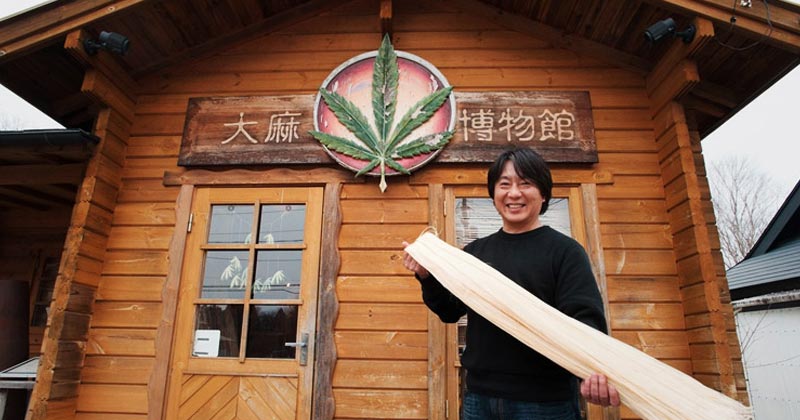
In an effort to reconnect the Japanese with their cannabis heritage, Takayasu founded the Taima Hakubutsukan (Cannabis Museum) in 2001, the only museum in Japan dedicated to this much-maligned plant.
The Cannabis Museum
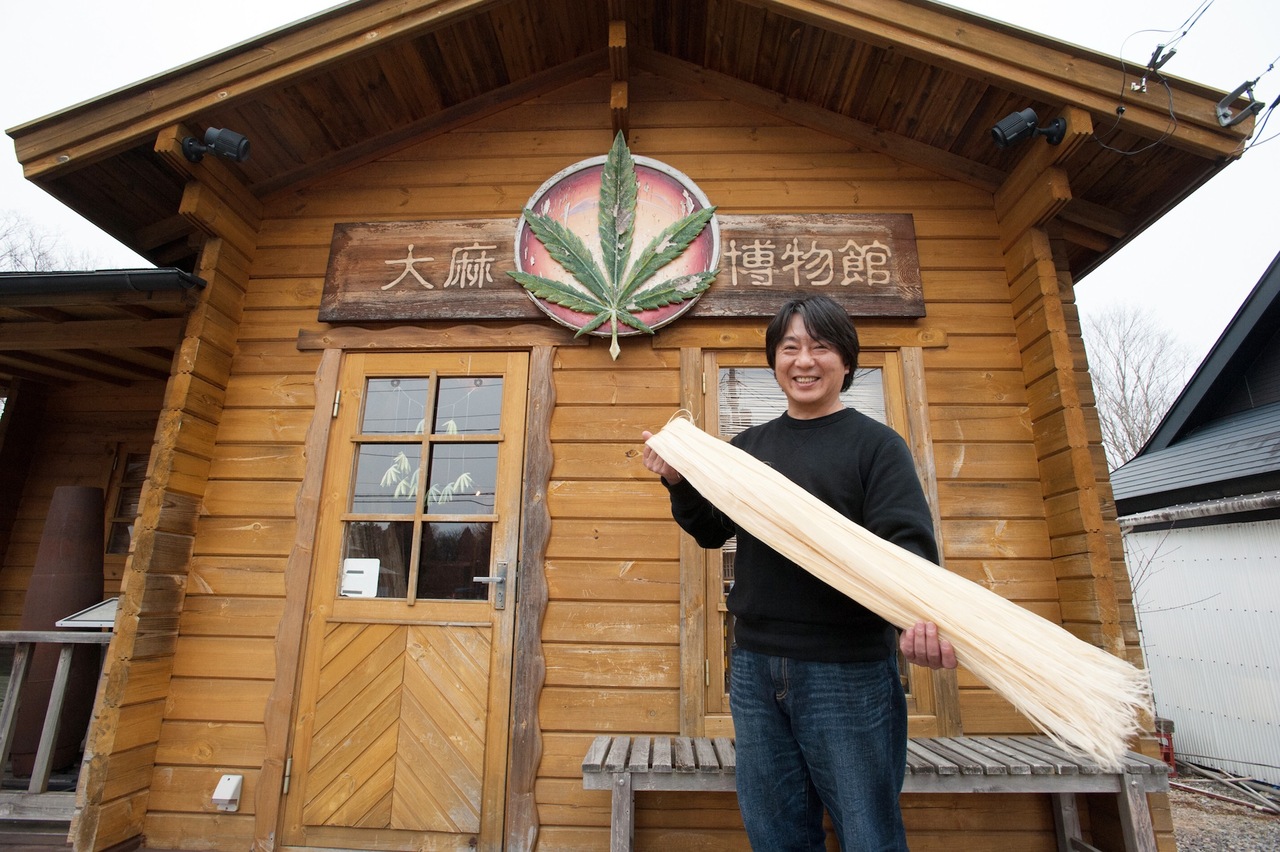
Taima Museum in Tochigi Prefecture, Japan
The museum is housed in a log cabin 150 km from Tokyo in Tochigi Prefecture, a region long associated with Japan’s cannabis culture. The prefecture borders the Tohoku region, which was devastated by the earthquake on March 11, 2011, but because it is inland and thus protected from the tsunami, and shielded from radioactive fallout by the surrounding mountains, it largely escaped the disaster.
The museum features exhibits showcasing the history of cannabis in Japan. There are 17th-century woodblock prints depicting women processing the fibers and photographs of farmers harvesting the plants. In one corner, a working loom allows Takayasu to demonstrate the art of weaving. He highlights the benefits of cannabis clothing: warm in winter, cool in summer, perfect for Japan’s climate.
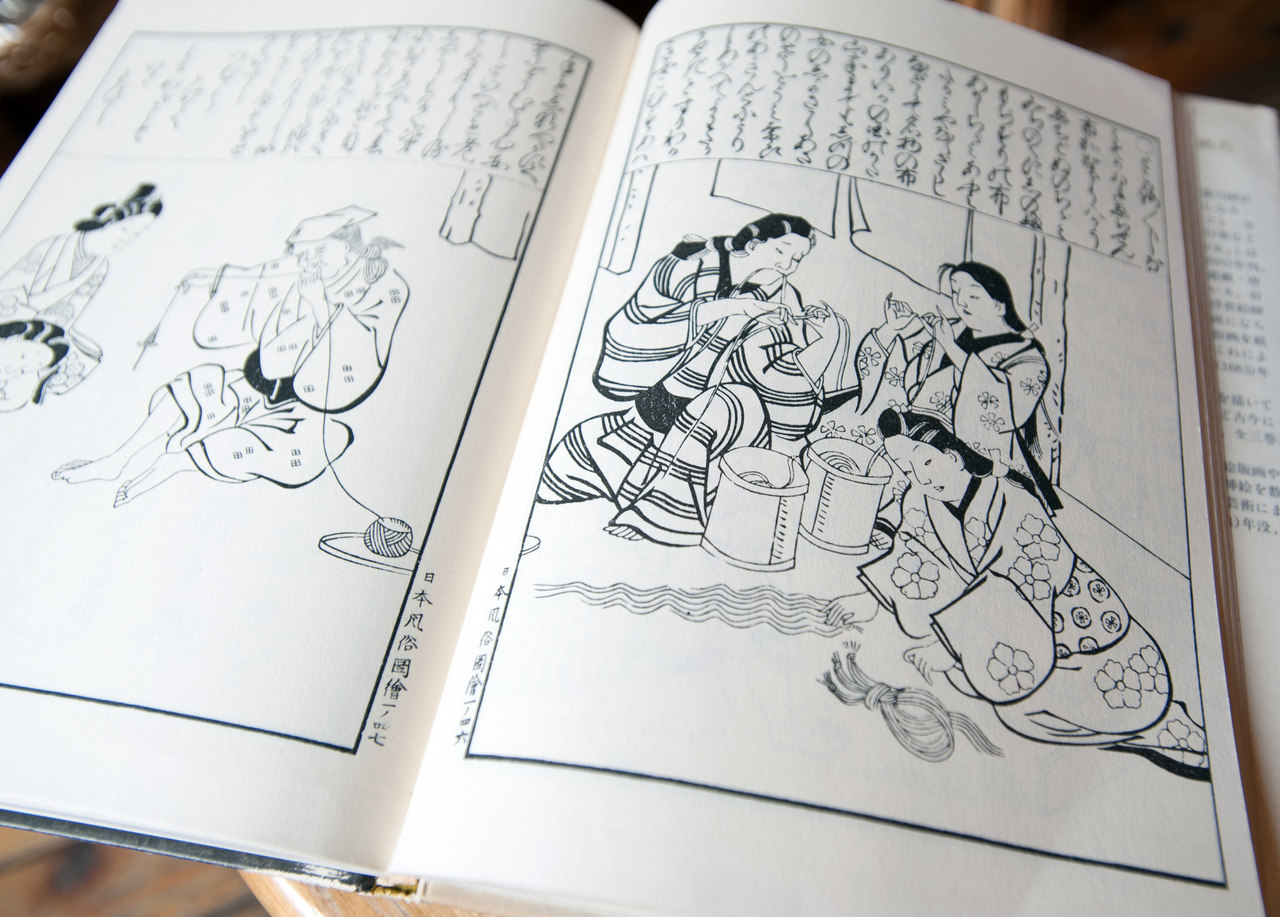
Print featuring cannabis
«Until the mid-20th century, Japanese cannabis cultivation followed a one-year cycle,» explains Takayasu. «The seeds were planted in the spring and harvested in the summer. The stems were then dried, soaked, and processed into fibers. During the winter, they were used to make clothing ready to wear for the coming season.»
Given its significant role in agriculture, cannabis frequently appeared in popular culture. It is mentioned in the 8th-century Manyoshu, Japan’s oldest collection of poems, and features in many haiku and tanka. Ninjas supposedly used cannabis in their training, jumping over these fast-growing plants to hone their acrobatic skills.
According to Takayasu, cannabis plants grew so tall that a Japanese proverb about the positive influence of one’s surroundings states that even a stunted weed could straighten up when surrounded by cannabis plants.
Similarly, school songs in cannabis-farming communities encouraged children to grow as tall and as straight as the cannabis plants. Because of these perceived qualities, a textile factory called Asa-no-ha, which based its designs on intertwining cannabis leaves, became popular as early as the 18th century. The pattern was a good choice for children’s clothing and became fashionable among merchants hoping for immediate financial gains.
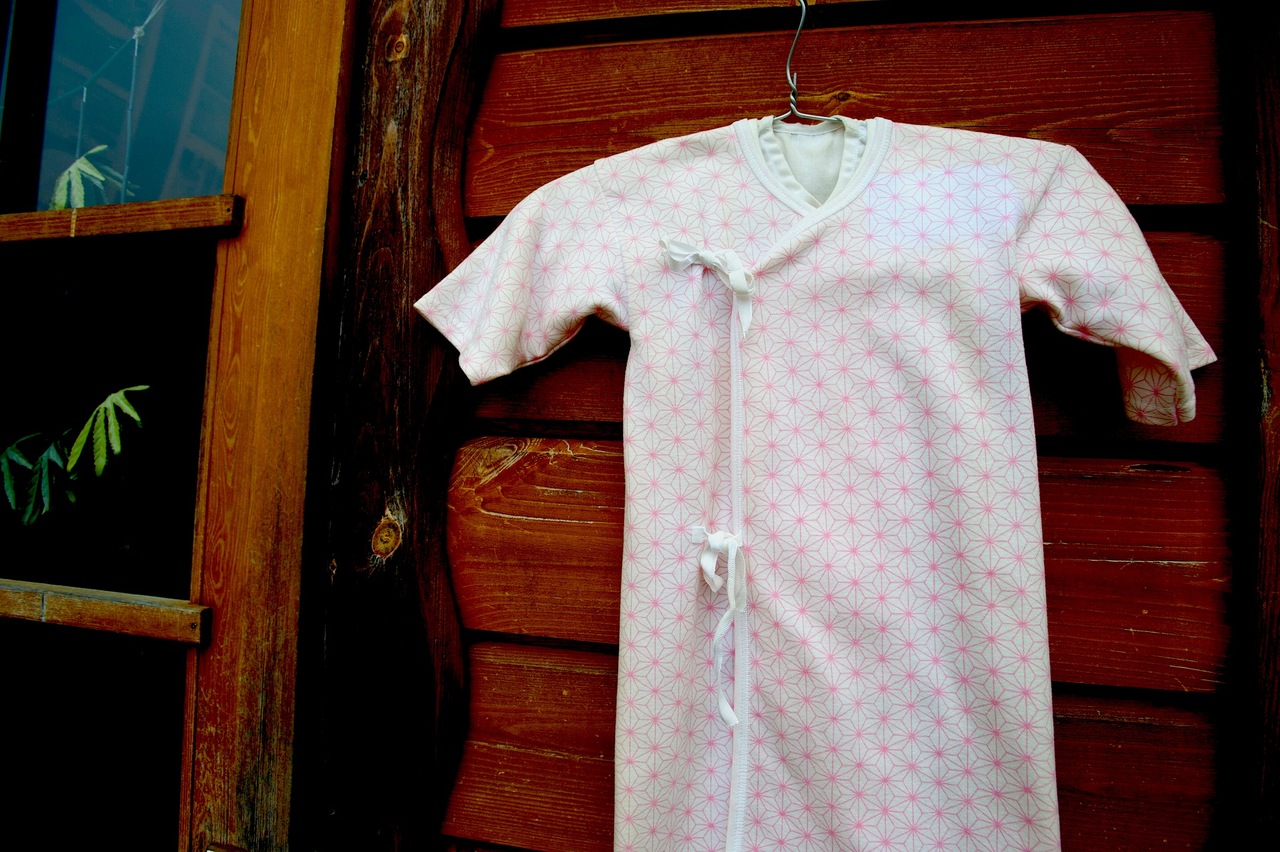
Children's clothing with a cannabis pattern
In addition to these practical uses, cannabis also holds spiritual significance in Shintoism, Japan’s indigenous religion, which venerates natural harmony and the concepts of purity. Cannabis was revered for its purifying properties; Shinto priests would wave branches of cannabis to exorcise evil spirits. Additionally, to demonstrate their purity, brides wore a veil made of hemp for their wedding. Today, the country’s most sacred shrine, Ise Jingu in Mie Prefecture, continues to hold five ceremonies a year, called taima, dedicated to the Sun Goddess. However, few visitors today make the connection between the names of these rituals and the drug so vilified by politicians and the police.
In the early 20th century, American historian George Foot Moore described how Japanese travelers would leave small offerings of cannabis leaves at roadside shrines to ensure a safe journey. Families, too, would burn a pile of cannabis at their doorsteps to welcome back the spirits of the dead during the summer Obon festival.
Was he high?
Given all this evidence that cannabis played a vital role in many aspects of Japanese life, one question remains: was it smoked?
Takayasu isn’t sure, and neither are many experts. Historical records make no mention of cannabis use in Japan, but these writings tend to focus primarily on the lifestyle of the elite and overlook the habits of the majority of the population. For hundreds of years, Japanese society was strictly divided into several classes. Within this hierarchy, rice—and the sake and wine produced from it—were controlled by the wealthy. Cannabis may have been the drug of choice for the masses.
Just as important as knowing whether it was smoked: could it be smoked? The answer to that is clearly yes. According to a 1973 study published by the United Nations Office on Drugs and Crime, the THC levels in native Japanese plants were 4%. By comparison, THC levels in marijuana seized in the 1970s in the United States were only 1.5%.
Until the early 20th century, cannabis-based remedies were available in pharmacies in Japan. Long used as an ingredient in traditional Chinese medicine, it was taken to relieve muscle pain or insomnia.
Meanwhile, the Tohoku region was known for its «laughing mushrooms,» or wariai kinoko. In a country that loves its mushrooms—shiitake, for example—the sale of hallucinogenic mushrooms was legal until 2002 in order to improve the country’s image ahead of the World Cup in Japan and South Korea.
The Prohibition of Cannabis in Japan
The ban on Japan's cannabis industry also has foreign origins.
According to Takayasu, the 1940s got off to a good start for cannabis growers, as Japanese military leaders, much like the Americans, urged farmers to grow cannabis to help win World War II.
«The Imperial Navy needed it for ropes, and the Air Force needed it for parachute cords. The army classified cannabis as war material and had created patriotic war slogans about it. It was as if to say that without cannabis, the war could not be won,» says Takayasu.
However, after Japan surrendered in 1945, U.S. authorities occupied the country and imposed their own policies regarding cannabis. Having banned its cultivation in 1937, Washington now sought to ban it in Japan as well. In 1948, Japan, still under U.S. control, passed the Cannabis Control Act. The law criminalized unauthorized possession and cultivation, and more than 60 years later, it remains at the heart of anti-cannabis laws.
At the time, U.S. authorities portrayed the passage of this law as an altruistic effort to protect the Japanese people from the scourge of drugs. But critics have pointed out that the Occupation authorities allowed the sale of amphetamines until 1951. Several Japanese experts tend to believe that the ban was driven by U.S. petrochemical industry lobbies that wanted to kill the cannabis fiber industry and open the market to American synthetic materials, including nylon.
Takayasu views the ban in a different light, seeing it instead as part of a broader American effort to curb the power of the Japanese military, which had led Asia into war.
«Just as U.S. authorities discouraged the practice of martial arts such as kendo and judo, the Cannabis Control Act of 1948 was a way to curb militarism in Japan. The cannabis war industry was so dominated by the military that the new law was enacted to strip it of its power.»
Whatever the real reasons may have been, the 1948 law had devastating consequences. From 25,000 cannabis farms in 1948, the number rapidly declined, forcing farmers to change professions and causing cannabis cultivation techniques to fall into oblivion. Today, fewer than 60 farms are authorized to grow cannabis, exclusively varieties with very low THC levels, and only an 84-year-old woman oversees the entire cultivation cycle, from seed to harvest.
At the same time, a sustained propaganda campaign has alienated the Japanese from their cannabis culture, portraying marijuana as a poison on par with crack or heroin.
These campaigns succeeded in erasing all traces of cannabis’s millennia-old history in Japan, but they failed to curb the plant’s resilience. Every summer, millions of these bushes—the remnants of plants cultivated until 1948—sprout up in the mountains and plains of the Japanese countryside. In 2006, 300 plants even sprouted on the grounds of Abashiri Prison in Hokkaido, causing considerable embarrassment for officials.
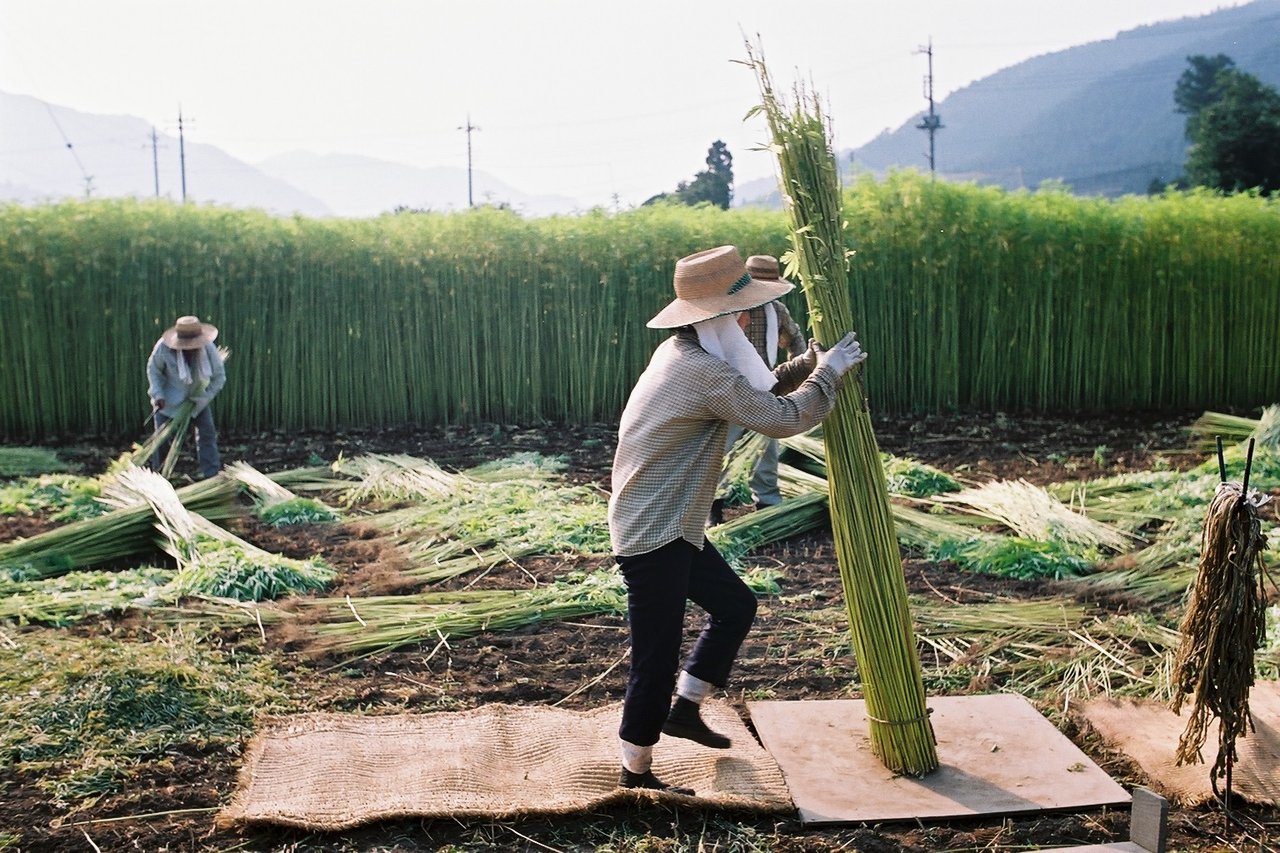
Industrial cannabis farm in Japan
Every year, the Japanese police launch highly publicized eradication campaigns against these plants. On average, they discover and destroy between 1 and 2 million of them. But like many other aspects of the war on drugs, theirs is a losing battle, and the following year, the plants grow back even more.
A waste of resources?
Because of the taboos surrounding discussions about cannabis, many people have been reluctant to condemn these political campaigns. But critics are now beginning to speak out against the waste of public resources as well as the needless destruction of harmless plants.
Hideo Nagayoshi, author of the 2009 book *Introduction to Cannabis*, advocates for the systematic harvesting of wild cannabis for use in medicine, biomass, or the construction industry.
Yukio Funai—another advocate and author of *Akhou! Taima Torishimarihou no Shinjitsu* (Bad Law! The Truth Behind the Cannabis Control Act, 2012)—describes cannabis as a cash cow for Japan. In a detailed description of the potential economic benefits of legalization, he highlights the savings achieved through a reduction in arrests and incarcerations, concluding that the country could earn $300 billion in the long term.
In a nation facing unprecedented economic challenges, these arguments strike a chord. Recently, Japan fell behind China to become the world’s third-largest economy, and the country owes more than $10 billion in debt—twice its GDP. These problems contribute to a toll of 6.5 million alcoholics and a suicide rate that peaks at 30,000 per year.
Legalizing cannabis could solve some of these problems. By attracting young entrepreneurs to rural areas, it could counter the decline of agriculture, particularly in the post-earthquake situation. It could improve the quality of care for thousands of cancer patients and halt the exodus of scientists studying medical cannabis. Legalization could also prevent the 2,000 annual arrests of Japanese citizens—mostly in their twenties and thirties—whose lives are ruined by archaic and illogical laws.
In the years to come, Taima Hakubutsukan could be seen as a true pioneer in this effort.
«People need to know the truth about the history of cannabis in Japan,» says Takayasu. »The more we learn about the past, the more clues we have for how to live better in the future. Cannabis can offer Japan a glimmer of hope.”.
Cannabis: What’s Behind the Name?
Botanists typically divide the cannabis family into three main varieties: the tall sativa, the bush cutter indica and the small ruderalis. This simplistic taxonomy is often called into question by the interfertility of these three species, which allows for numerous crosses resulting in many new cannabis varieties.
The desired properties of these hybrids tend to determine the name by which they are known.
Marijuana, for example, often refers to cannabis plants that are grown for medical or recreational use. Sativa is known for its energizing effects and may be prescribed to treat depression, while indica is often more sedative and can be used as a muscle relaxant or to treat chronic pain.
Hemp is the name given to tall sativa plants that are grown for their strong fibers, but which may also contain levels of THC significant.
More recently, the term “industrial hemp” was coined in the United States to refer to cannabis plants grown specifically for their very low THC levels (less than 0.3%) in order to comply with current drug laws. Today, most farms authorized to grow cannabis use low-THC plants, known as Tochigi shiro, which were developed during the postwar period.
Via http://apjjf.org/2014/12/49/Jon-Mitchell/4231.html
Photos by Hiroko Tanaka and Junichi Takayasu








Dr. Pascal Douek, a tireless advocate for medical cannabis in France, has died

Kentucky now has 26 medical cannabis dispensaries

«Vincy Gold»: Humboldt Seed Company on the Hunt for Saint Vincent Sativas

Cronos Completes the Acquisition of CanAdelaar for 57.5 million euros

Cannabis with a "bloody" twist: Discover Sensi True Blood and Sensi Sangria, the two new strains from Sensi Seeds

Hemp: The Council of the EU Takes a Stand on New Production and Marketing Rules

Missouri's legal cannabis market accounts for 93 % of consumer spending

THC Gummies: How to Read a Certificate of Analysis Before Buying

British patients now have access to THCV-rich cannabis flowers

Spain: Medical Cannabis Is Coming to About 50 Hospitals
-
 Business3 weeks ago
The legal cannabis market in New York exceeds 4 billion $ in revenue
-
Cannabis in France2 weeks ago
France already has 3,000 cannabis retail outlets. None of them are legal.
-
Cannabis in the U.S.2 weeks ago
A DEA report confirms that there are no fatal cannabis overdoses
-
Cannabis in France4 weeks ago
France’s Drug Policy Chief Defends Cannabis Prohibition... and Runs Into the Facts
-
Studies on cannabis2 weeks ago
Cannabis Oil and Endometriosis: A Promising Study for Pain Relief
-
Business2 weeks ago
Tilray is accelerating its operations in Europe thanks to a license in Portugal
-
CBD3 weeks ago
In Brazil, researchers are developing an innovative CBD eye drop
-
Cannabis in France2 weeks ago
CBD in France: Traceability, Retail Stores, THC and Driving… What the New Bill Proposes
















You must be logged in to post a comment Login