Cannabis in Quebec
Quebec legalized cannabis at the same time as Canada. However, the province is one of the most repressive in its approach to legalization. It has banned the self-cultivation of cannabis, raised the age limit for buying cannabis beyond the age of majority (to 21 from 18) and curbed the marketing of edibles and other concentrates by limiting the dosages available. The distribution network, managed by the Société Québecoise Du Cannabis (SQDC), is also sparse and inadequate. At the end of the first year of cannabis legalization, however, the province decided to’increase the number of distribution points, to test cannabis home delivery services and to make an effort on prices to better compete with the black market, which hasn't had too much to worry about so far.
Legal status of cannabis in Quebec
Legal
Cannabis is legal in Quebec for adults over 21.
Where in the world is cannabis legal?Is cannabis legal in Quebec?
Quebec's weed laws were amended in October 2018. When it came time for Quebec to adopt its version of cannabis legalization, the Parti Québécois opposition wanted stricter controls and voted against the legislation.
Despite the divisions, in June 2018 the government of Quebec Liberal Party Premier Phillipe Couillard passed Bill 157 enacting the Cannabis Regulation Act, creating the Société québécoise du cannabis (SQDC) to oversee sales and distribution, and modifying road safety standards.
While cannabis proponents have decried some of the more restrictive measures, such as the ban on home cultivation and the few stores, all government-owned, where cannabis will initially be available, Quebec has announced that it will be ready for legalization on October 17, 2018.
Even with the constraints, Quebec was more permissive in some respects than the other provinces or territories, allowing more consumption in public places and adopting a minimum age of 18 to buy or consume cannabis. All other provinces, with the exception of Alberta, have adopted the 19-year limit set by the federal government.
Opposition parties had argued, among other things, for greater limits on public consumption, and the Coalition Avenir Québec had lobbied for an age limit of 21.
Despite their reputation as a party province, Quebecers are more moderate when it comes to cannabis. Consumption in the province is in the middle of the pack among the provinces, but a CROP, Inc. poll conducted by Radio Canada revealed that only 46 % of the population were in favor of legalizing cannabis, compared to 58 % nationally.
As part of its bill legalizing recreational marijuana, the province has imposed a number of road safety changes, including a «zero tolerance» policy for driving with any detectable amount of cannabis or alcohol in the body, once effective equipment to detect cannabis in saliva is available and approved. Limited exceptions may be made for medical marijuana users.
Police can immediately suspend driver's licenses for up to 90 days if their assessment reveals impairment by drugs and/or alcohol, or if a driver refuses to submit to testing. Vehicles may be impounded if drivers have previous convictions for drug or alcohol use. Drivers can also face fines of $1,500 to $5,000, the installation of an immobilizer and other penalties, including jail time, for operating a vehicle under the influence.
Under federal guidelines, drivers are subject to progressive penalties based on drug and/or alcohol concentration levels, as well as previous offenses.
At federal level, the legal limit for THC in blood is two nanograms per millilitre. One nanogram corresponds to one billionth of a gram. Concentrations between two (2) and five (5) nanograms carry a fine of up to $1,000. A concentration of five (5) nanograms or more carries a minimum fine of 1,000 $ for a first offense, imprisonment for 30 days or more for a second offense, and imprisonment for 120 days or more for a third offense. Penalties for drug-impaired driving accidents can range from 18 months to life imprisonment in the case of a fatal accident.
Is cannabis legal in Montreal?
Montreal's pot laws are in line with those of Quebec.
Where can you buy cannabis safely in Quebec?
When legalization came into effect, Quebec consumers could only purchase recreational cannabis legally in stores and online via the SQDC's public website.
The Quebec government has control, operation and distribution of all legal cannabis in the province. SQDC expected 20 stores to be open by October 17, 2018, and that they could reach 100 or more by 2021, which is not the case.
The first four stores in Montreal were located near the busy Berri-UQÀM, Radisson, Jean-Talon and Lionel-Groulx metro stations.
Minors are not allowed inside, and the stores are self-contained, cannabis-only, with around 150 products. Displays are not visible to passers-by, and stores must be at least 250 metres, or about 820 feet, from schools. In Montreal, the distance is 150 metres, or about 492 feet.
Customers are allowed to purchase a maximum of 30 grams, or 1.6 ounces, of dried cannabis at a time, or the equivalent in fresh cannabis and cannabis oils.
The edibles and pre-made extracts were not made immediately available. The federal government authorized them through legislation it put in place on October 17, 2019, 1 year after legalization, although consumers can create their own edibles as they wish.
Employees must attend government-sponsored cannabis training programs.
Where is it safe to consume cannabis?
Consumption is generally permitted in places where smoking and vaping are allowed. Smoking is permitted in private residences and rentals, unless prohibited by the lease or property contract. Landlords had until January 17, 2019 to incorporate cannabis restrictions into leases.
Cannabis consumption in public is not permitted in most restaurants, bars, hospitals, schools, bus shelters, bike paths or sports facilities. Smoking is also prohibited on and within 9 meters, or 29 1/2 feet, of areas frequented by children, such as playgrounds or swimming pools. It should be noted that public parks that do not serve as playgrounds will allow the consumption of cannabis just as they allow the consumption of tobacco products.
It is illegal to consume cannabis while driving a vehicle, whether for the driver or passengers. The law applies whether or not the vehicle is in motion. In a vehicle, cannabis must be kept in a sealed container to which the driver or passengers have no access during transport.
Possession of cannabis
Adult use
The minimum age for buying or possessing cannabis in Quebec is 21, different from other Canadian provinces. Quebec allows authorized adults to possess up to 30 grams, or 1.06 ounces, of cannabis in most public places.
Possession is prohibited in daycare centers, in most buildings and on school and college campuses. Possession is also prohibited in detention facilities.
The national government has established equivalents so that one gram of dried cannabis is equal to :
- 5 grams of fresh cannabis
- 15 grams, or half an ounce (0.5 oz) of edibles
- 70 millilitres, or 2.35 fluid ounces, of liquid
- 0.25 grams of concentrate, and
- 1 plant seed
The limit for home possession is 150 grams, or 5.3 ounces, per household, regardless of the number of occupants. In addition, a person may not possess more than 150 grams, or 5.3 ounces, combined between public places and multiple residences.
Medical
Under federal law, medical marijuana patients are allowed to possess up to 150 grams, or 5.3 ounces-30 times the daily dose prescribed by a licensed health care professional, whether a physician or nurse practitioner-of dried marijuana or its equivalent.
Is home growing permitted in Quebec?
Quebec does not allow the cultivation of cannabis for personal use. Quebec also prohibits the possession of a cannabis plant for personal use. These regulations do not apply to approved and authorized home-grown medical marijuana, which is governed by national laws.
Medical cannabis in Quebec
Thousands of Canadians are authorized by the federal government to possess and use marijuana for medical purposes. Until the new law was passed, Canadians had to qualify for the Access to Cannabis for Medical Purposes Regulations (ACMPR), which came into effect on August 24, 2016.
Beneficiaries must provide medical documentation confirming the diagnosis made by a healthcare professional.
Patients must not have been convicted of a marijuana-related offense and can only be registered once at a time.
Eligibility requirements
In general, patients can benefit from medical marijuana in two categories. The first is to provide compassionate end-of-life care, to relieve the pain symptoms associated with illness and injury, or to treat the side effects of cancer or HIV/AIDS medications. The second category concerns patients suffering from other persistent debilitating symptoms. Among the illnesses listed by Health Canada as potentially eligible are the following:
- Alzheimer's disease
- Anxiety
- Arthritis
- Attention deficit disorder and attention deficit hyperactivity disorder (ADD/ADHD)
- Back and neck disorders
- Brain damage
- Cancer
- Chronic nausea
- Chronic pain
- Depression
- Eating disorders
- Epilepsy
- Fibromyalgia
- Gastrointestinal disorders
- Colitis
- Crohn's disease
- Irritable bowel syndrome
- Hepatitis C
- HIV/AIDS
- Renal insufficiency, including patients on dialysis
- Migraines
- Multiple sclerosis
- Muscle spasms
- Muscular dystrophy
- Parkinson's disease
- Post-traumatic stress disorder (PTSD)
- Severe arthritis
- Sexual dysfunction
- Sleep disorders
- Road accidents
Application procedure
Information on eligibility and application is available on the Canadian government's medical marijuana website.
Caregivers
Licensed caregivers may possess fresh or dried marijuana or cannabis oil, and may transfer or administer the substances or provide a medical document. They may also transfer substances to a person who is responsible for the patient under their professional treatment.
Latest news on Cannabis in Quebec
-

 Hemp4 weeks ago
Contest: Win a trip to Quebec to experience the hemp harvest firsthand
What if your next getaway took you to Quebec? The Quebec-based company Groupe Chanv is hosting a big contest to win a day-long immersion in the heart of...
-

 SQDC1 month ago
Christine Fréchette is alienating Quebec’s cannabis industry
A brief remark made in the midst of the Quebec election debate sparked outrage in the cannabis industry. By referring to Greentone as a ’marijuana company« for...
-

 2 months ago
Cannabis in Quebec: The 21-Year-Old Age Requirement in the Spotlight
Quebec’s decision to set the legal age for cannabis use at 21 is once again under close scrutiny, with experts...
-

 Business4 months ago
The SQDC exceeded $800 million in cannabis sales in 2025
The Société québécoise du cannabis (SQDC) posted another year of growth in 2025–2026, with sales reaching 809.5 million Canadian dollars (slightly...
-

 Business10 months ago
Canopy Growth to acquire Quebec-based MTL Cannabis
Canopy Growth has announced its intention to acquire MTL Cannabis, a Quebec producer renowned for its artisanal approach, in a transaction valued at around 125...
-
 Consumption methods11 months ago
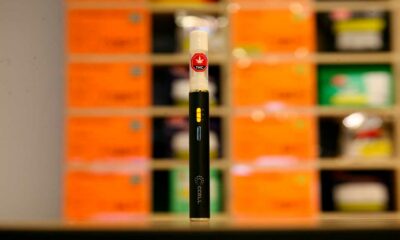
Quebec finally launches cannabis vape sales after a long ban
Société québécoise du cannabis (SQDC) will officially add cannabis vape pens to its product range on November 26, 2025. This puts an end to...
-

 Recreational cannabis1 year ago
Fewer Quebecers report cannabis use in 2025
Cannabis use among Quebecers has fallen for the first time in several years, according to preliminary data from the Institut de la statistique du Québec....
-

 Recreational cannabis2 years ago
The proportion of cannabis users is falling in Quebec, especially among young people
The Institut de la statistique du Québec (ISQ) has released the latest data from the Quebec Cannabis Survey, which provides an annual portrait of the...
-

 Business2 years ago
Cannabis sales continue to rise in Quebec
Société québécoise du cannabis (SQDC) has posted solid financial results for the third quarter of fiscal 2024-2025, with net income reaching $40.5 million....
-

 Business2 years ago
A new look for a new life at SQDC
The Société québécoise du cannabis (SQDC) has decided to redefine its retail strategy, focusing on creating a more personalized shopping experience....
-
 Business2 years ago
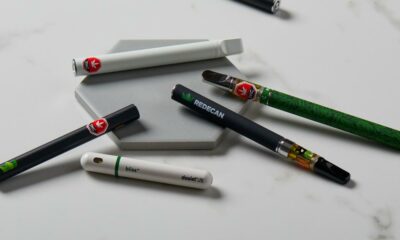
SQDC to start selling vape pens in late 2025
The Société québécoise du cannabis (SQDC) will be selling cannabis vaping products by the fall of 2025, ending the provincial ban on these products in effect...
-

 Business2 years ago
Société québécoise du cannabis opens its 100th store
Société québécoise du cannabis (SQDC) has opened its 100th store in Richelieu, a small town just outside Montreal. This latest expansion reflects...
-

 Business2 years ago
SQDC brings $258.8 million to Quebec in 2023
Société québécoise du cannabis (SQDC) has reported a solid financial performance for the year ending March 30, 2024. According to the latest data, the...
-

 Trends3 years ago
Latest data show fewer Quebecers are using cannabis
Since the legalization of cannabis in Canada, cannabis consumption trends have been closely monitored. In Quebec, they are undergoing surprising changes, as indicated by...
-

 Food3 years ago
Quebec can now enjoy cannabis-infused poutine
British Columbia-based cannabis producer Rubicon Organics has announced that its in-house brand, 1964 Supply Co, is marketing a cannabis-infused poutine sauce and...
-

 Recreational cannabis3 years ago
Should the legal age for cannabis use in Quebec be reviewed?
More than four years have passed since the Quebec government proclaimed its decision to set the legal age for cannabis consumption...
-

 Legalization of cannabis4 years ago
Cannabis consumption in Quebec remains stable since legalization
The annual survey that tracks the evolution of cannabis use in Quebec shows no increase in cannabis use in the province compared to the...
-

 4 years ago
Supreme Court of Canada upholds Quebec's right to ban home-grown cannabis
The Supreme Court of Canada confirmed last Friday that Quebec has the right to prohibit Quebecers from growing their own cannabis at home,...
-

 Recreational cannabis4 years ago
4 years ago, Canada legalized cannabis
If there was one figure to remember from the 4 years of cannabis legalization in Canada, it would probably be that 68% of consumers are now...
-

 Business4 years ago
Quebec to launch «small batch» pilot project for cannabis microproducers
The Société québécoise du cannabis (SQDC) launches a «small batch» pilot project to make it easier for microproducers to bring new products to market....





«Vincy Gold»: Humboldt Seed Company on the Hunt for Saint Vincent Sativas

Cronos Completes the Acquisition of CanAdelaar for 57.5 million euros

Cannabis with a "bloody" twist: Discover Sensi True Blood and Sensi Sangria, the two new strains from Sensi Seeds

Hemp: The Council of the EU Takes a Stand on New Production and Marketing Rules

Missouri's legal cannabis market accounts for 93 % of consumer spending

THC Gummies: How to Read a Certificate of Analysis Before Buying

British patients now have access to THCV-rich cannabis flowers

Spain: Medical Cannabis Is Coming to About 50 Hospitals

JIHE 2026: Japan’s Largest Trade Show Dedicated to Hemp and CBD Returns to Tokyo with More Than 100 Industry Players
