North Carolina: Moving Toward State-Regulated Cannabis Legalization


North Carolina could become the next U.S. state to legalize recreational cannabis, although under a regulatory framework that is significantly more restrictive than those adopted elsewhere in the United States.
An advisory board appointed by the governor Josh Stein proposes a market model in which the government would retain control over cannabis distribution, retail prices, and points of sale.
The board is expected to vote on its final recommendations in December before submitting them to the governor by December 31.
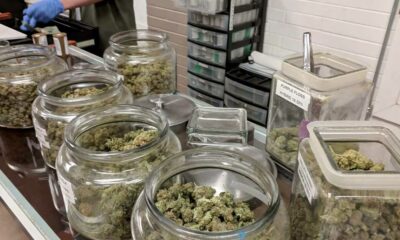
Cannabis dispensaries under direct state supervision
The 19-page draft document, obtained by Marijuana Moment, outlines what the advisory board describes as «the most restrictive and conservative plan regarding adult consumption.».
Modeled after North Carolina’s current alcohol distribution system, the proposed framework would allow private companies to cultivate and process cannabis under a state-issued license. Retail operations, however, would remain under the authority of an independent regulatory agency, with private operators running the dispensaries on its behalf.
The government would determine which products could be sold, set retail prices, oversee inventory, and decide on the number and geographic distribution of retail outlets, subject to local authorization.
Unlike traditional legal cannabis markets in the United States, the proposed system would aim to minimize competition as well as promotions, discounts, and advertising that might encourage consumption.
A unified market for cannabis and hemp-derived THC
The reform also aims to address regulatory inconsistencies regarding cannabinoids derived from hemp, which have proliferated since industrial hemp was legalized at the federal level in 2018.
While recreational cannabis remains prohibited under North Carolina law, hemp-based products with psychoactive effects are widely available in the state, without age verification, laboratory testing, or mandatory labeling.
According to the board's interim report released in April, North Carolina residents are also estimated to have spent approximately $3 billion on illicit cannabis in 2022.
«The status quo is simply unacceptable,» said Matt Scott, Robeson County District Attorney and co-chair of the advisory board, as reported by the’Asheville Citizen Times.
Rather than establishing separate markets for recreational cannabis, medical cannabis, and hemp products, the council favors a unified regulatory framework based on THC content. Sales would be restricted to adults aged 21 and older, with mandatory product testing, traceability, concentration limits, and restrictions on packaging that might attract children. Synthetic cannabinoids would also be banned, alongside the federal ban.
Specific protections for patients would be incorporated into the regulatory framework for adults, without, however, establishing a program dedicated to medical cannabis. The issue of access for pediatric patients remains unresolved.
Criminal Records, Home Education, and Taxation
Beyond commercial regulations, the recommendations address the consequences of several decades of cannabis prohibition.
More than 325,000 residents of North Carolina are believed to have been convicted of cannabis-related offenses. The council proposes to facilitate the’erasing criminal records for eligible individuals, particularly those convicted solely of simple possession, with automatic procedures whenever possible.
The issue of home cultivation remains more controversial. Several council members, including law enforcement representatives, have expressed concerns that personal cultivation could facilitate illicit distribution.
Taxation is another unresolved issue. Lawmakers could choose between a traditional tax based on revenue and a system calculated based on THC content. The revenue would help fund prevention, treatment, education, and law enforcement.
A political climate more conducive to legalization
These recommendations come amid a shifting political landscape in North Carolina. Following the November midterm elections, the Democrats took control of the state House of Representatives, while the Republicans retained a slim one-seat majority in the Senate.
Previous attempts to legalize medical cannabis had repeatedly stalled in the House of Representatives, despite the Senate's approval.
Although the new political landscape may make it easier to legalize cannabis in North Carolina, the advisory board’s recommendations have no legislative weight. Ultimately, it will be up to the General Assembly to decide whether to adopt, amend, or reject the proposed framework.






















North Carolina: Moving Toward State-Regulated Cannabis Legalization

Grinder: How to Choose the Right Model for Your Herbs, Tobacco, or CBD Flowers

Thanksgiving: The «Cousin Walk,» an American cannabis tradition that’s coming out of the shadows

Medical Cannabis in France: Stéphanie Rist Postpones Regulatory Changes Until January 2027

Germany: Pharmacists Propose a Pilot Program to Sell Recreational Cannabis in Pharmacies

France Is More Reluctant to Legalize Cannabis Than the EU Average, According to a New EUDA Survey

Scientists Create Cannabinoid-Free Hemp

MediPharm is preparing to launch its cannabis inhaler in Europe

Sensi Seeds and High Times are teaming up to launch five new cannabis strains

Brains Bioceutical is aiming for the Nasdaq with a valuation of $750 million
-
 Cannabis in Quebec4 weeks ago
Cannabis: What France Could Learn from Quebec, Eight Years After Legalization
-
Cannabis in New Zealand4 weeks ago
Chronic Pain: New Zealand Is Testing Cannabis to Improve Sleep
-
Cannabis in France4 weeks ago
Medical cannabis: The Greens introduce two amendments to accelerate its widespread adoption
-
Cannabis in Canada4 weeks ago
A Canadian study reveals the pleasant psychotropic effects of high-dose CBD
-
Studies on cannabis4 weeks ago
More THC, barely any additional effects: A new study challenges common assumptions about the potency of cannabis
-
Cannabis in Argentina4 weeks ago
The Argentine province of Chubut is creating its own framework for medical cannabis
-
Cannabis in France3 weeks ago
Medical Cannabis: Patients Issue a Formal Notice to the Government to Break the Deadlock
-
CBG3 weeks ago
CBG and High Blood Pressure: A New Study Reveals Surprising Cardiovascular Effects















You must be logged in to post a comment Login