Should we be afraid of CBD e-liquids?

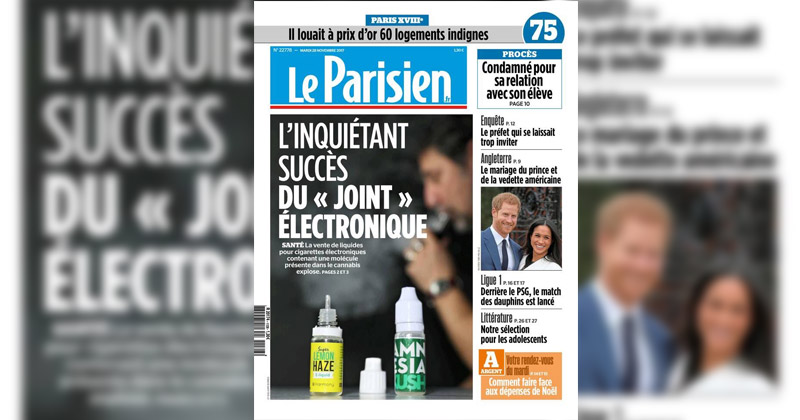
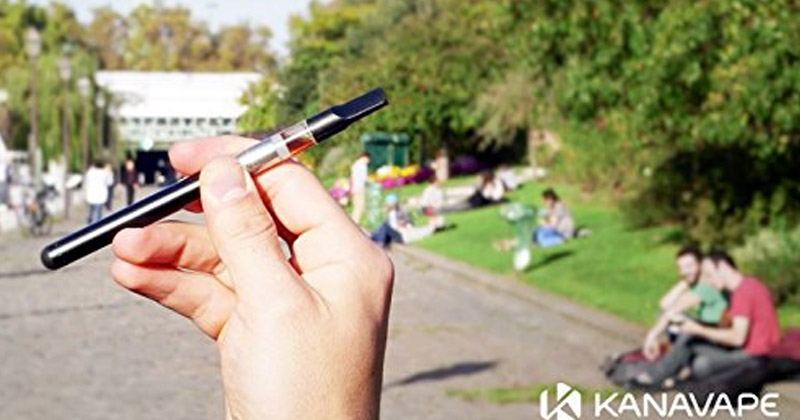
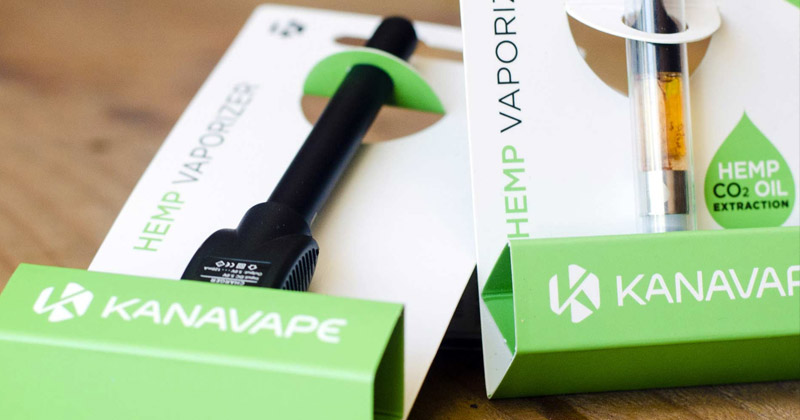
Yesterday, *Le Parisien* published an «alarming» front-page story on the rise of CBD e-liquids. Similar to those containing nicotine, they are consumed using an e-cigarette and do not cause any psychoactive effects. At most, the user experiences a slight feeling of relaxation.
The cannabidiol (CBD) is extracted from cannabis, a plant whose use is restricted in France, which is why *Le Parisien* compared it to an «electronic joint» or «e-joint.» But are they really comparable? What are the potential dangers of CBD e-liquids? We interviewed three people who were able to answer our questions.
Jean-Pierre Couteron, President of the Fédération Addiction
According to Jean-Pierre Couteron, whom we contacted, «The dangers lie primarily in news articles that lump everything together—in this case, a CBD e-liquid and an e-joint.»
«The use of e-liquid—via vaporization—with properties similar to those of nicotine-containing e-liquids is part of the same approach to risk reduction and access to a specific substance: nicotine in one case for those who are addicted, and CBD for others. Users seek to avoid combustion and its associated risks, and to avoid exposure to other substances in tobacco or to THC.»
«Studies are currently underway on the therapeutic benefits attributed to CBD, and the initial results from any single study are not sufficient. Typically, a single study is not enough.".
At this stage, the literature points to serious potential for the therapeutic use of CBD, particularly its anxiolytic and emotion-regulating properties, as well as its anti-inflammatory, analgesic, and antipsychotic effects. »This is one of the reasons why it is an ingredient in the drug Sativex; therefore, we must speed up the availability of medical cannabis.” Jean-Pierre Couteron also mentioned yesterday at noon on RTL that Sativex was still not available to patients with multiple sclerosis.
Jonathan Cuenca, consultant and CBD project manager at Liquideo
Jonathan is a consultant and CBD project manager at Liquideo, one of the companies featured on the front page of *Le Parisien*. We asked him three questions:
Can CBD e-liquid really be considered an e-joint?
No, absolutely not—it’s actually quite the opposite. The first difference is the absence of combustion. When lit, a joint releases a significant amount of substances that are particularly toxic to the body. But the biggest difference is the absence of THC. CBD is a non-psychoactive substance, meaning it has an effect on the body without altering the senses, unlike a joint.
What should you look out for when buying CBD e-liquid?
The current trend surrounding this substance necessarily requires the ability to trace the origin of products effectively and transparently. Since this molecule is found in hemp—though not exclusively—it can be extracted in various ways. For our part, we consistently recommend CBD that is extracted using clean methods and produced from organically grown crops to ensure a product that is safe for consumption.
Does your CBD e-liquid have any therapeutic uses?
Of course not; it's simply an alternative to a consumption pattern that we consider inappropriate, and we bring to market any option that steers people away from cigarettes and joints.
A hemp farmer from southern France
When we interviewed a hemp farmer from southern France—who asked to remain anonymous—he reminded us that the varieties grown in France must comply with the 0.2% THC limit and contain no more than 6% of CBD. He also emphasizes the legal uncertainty surrounding CBD, which benefits only foreign producers.
Although we are still, for the time being, Europe’s leading hemp producers, the CBD used today in hemp-derived products sold in France comes mainly from Spain, the Czech Republic, and even China.
The issue for our hemp farmer is the difficulty in getting answers from French authorities about what is actually possible—or not—and whether the current rules can be changed. French hemp farmers often find themselves in legal trouble due to overly restrictive regulations. For example, THC levels regularly exceed 0.2% in the fields, depending on the soil or sunlight exposure. At the slightest misstep—and we’re talking about less than 1% of THC, a level that has no psychoactive effects—farmers are treated as drug producers.
Furthermore, there is the inability to use hemp flowers, even though they contain the majority of the cannabinoids, including CBD. The flowers must be destroyed, which amounts to millions of euros being thrown away.
He also points out that numerous international studies have been conducted on CBD—a product that is ultimately safe—but these are not recognized by the ANSM, which nevertheless appears to be seeking to maintain control over any commercial use of cannabidiol. The only option for truly working with the plant is to move abroad, which is what many of his colleagues are doing.









October 2026 CBD Highlights: 10 Strains and Hash to Discover from 5 French Producers

CBD in France: Traceability, Retail Stores, THC and Driving… What the New Bill Proposes

Organigram Enters the Race for Aurora Cannabis

Medical Cannabis: Augur Associates’ latest report provides an update ahead of the publication of the decrees

Golden Buds is relaunching its Nova High vape pens with a cannabinoid formula that’s out of the ordinary

Cannabis is now Canada's fifth-largest commercial crop

Bedrocan Finally Declared Bankrupt

After CBD, Can Wellness Exist Without Cannabinoids?

Uganda Launches a Cooperative Dedicated to Medical Cannabis

Ukraine: First Cancer Patient Prescribed Medical Cannabis
-
 Business1 week ago
The legal cannabis market in New York exceeds 4 billion $ in revenue
-

 Cannabis in France3 weeks ago
Which countries legalized medical cannabis before France?
-
Business3 weeks ago
South Korea is preparing to begin local production of medical cannabis to meet rising demand
-
Cannabis in the Netherlands4 weeks ago
One year after the launch of the Dutch cannabis experiment, the first trends are emerging
-
Cannabis in Thailand3 weeks ago
From the boom in dispensaries to a purely medical approach: Thailand is revising its cannabis policy
-
Cannabis and driving3 weeks ago
Medical Cannabis and Driving: New South Wales Ends Automatic Penalties for THC
-
Cannabis in Argentina4 weeks ago
Argentina Opens Its Market to Hemp Flowers Containing 1% of THC
-
Autism3 weeks ago
Autism and Cannabis: Results from the First Placebo-Controlled Trial of NTI164















You must be logged in to post a comment Login