Bernie Sanders unveils plan to legalize cannabis in 100 days

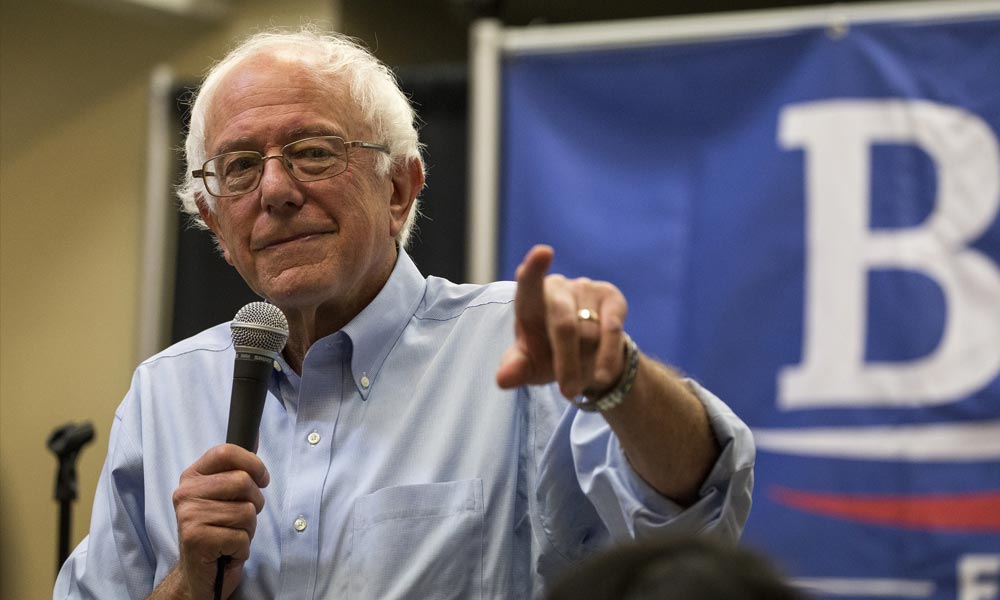
In a cannabis reform plan released last Thursday at 4:20 p.m., Democratic presidential candidate Bernie Sanders presented its plan to legalize cannabis at the federal level within his first 100 days in office if elected.
The plan includes the overturning of cannabis-related convictions, social equity programs funded by cannabis revenues and would «ensure that legal cannabis doesn't turn into Big Tobacco».
Too many lives were ruined due to the disastrous criminalization of marijuana. Today I am releasing my plan to:
✅ Legalize marijuana with executive action
✅ Expunge past marijuana convictions
✅ Invest in communities most affected by the War on Drugs https://t.co/0xQSHn6F3U- Bernie Sanders (@BernieSanders) October 24, 2019
ADVERTISING
Acting on the failure of prohibition
Bernie Sanders was the first U.S. presidential candidate to make cannabis legalization a campaign issue, in 2015. The current senator said he would appoint an attorney general, an administrator of the Drug Enforcement Administration (DEA) and a Secretary of Health and Human Services, «who would work to quickly end the war on drugs and legalize cannabis.».
«It's time to admit that the criminalization of cannabis has been a disaster, especially for communities of color, and to allow the people most affected to move on with their lives,» the plan states. «Our job now is to legalize cannabis, overturn previous convictions, and ensure that revenues from legal cannabis are reinvested in the communities most affected by the war on drugs.»
50 billion over 10 years
Taxes on legal cannabis sales would be used in part to create a $20 billion minority business development grant program «to provide subsidies to entrepreneurs of color who continue to face discrimination in access to capital.».
Another $10 billion subsidy would be created for cannabis businesses owned or controlled at least 51% by people in areas disproportionately affected by the war on drugs, or by people arrested or convicted of cannabis-related offenses.
A $10 billion program would also be set up in the U.S. Department of Agriculture to create cannabis farms in urban and rural areas hardest hit by the war on drugs. The plan also includes free job training for previously incarcerated people seeking to enter the space.
To prevent cannabis from becoming an indestructible industry like Big Tobacco, the Sanders plan would encourage cannabis companies to incorporate as non-profit organizations, ban advertising aimed at young people, prohibit access to the cannabis sector by companies that have created cancer-causing products or used deceptive marketing practices, and the tobacco and cigarette industry.
Bernie Sanders would base his penal reform policy on the Californian model, which obliges authorities to review current convictions and previous cannabis-related convictions. Prosecutors would have one year to «appeal or object», after which the authorities would automatically erase criminal records.
The process would be federally funded, and would encourage partnerships with organizations capable of accelerating the process, following the example of California's partnership with Code for America. This partnership has resulted in the overturning of 9,362 misdemeanor and felony cannabis convictions in the state since 1975.
Sanders also wants to set up a national organic cannabis certification system «to give consumers the information they need to make an informed decision» and to ensure that «cannabis producers receive a fair price for their products [...]". guaranteeing cannabis growers a decent wage.»
A Democratic campaign focus
While Bernie Sanders is the most visible candidate advocating federal legalization of cannabis, he's not alone. Beto O'Rourke (Democrat) also released a drug policy reform plan on Thursday, proposing to decriminalize possession of all drugs and to establish safe injection sites and needle exchange programs.
Pete Buttigieg and Tulsi Gabbard (Democrats) are also in favor of a decriminalization policy, and entrepreneur Andrew Yang wants to remove criminal penalties for possession and possession of opioids.
Former Housing and Urban Development Secretary Julián Castro also proposed a criminal justice plan in which he promised that if elected president, he would legalize cannabis, overturn previous cannabis convictions and invest in communities disproportionately affected by prohibition.
My #FirstChance Plan:
✔️Justice for Communities of Color
✔️End Police Violence
✔️Legalize Marijuana, Expunge Records
✔️Abolish the Death Penalty
✔️Fair Trials for All
✔️Heal The Wounds of Mass Incarceration https://t.co/dvXzJekckt- Julián Castro (@JulianCastro) October 23, 2019



















Medical Cannabis in Germany: THC Prices Vary by a Factor of 12

France already has 3,000 cannabis retail outlets. None of them are legal.

Morocco's exports of legal cannabis have expanded to 15 countries

Aurora Cannabis Doubles Its Production Capacity in Germany

Tilray is accelerating its operations in Europe thanks to a license in Portugal

Boston will host the 10th annual State of the Cannabis Industry Conference on October 26

A DEA report confirms that there are no fatal cannabis overdoses

A British patient is challenging the NHS's refusal to reimburse medical cannabis

October 2026 CBD Highlights: 10 Strains and Hash to Discover from 5 French Producers

CBD in France: Traceability, Retail Stores, THC and Driving… What the New Bill Proposes
-
 Business2 weeks ago
The legal cannabis market in New York exceeds 4 billion $ in revenue
-

 Cannabis in France3 weeks ago
Which countries legalized medical cannabis before France?
-
Business3 weeks ago
South Korea is preparing to begin local production of medical cannabis to meet rising demand
-
Cannabis in Thailand3 weeks ago
From the boom in dispensaries to a purely medical approach: Thailand is revising its cannabis policy
-
Cannabis and driving3 weeks ago
Medical Cannabis and Driving: New South Wales Ends Automatic Penalties for THC
-
Cannabis in Argentina4 weeks ago
Argentina Opens Its Market to Hemp Flowers Containing 1% of THC
-
Autism3 weeks ago
Autism and Cannabis: Results from the First Placebo-Controlled Trial of NTI164
-
Cannabis in France2 weeks ago
France’s Drug Policy Chief Defends Cannabis Prohibition... and Runs Into the Facts

















You must be logged in to post a comment Login