Cannabis Europa London 2023 - Day 1


The ninth edition of Europe's leading cannabis conference, Cannabis Europa, came back this week at the Barbican Center for the first time since its inception in 2018, bringing together more than a thousand industry leaders, key policymakers from across the EU, and patient representatives.
Preliminary Remarks
Stephen Murphy, CEO of Prohibition Partners, welcomed attendees to the Barbican Theater on Tuesday morning, noting that the venue was a «beacon of creativity» in the United Kingdom and stating that the need for «creativity in the cannabis industry» was just as «essential .».
Looking back on the first edition of Cannabis Europa in 2018, Mr. Murphy noted that there were «few or no patients, companies, or regulations» in the EU.
He added that while it's easy to feel frustrated by the lack of change and momentum in the industry, we need to remember how far we've come in such a short time.
In addition, he emphasized that it is still necessary to involve patients throughout the sector and that the sector must continue to place patients at the center of its business models.
With that in mind, he welcomed the event’s main sponsor, Robin Emerson, executive director of the Jorja Emerson Center, onto the stage.
During his speech, Mr. Emerson told the audience that this was a «surreal moment» for him, having started out—like many people in the audience—as a family member of a patient who used cannabis for medical purposes.
He shared the story of his daughter, Jorja, and the improvements that medical cannabis had brought to her life, stating, «Naturally, I decided to make medical cannabis my life’s work.».
He then revealed exclusively to Cannabis Europa that Jorja’s story will soon be featured in a documentary, with the goal of raising awareness and increasing access, and helping her company «shake up the industry.».
Current Situation – Germany, the Czech Republic, and Switzerland
The first of a series of three discussions on the current state of affairs during the morning session focused on Germany, which, following a dramatic change in course, announced by the country's government last month, drew a large crowd.
The panel moderator, Krautinvest Editor-in-Chief Moritz Förster, began by asking a direct question about the panel’s level of satisfaction with the recently announced guidance document, and Dirk Heitepriem of BvCW stated: «As an industry, we had hoped for more, but we always knew this was a marathon, not a sprint.»
While acknowledging that any progress toward cannabis legalization is a step forward, he noted that the «first pillar will not be easy» to implement.
»As a nonprofit organization, the industry doesn't seem to have any role other than a supporting one,« he added, noting that the second pillar of the pilot study, on the other hand, represented a »huge opportunity.".
«We need to move forward very quickly; otherwise, we'll let the illicit market flourish.»
Julian Wichmann, co-founder of the Bloomwell Group, said that, in his view, the most important part of the new legislation was the «reclassification,» but he added that this reclassification could take place in 2024 or later.
Regarding the industry’s role in a market centered on Cannabis Social Clubs, the panel agreed that, although this is «certainly not a structure that will replace the illicit market,» the industry has a key role to play in sharing the body of knowledge it has been building over the past six years, ensuring that the project does not «start from scratch.».
Although speculation about upcoming pilot projects has been limited, given the lack of details provided by the government so far, the panel stated that the data obtained during this process would be crucial to «convincing more EU member states to change their policies.».
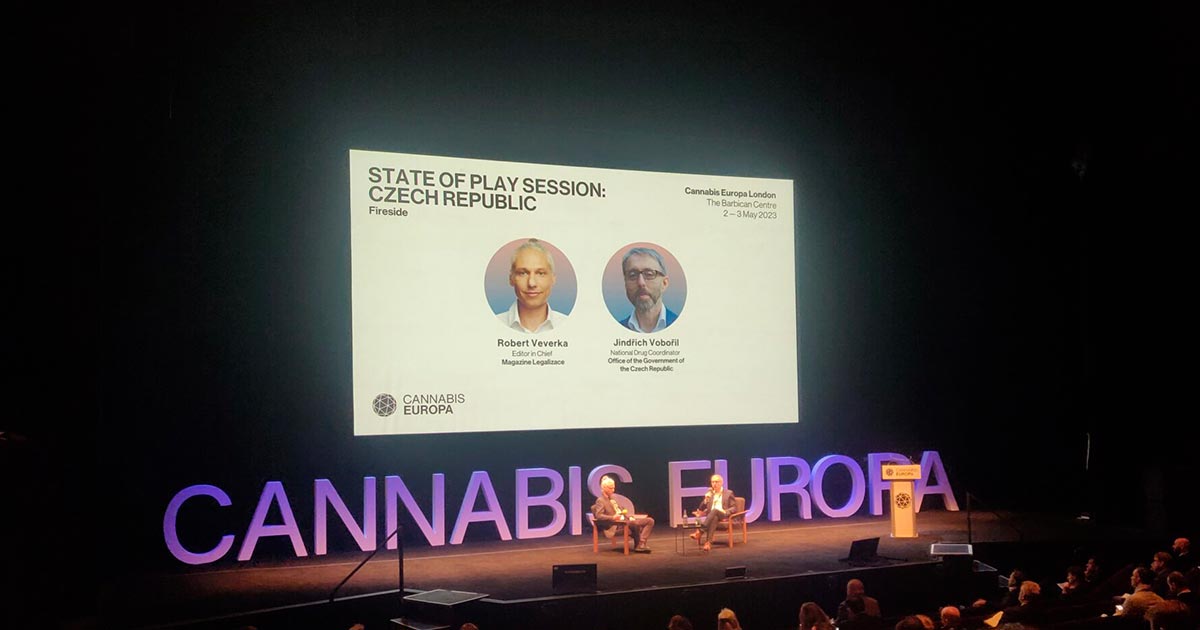
The next panel focused on to the Czech Republic, where the national drug coordinator, Jindřich Vobořil, stated that he now believed there was sufficient data on the alcohol and tobacco markets to prove that prohibition does not reduce harm, but that regulation does.
He added that the Czech Republic was now »on its own in its quest» to launch a fully-fledged commercial market, and that it was «drafting a proposal for a commercial market and sales in dispensaries and pharmacies.».
While stating that there was not yet a consensus within his own coalition on how to move forward, he «believed it was possible; otherwise, I wouldn’t be pushing for it; I’m too old to waste my time on something I can’t do.».
«It’s very difficult to have a debate at the EU level on this issue because countries have very different views and legal frameworks. The EU is a great idea, but it’s very bureaucratic and, in many ways, far behind on this issue.»
«The way forward is the path we are already on. Each country will amend its laws and put pressure on the EU.»
«Conferences are a good thing, but we need to take concrete action. To put it bluntly, we need strong lobbying and campaigns, we need to put money on the table, and we need to eliminate politicians» unnecessary anxiety by educating them.”.
The most recent «State of the Industry» session focused on Switzerland, which, as Luc Richner, CEO of Cannavigia, pointed out, is now considered a a European pioneer in its efforts to legalize cannabis.
He added that one aspect of the Swiss model that «often goes unnoticed» is that the country’s authorities «have allowed everyone to come together and propose studies on how this might work,» which he considers a very «forward-looking» approach.
«Even in a small country, there are so many different approaches to how this will play out, and I think that’s very important for what’s happening in Europe. I don’t think we have the answer, because no one has the answer. I think we can help shed some light on it.»
Risk Mitigation and the Traditional Market
The discussion then turned to the potential impact of these policies on patients and cannabis users.
During a roundtable discussion on harm reduction, Lisa Townsend, Surrey’s police and crime commissioner, said she feared that the United Kingdom’s two main political parties were preparing for a «war on crime… an arms race that, in the end, will benefit no one.».
She added that, although she does not agree with the argument that Cannabis is a gateway drug, it is becoming a gateway drug for criminal gangs that have traditionally focused on the cocaine trade but are increasingly turning to cannabis.
With regard to Current developments in Ireland, Member of the European Parliament Luke Ming Flanagan said he hoped the Citizens’ Assembly on Cannabis would have a positive impact on public opinion and government policy, citing the success of similar initiatives on same-sex marriage and abortion.
«Many people were skeptical about the expert panel (of the Citizens» Assembly), but after following the initial debates, it’s clear that Irish citizens are far ahead of the political mainstream on this issue. There won’t be a referendum on the issue, but this will put pressure on politicians.”
«It’s not as progressive as I’d like it to be, but the citizens» assembly will move things forward. In Ireland, politicians would legalize the consumption of raw chicken if a citizens’ assembly recommended it.”
«If opinion polls in the United Kingdom are to be believed, it has never been easier, from a political standpoint, to talk about legalizing cannabis. I have a hard time understanding why a major British political party isn’t coming out in favor of this measure—you’ll lose votes and won’t know what to do with them.»
Bell Ribeiro-Addy, a Labor Party member of Parliament, said there is currently a «very contradictory message» regarding cannabis, which remains decriminalized despite the existence of a thriving private medical industry.
She also raised the issue of disproportionate criminalization in the United Kingdom, even though there is no evidence of an increase in drug use among communities of color.
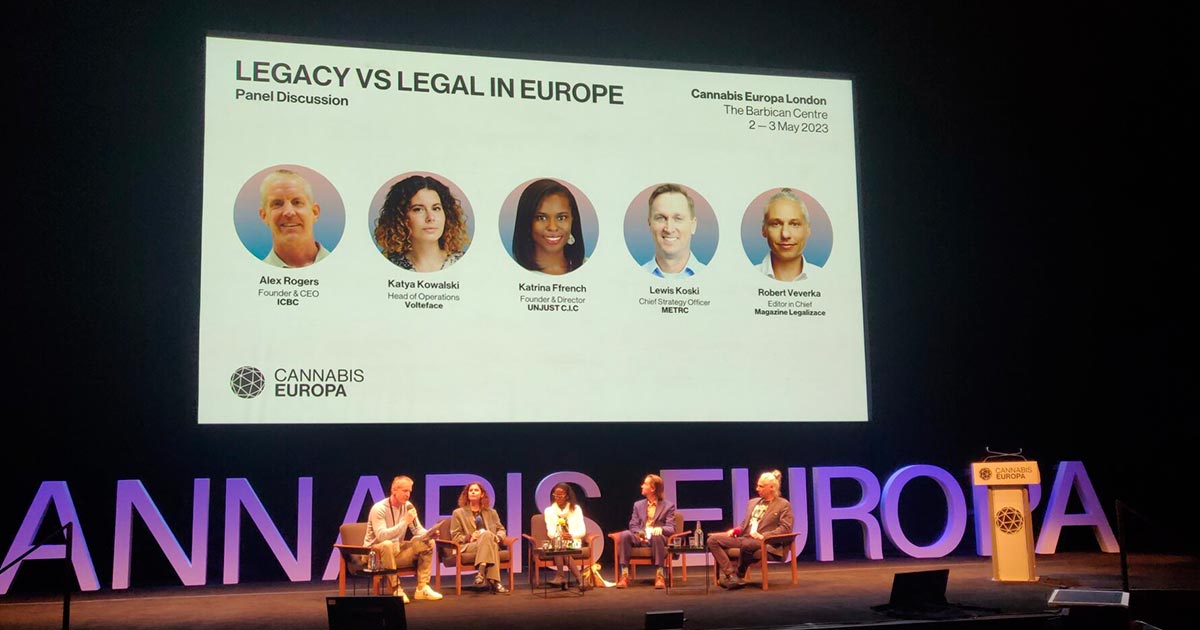
This point was explored in greater depth during the day’s final session by Katrina Ffrench, founder of Unjust CIC, who stated: «As a Black man, you’re viewed as a criminal: «As a Black man, you’re nine times more likely to be stopped and searched for cannabis.»”
«It is up to businesses and governments to understand how prohibition has harmed these communities.».
The Focus on Investors
The afternoon began with a series of panel discussions focusing on the investors' perspective.
Participants in the first session, titled «A Shift in Gear for Cannabis in Europe,» joked that it had actually been more like «hitting the brakes» over the past 12 months.
After warning that the session was unlikely to get off to a «strong start,» Sam Volkering, editor-in-chief and chief investment officer at Southbank Investment Research, suggested that if a company «hasn’t been profitable or doesn’t have enough cash, no one wants to invest in it.».
Sean Stiefel, CEO of Navy Capital, said that in his opinion, «the biggest obstacle to investment is the lack of regulatory clarity; even if you think the company is solid, you have no idea how long it will last.».
«It won’t take much to restore enthusiasm in the industry. On the other hand, over the past two years, we’ve seen business models that simply didn’t work.»
Regarding the companies that had failed, he suggested that consolidation was not a topic about which his company was «optimistic,» given that significant obstacles to the transfer of licenses remained and that many of their facilities were now obsolete.
Regarding the news that the financial giant Euroclear recently withdrew from the cannabis industry, Nick Davis of Memery Crystal said, «The Home Office could step in very quickly.» Jersey has clarified the law on proceeds of crime—which wasn’t particularly difficult to do. Not only is there uncertainty surrounding the plant, but in the United Kingdom, there’s this issue of proceeds of crime.”
«If you’re an investor in 2023, cannabis is probably riskier than ever, and the markets are risk-averse. You have to be a forward-thinking investor to take on these risks right now. I remain convinced that the returns will be there.».
The market was similar on the other side of the Atlantic, according to Mr. Stiefel, who told the audience: «Liquidity for U.S. traders is higher than in the European Union.» Liquidity for U.S. operators has never been lower. It’s harder than ever for an investor to wake up and decide to invest in cannabis. Furthermore, the number of attractive companies worth investing in has never been lower in the cannabis sector.”.
In line with the panel’s previous statements, he said it was becoming clear that the cannabis industry would never support hundreds of thousands of businesses, but that, like the alcohol industry, there would be «a few conglomerates, a bunch of small businesses, and regional players.».
«I would say that, at least in the United States, between now and the end of time, there will be fewer cannabis companies.»
«I remain convinced that the U.S. market will reach $100 billion. We therefore believe there are many advantages for those who will succeed, and every day it becomes increasingly clear who they are.».
To learn more about the second day, Click here.
























The Brazilian medical cannabis market continues to grow

Morocco: Three Cannabis-Based Medications Approved for the Treatment of Epilepsy

Canopy Growth Receives New EU-GMP Certification to Strengthen Its Presence in Europe

Three years after legalizing medical cannabis, Albania continues to establish regulations for it

The first plant-based medical THC spray arrives in the United Kingdom

Medical Cannabis in Germany: THC Prices Vary by a Factor of 12

France already has 3,000 cannabis retail outlets. None of them are legal.

Morocco's exports of legal cannabis have expanded to 15 countries

Aurora Cannabis Doubles Its Production Capacity in Germany

Tilray is accelerating its operations in Europe thanks to a license in Portugal
-
 Business2 weeks ago
The legal cannabis market in New York exceeds 4 billion $ in revenue
-

 Cannabis in France4 weeks ago
Which countries legalized medical cannabis before France?
-
Business4 weeks ago
South Korea is preparing to begin local production of medical cannabis to meet rising demand
-
Cannabis in France4 days ago
France already has 3,000 cannabis retail outlets. None of them are legal.
-
Cannabis in Thailand4 weeks ago
From the boom in dispensaries to a purely medical approach: Thailand is revising its cannabis policy
-
Cannabis in the U.S.5 days ago
A DEA report confirms that there are no fatal cannabis overdoses
-
Cannabis and driving3 weeks ago
Medical Cannabis and Driving: New South Wales Ends Automatic Penalties for THC
-
Cannabis in France3 weeks ago
France’s Drug Policy Chief Defends Cannabis Prohibition... and Runs Into the Facts

















You must be logged in to post a comment Login