More and more Canadians banned for life from the U.S. for cannabis use

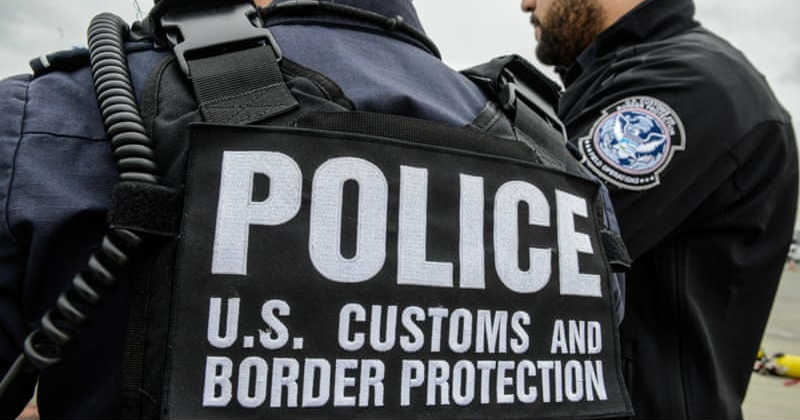
From the announcement of full legalization of cannabis in Canada, The U.S.-Canadian border has become a point of friction between the two countries. Cases of lifetime banishment of Canadians who have admitted to using cannabis in their lives or working in the cannabis industry are multiplying, but so far no diplomatic action has been taken on the issue.
On the Canadian side
The state of U.S. federal law, which classifies cannabis as an illicit substance despite its legalization in some states, provides for lifetime banishment from U.S. territory for «cannabis addicts".« drug abusers ». Anyone who admits to having smoked cannabis once in their life could fall into this category.
Perhaps the best-known case is that of Matthew Harvey, banned for life at the age of 37 for admitting to smoking cannabis when he was 18. Immigration lawyer Len Saunders reports an upsurge in similar cases since the announcement of Canadian legalization, with one or two cases a week compared with one or two a month 15 years ago. This trend is likely to increase, as it is estimated that 40% of Canadians will smoke once legalization becomes effective.
By extension, Canadians who work in the cannabis industry are declared inadmissible and considered agents of drug trafficking. This is the case, for example, of Jay Evans, CEO of Keirton Inc, and two of his colleagues who were traveling to the United States to discuss the creation of a device to facilitate cannabis production. Although they were not involved in the sale or cultivation of the plant, they were detained, interrogated and then branded as drug traffickers banned from entering the country.
Once banned, Canadian citizens wishing to enter the United States can apply for a waiver, legal solution that temporarily lifts the ban after a thorough file review. However, this document only lasts from six months to a year, or even five in some cases, and entails a processing fee of 937$. What's more, the file to be compiled is very demanding in terms of procedure, and includes: a criminal record check by the Royal Canadian Mounted Police, Two letters of recommendation, one letter of remorse, proof of employment and all immigration application papers.
Once all the documents have been collected, banished persons must bring them to a point of entry where their fingerprints and a photograph of their face will be taken. The documents are then sent to the Bureau d'Examen de l'Admissibilité, which can then mandate a doctor to carry out a drug test. A very tedious and costly procedure.
On the American side
Conversely, U.S. citizens who travel to Canada as part of cannabis tourism risk sanctions if they bring back a vacation souvenir. They can be arrested for drug possession or trafficking, and face jail time or hefty fines. This customs rigor, at a time when some border states have legalized the recreational use of cannabis, poses a serious problem for residents of border towns who regularly cross the border in either direction.
According to lawyer Len Saunders, this situation of intolerance is attributed to the Department of Justice's paranoia about the potential effects of Canadian legalization. Jeff Session, U.S. Attorney General, is particularly reticent about recent pro-legalization and pro-decriminalization trends. Although Customs does not report to the Department of Justice but to the Department of Homeland Security, the agency is known for its anti-cannabis stance. Jeff Session has refused to be interviewed on the subject, and it still seems taboo in political circles.








Medical Cannabis in Germany: THC Prices Vary by a Factor of 12

France already has 3,000 cannabis retail outlets. None of them are legal.

Morocco's exports of legal cannabis have expanded to 15 countries

Aurora Cannabis Doubles Its Production Capacity in Germany

Tilray is accelerating its operations in Europe thanks to a license in Portugal

Boston will host the 10th annual State of the Cannabis Industry Conference on October 26

A DEA report confirms that there are no fatal cannabis overdoses

A British patient is challenging the NHS's refusal to reimburse medical cannabis

October 2026 CBD Highlights: 10 Strains and Hash to Discover from 5 French Producers

CBD in France: Traceability, Retail Stores, THC and Driving… What the New Bill Proposes
-
 Business2 weeks ago
The legal cannabis market in New York exceeds 4 billion $ in revenue
-

 Cannabis in France3 weeks ago
Which countries legalized medical cannabis before France?
-
Business3 weeks ago
South Korea is preparing to begin local production of medical cannabis to meet rising demand
-
Cannabis in Thailand3 weeks ago
From the boom in dispensaries to a purely medical approach: Thailand is revising its cannabis policy
-
Cannabis and driving3 weeks ago
Medical Cannabis and Driving: New South Wales Ends Automatic Penalties for THC
-
Cannabis in Argentina4 weeks ago
Argentina Opens Its Market to Hemp Flowers Containing 1% of THC
-
Autism3 weeks ago
Autism and Cannabis: Results from the First Placebo-Controlled Trial of NTI164
-
Cannabis in France2 weeks ago
France’s Drug Policy Chief Defends Cannabis Prohibition... and Runs Into the Facts

















You must be logged in to post a comment Login