
Who will benefit from the legalization of cannabis in Canada?

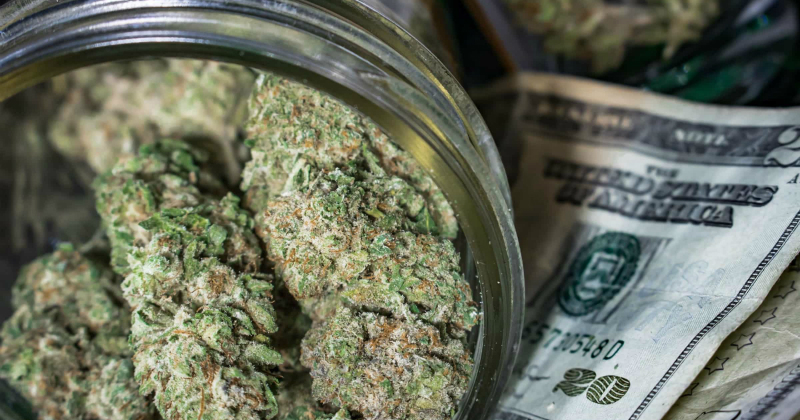
After 95 years of prohibition, Canada will officially become the second country to legalize cannabis nationwide, effective October 17, 2018. Since cannabis has been partially legal for medical purposes since 2001, the Canadian industry is already well-established and ready to expand into the recreational market. But who will benefit from this new market of 5 million potential customers, which is poised to become one of Canada’s most lucrative?
Big Cannabis
Big Tobacco, Big Pharma—the trend toward monopolies in the tobacco, alcohol, and pharmaceutical industries has given rise to true giants. These companies generate revenues that exceed the GDP of some countries, run massive international operations, have a presence on every continent, and are constantly competing to secure as much market share as possible.
The Canadian cannabis industry appears to be moving toward this same model. In Canada, Canopy Growth leads the way and was the first company to surpass $1 billion in market capitalization. Canopy Growth consistently invests in ambitious plans, such as its recent move to establish a subsidiary in Latin America, which included the acquisition of Spectrum Cannabis Colombia. When it went public on the TSX (Toronto Stock Exchange, the Canadian stock market for large companies), the share price was less than 5$. Last year, it nearly reached 50$.
In late 2017, the company even signed a agreement with Constellation Brands, an American alcohol company, which acquired nearly 10% of Canopy Growth's equity.
Along with Canopy Growth, which already produces tens of thousands of kilograms of cannabis and cannabis derivatives each year, as well as other companies such as Aurora Cannabis which is preparing to acquire MedReleaf With companies valued at nearly 3 billion Canadian dollars—or Cronos Group, which has a market capitalization of 1.6 billion—the hippie spirit of cannabis from days gone by has vanished.
Former Cannabis Critics Turned Advocates
In 2016, even though medical use is legal in Canada, approximately 60,000 people were arrested for cannabis-related offenses. According to figures from the Canadian justice system, the majority of drug-related arrests involved cannabis, the least dangerous of the substances prohibited by the Controlled Drugs and Substances Act, and the majority of the prosecutions that resulted were for simple possession.
These figures stand in stark contrast to the success of Canadian cannabis companies and the upcoming legalization of cannabis for adults. Big Cannabis is already raking in millions of dollars, yet users continue to be arrested. Police action is also said to be disproportionate for people of color, who, according to statistics, are three times more likely to be arrested for cannabis, even though the rate of use is the same across all communities and ethnic groups.
Canadian activists decry widespread hypocrisy in the cannabis industry and point the finger at many former proponents of prohibition—such as high-ranking police officials and politicians—who are now trying to’get their share of the spacecake. Julien Fantino, the former Toronto police chief, stated a few years ago that legalizing cannabis was comparable to legalizing murder. Today, he is one of the leaders of a company that connects patients with dispensaries, alongside people such as Gary Goodyear and Raf Souccar, two former high-ranking officials who participated in and profited from the criminalization of cannabis users.
No room for the little ones
Legalization hasn’t even taken effect yet, and the major players are already becoming apparent. And the space available to small-scale producers is proving limited in the face of companies that have already begun building cultivation facilities capable of producing astronomical quantities of cannabis at low cost.
Canopy Growth alone already has more than 55,000 square meters of production space, which will increase to 118,000 in the near future. The company already owns Tweed, Bedrocan, and Spectrum Cannabis, and is pursuing a long-term investment strategy that suggests a desire for total market dominance. It is unlikely that this new facet of the cannabis industry, the corporate weed, leaves plenty of room for small-scale initiatives.
Furthermore, many people who have developed expertise in cannabis have already served time in prison and therefore struggle to carve out a place for themselves in a market that they were the first to develop, despite the risks involved.
Banks also refuse to grant loans to former «criminals,» while others are still serving prison sentences for international trafficking, even as legal businesses expand beyond U.S. borders. In response to the question, «Will individuals who have been convicted of cannabis-related offenses be able to participate in the cannabis industry?», the Canadian government has answered that he «could take certain factors into account to protect the health and safety of fellow citizens,» and that «among these factors is the candidates» criminal history.”.
In short, the Canadian government could prevent the most experienced cannabis operators from entering the legal market, under the pretext of «protecting the legal supply chain from infiltration by criminal networks.».
The legalization of cannabis in Canada will therefore primarily benefit large medical cannabis companies and their partners within the government and law enforcement. A small portion of the market will likely be left to smaller initiatives, with the risk of effectively excluding people with prior convictions or those who are already underrepresented in other industries.












France’s Drug Policy Chief Defends Cannabis Prohibition... and Runs Into the Facts

Cannabis and the Adolescent Brain: French Scientists Make a Key Discovery

EFSA Gives Initial Approval for Synthetic CBD; Natural Extracts Still Pending

Federal Cannabis Reform Once Again on Hold in the United States

Contest: Win a trip to Quebec to experience the hemp harvest firsthand

Bedrocan on Hold Amid Uncertainty Over Medical Cannabis

Newsweed Launches Its Own AI
A new tax of 0.5% could disrupt the hemp industry in Canada

Medical Cannabis and Driving: New South Wales Ends Automatic Penalties for THC

China's Yongji Health Takes Control of Tasmanian Botanics
-
 Cannabis and driving3 weeks ago
Cannabis and CBD: French Drivers Can Now Lose Their License Even Without a Positive Test Result
-

 Cannabis in France1 week ago
Which countries legalized medical cannabis before France?
-
Cannabis in France4 weeks ago
Cannabis Legalization: The LFI Bill Has a Major Problem—THC
-
Cannabis in the Netherlands3 weeks ago
One year after the launch of the Dutch cannabis experiment, the first trends are emerging
-
Business1 week ago
South Korea is preparing to begin local production of medical cannabis to meet rising demand
-
Cannabis in Thailand1 week ago
From the boom in dispensaries to a purely medical approach: Thailand is revising its cannabis policy
-
Cannabis in Argentina2 weeks ago
Argentina Opens Its Market to Hemp Flowers Containing 1% of THC
-
Cannabis in France3 weeks ago
French medical cannabis remains stalled at the Ministry of Health

















You must be logged in to post a comment Login