Wealthy countries have recently spent over a billion dollars on the global war on drugs, according to a new report.

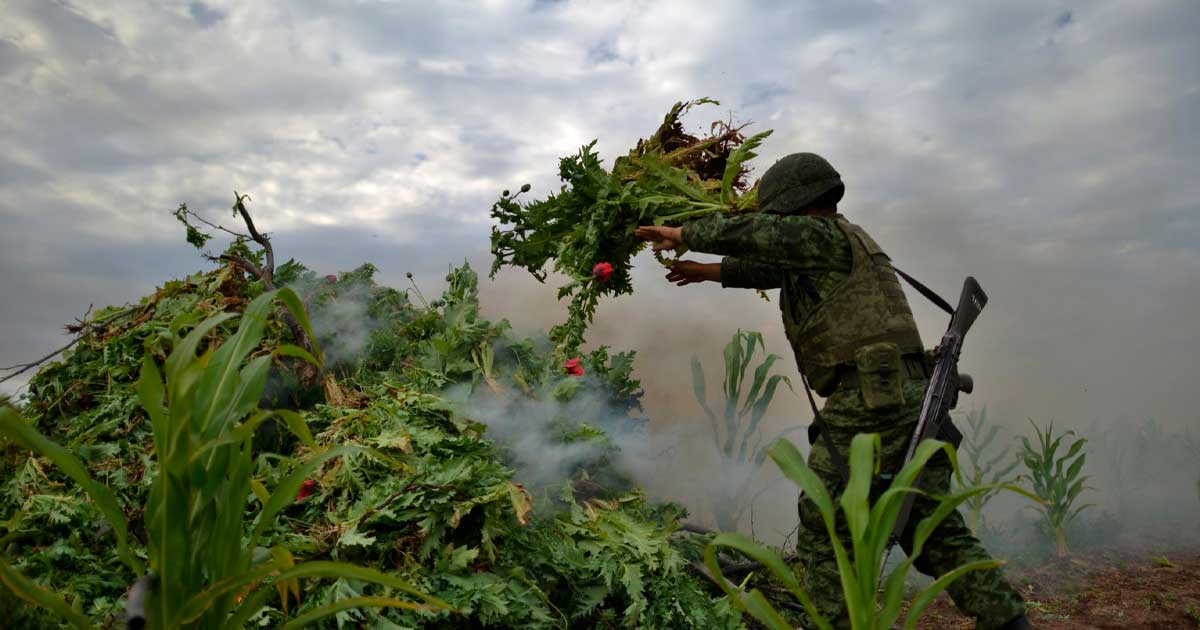
A recent report by Harm Reduction International (HRI) highlights how the wealthiest countries, such as the USA and Europe, continue to provide substantial foreign aid to the global war on drugs, mainly allocated to law enforcement and military efforts.
HRI calls on governments to «stop using money from their limited aid budgets» to support policies that have a negative impact on people who use drugs.
We know that public health programmes that prioritise community and justice are effective and save public funds. Yet governments and donors around the world continue to waste vast amounts of money on funding punitive responses to drugs. https://t.co/zumPT5s8cc #investinjustice pic.twitter.com/eLObjJPf9w
- Harm Reduction International (@HRInews) September 14, 2023
The report « Aid for the War on Drugs »reveals that between 2012 and 2021, 30 donor countries allocated $974 million in international aid to the «fight against narcotics».
Part of this aid, totalling at least $70 million, has been allocated to countries that apply the death penalty for drug-related offences.
As the report notes, in 2021, aid funds were allocated to Indonesia to support a «counter-narcotics training program», in the same year that Indonesia handed down a record 89 death sentences for drug-related offenses. Japan gave Iran several million dollars to help fund its drug-detecting dog units, while Iran executed at least 131 people for drug-related cases in 2021.
In the space of a decade, the United States has become the main contributor, with more than half of global funding for the war on drugs, i.e. $550 million. It is followed by the European Union ($282 million), Japan ($78 million), the UK ($22 million), Germany ($12 million), Finland ($9 million) and South Korea ($8 million), reports Marijuana Moment.
The war on drugs receives more foreign aid than school feeding, early childhood education, labor rights and mental health care. During the period described in the report, 92 countries received aid for «drug control». The main beneficiaries were Colombia ($109 million), Afghanistan ($37 million), Peru ($27 million), Mexico ($21 million), Guatemala and Panama ($10 million each).
«There is a long history of global powers using drug policy to reinforce and enforce their control over other populations and target specific communities,» the report reads. «Racist and colonial dynamics continue to this day, with the wealthiest governments, led by the United States, spending billions of taxpayer dollars worldwide to strengthen or expand punitive drug control regimes and related law enforcement measures.
«These funding streams are out of step with existing evidence, as well as with international commitments to development, health and human rights, including the goal of eradicating AIDS by 2030,» the report stresses. «They rely on systems that disproportionately harm and reinforce black and indigenous populations worldwide.»
While some countries, such as the UK, have reduced their spending on foreign anti-drug initiatives, others have chosen to increase their funding. The United States, for example, significantly increased its support for the war on drugs at the start of President Joe Biden's term.
While the United States is the world's leading contributor to the war on drugs, HRI's report highlights the fluctuations in these figures. For example, in 2021, the US allocated $301 million in aid to «narcotics control», a significant increase on the previous year's $31 million. According to the report, Colombia has become the main beneficiary of this aid.













JIHE 2026: Japan’s Largest Trade Show Dedicated to Hemp and CBD Returns to Tokyo with More Than 100 Industry Players
New Caledonia: The Courts Clear the Way for the Return of CBD

The Brazilian medical cannabis market continues to grow

Morocco: Three Cannabis-Based Medications Approved for the Treatment of Epilepsy

Canopy Growth Receives New EU-GMP Certification to Strengthen Its Presence in Europe

Three years after legalizing medical cannabis, Albania continues to establish regulations for it

The first plant-based medical THC spray arrives in the United Kingdom

Medical Cannabis in Germany: THC Prices Vary by a Factor of 12

France already has 3,000 cannabis retail outlets. None of them are legal.

Morocco's exports of legal cannabis have expanded to 15 countries
-
 Business2 weeks ago
The legal cannabis market in New York exceeds 4 billion $ in revenue
-

 Cannabis in France4 weeks ago
Which countries legalized medical cannabis before France?
-
Business4 weeks ago
South Korea is preparing to begin local production of medical cannabis to meet rising demand
-
Cannabis in France4 days ago
France already has 3,000 cannabis retail outlets. None of them are legal.
-
Cannabis in Thailand4 weeks ago
From the boom in dispensaries to a purely medical approach: Thailand is revising its cannabis policy
-
Cannabis in the U.S.5 days ago
A DEA report confirms that there are no fatal cannabis overdoses
-
Cannabis and driving3 weeks ago
Medical Cannabis and Driving: New South Wales Ends Automatic Penalties for THC
-
Cannabis in France3 weeks ago
France’s Drug Policy Chief Defends Cannabis Prohibition... and Runs Into the Facts















You must be logged in to post a comment Login