
Ontario unveils plans to regulate cannabis

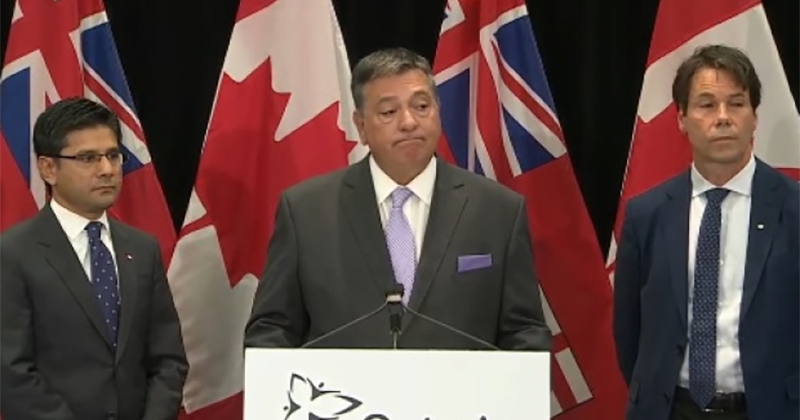
The Ontario government has announced the future regulatory framework for the sale and consumption of cannabis, which includes online ordering and around 150 dispensaries.
The plan revealed last Friday includes some key rules:
- 40 dispensaries will open in July 2018, 80 on July 1, 2019, rising to 150 in 2020
- online purchasing available from July 2018
- the minimum age for consuming, purchasing and possessing cannabis for recreational use will be 19, beyond the federal recommendations 18 years old.
Ontario is the first Canadian province to detail its future regulatory framework. can be found in short version here.
Many concerns
The province has decided to entrust management of the future cannabic stalls and online sales platform to the Ontario Liquor Control Board (LCBO).
This state monopoly will attack the many existing cannabis dispensaries head-on. Professionals who have been in the cannabis business for many years, and who have worked towards Canadian legalization, will find themselves excluded from the future industry.
«These cannabis dispensaries are illegal and will be closed,» said Attorney General Yasir Naqvi when announcing the legalization plan. «Consider yourselves warned».
The government is expected to continue its «proactive crackdown strategy» with local police forces to eliminate old dispensaries. New government dispensaries will be strategically placed in areas where there is a high concentration of dispensaries today.
The cannabis grey market has expanded rapidly in Toronto since legalization was announced. It is estimated that around a hundred are currently open.
However, the 40 dispensaries planned will struggle to meet the demand for legal cannabis. To give an order of magnitude, there will be 1 dispensary for every 240,000 inhabitants of cannabis-using age, or 1 dispensary for every 25,000 users. according to Canadian statistics of cannabis consumption. At 150 dispensaries, there will still be 1 dispensary for every 6,400 users. If the legal supply is insufficient, consumers will continue to buy on the black market.
In the meantime, the government will also have to train dispensary staff in both purchasing and sales.
«Dispensary staff need to be able to determine a person's experience level and tolerance, and recommend appropriate products to ensure they have a good experience.» said Jeremy Jacob, president of the Canadian Association of Medical Cannabis Dispensaries.
«That level of care and attention isn't present in liquor stores, and it's not something you can create with a snap of your fingers, and all of a sudden be sure that people are getting the advice they need.».





CBD is said to promote athletic recovery, without improving performance

294 cannabis clubs in Chile: a booming movement with uneven distribution

Chronic Sciatica: New York Approves First Clinical Trial of a THC-Based Medication

United States: The DEA is accelerating the integration of medical cannabis at the federal level

Florida is nearing one million patients using medical cannabis

Uruguay Revives Its Plan to Allow Tourists to Legally Access Cannabis

In Brazil, researchers are developing an innovative CBD eye drop

Autism: Medical Cannabis Is Linked to Reduced Anxiety

The $28 billion U.S. hemp market remains under threat

Jamaica Eases Small Farmers' Access to the Cannabis Market
-
 Business6 days ago
The legal cannabis market in New York exceeds 4 billion $ in revenue
-

 Cannabis in France2 weeks ago
Which countries legalized medical cannabis before France?
-
Business2 weeks ago
South Korea is preparing to begin local production of medical cannabis to meet rising demand
-
Cannabis in the Netherlands4 weeks ago
One year after the launch of the Dutch cannabis experiment, the first trends are emerging
-
Cannabis in Thailand2 weeks ago
From the boom in dispensaries to a purely medical approach: Thailand is revising its cannabis policy
-
Cannabis in France4 weeks ago
French medical cannabis remains stalled at the Ministry of Health
-
Cannabis in Argentina3 weeks ago
Argentina Opens Its Market to Hemp Flowers Containing 1% of THC
-
Cannabis and driving2 weeks ago
Medical Cannabis and Driving: New South Wales Ends Automatic Penalties for THC

















You must be logged in to post a comment Login