Australia: bill to legalize cannabis

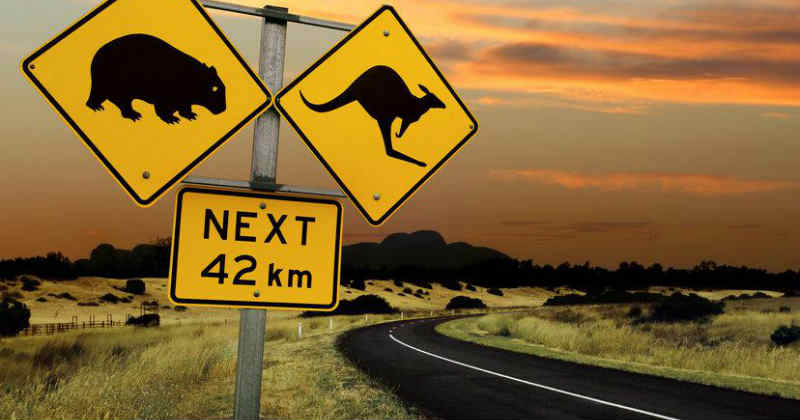
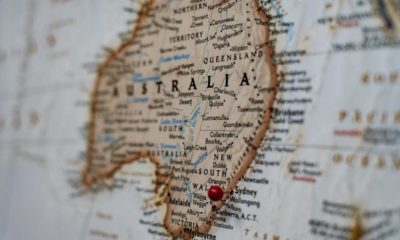
A proposed law introduced by Australian Liberal Democrat Senator David Leyonhjelm proposes amending the state's Criminal Code to remove legal barriers to the regulation of medical, recreational and industrial cannabis. The text would de facto legalize cannabis at federal level by simply ceasing to consider it a controlled substance.
Cannabis disappears from the law
Cannabis is defined exhaustively in the Australian Criminal Code, and all its parts are considered prohibited. In line with this definition, the code establishes a series of penalties relating to its production, processing and trade. However, the removal of the definition of cannabis from the Criminal Code means that these activities, and more broadly any activity involving the plant, are no longer considered crimes.
This change in status would also entail the concomitant modification of other legal texts in which cannabis is mentioned, such as the law on crime, the law on narcotics trafficking, the law on border control, the law on medicines containing narcotics and the law on therapeutic products. The proposed law aims, for example, to remove the reference to cannabis from texts on international trafficking, or to remove the elements that regulate its access for medical use only through licenses and permits.
Another amendment prevents cannabis from being classified as a poison, like cigarettes. The text calls for self-determination and considers that adults should be free to make their own choices, as long as these do not involve third parties or harm anyone.
For David Leyonhjelm, his proposal is in line with Human Rights, and is justified by the fact that prohibition turns ordinary citizens into criminals, puts significant pressure on the justice system, and feeds organized crime and violence.
Fiscal considerations are also put forward. On this point, the budgets of federal intelligence, police and border control agencies would be reduced in proportion to cannabis-related expenditure (around A$100 million). At the same time, the cannabis trade could lead to an increase in the Goods and Services Tax which would represent a profit of around 300 million. The combination of the two could therefore bring in some 400 million Australian dollars for the State.
The implications of the law
This law simply aims to remove legal barriers and restrictions around cannabis-related activities, but does not propose any alternative legal framework for their regulation. Australia's States and Territories would therefore be free to choose the model of cannabis regulation and taxation that suits them. without federal interference.
Cannabis would be made legal in all forms and in unlimited quantities.
Is the absence of a legal framework viable? It would also mean making cannabis-like synthetic substances legal, despite their dangerousness. Driving under the influence or resale to minors would also be problematic.
The bill passed its second reading last May and will be debated again this Monday in the Senate. For the moment, nothing has been done. If the bill were to pass unchanged, the Australian provinces would also have to examine the issue, as the Canadian provinces have done, to find out what to do with this regulation.
















Medical Cannabis in Germany: THC Prices Vary by a Factor of 12

France already has 3,000 cannabis retail outlets. None of them are legal.

Morocco's exports of legal cannabis have expanded to 15 countries

Aurora Cannabis Doubles Its Production Capacity in Germany

Tilray is accelerating its operations in Europe thanks to a license in Portugal

Boston will host the 10th annual State of the Cannabis Industry Conference on October 26

A DEA report confirms that there are no fatal cannabis overdoses

A British patient is challenging the NHS's refusal to reimburse medical cannabis

October 2026 CBD Highlights: 10 Strains and Hash to Discover from 5 French Producers

CBD in France: Traceability, Retail Stores, THC and Driving… What the New Bill Proposes
-
 Business2 weeks ago
The legal cannabis market in New York exceeds 4 billion $ in revenue
-

 Cannabis in France3 weeks ago
Which countries legalized medical cannabis before France?
-
Business3 weeks ago
South Korea is preparing to begin local production of medical cannabis to meet rising demand
-
Cannabis in Thailand3 weeks ago
From the boom in dispensaries to a purely medical approach: Thailand is revising its cannabis policy
-
Cannabis and driving3 weeks ago
Medical Cannabis and Driving: New South Wales Ends Automatic Penalties for THC
-
Cannabis in Argentina4 weeks ago
Argentina Opens Its Market to Hemp Flowers Containing 1% of THC
-
Autism3 weeks ago
Autism and Cannabis: Results from the First Placebo-Controlled Trial of NTI164
-
Cannabis in France2 weeks ago
France’s Drug Policy Chief Defends Cannabis Prohibition... and Runs Into the Facts















You must be logged in to post a comment Login