
A second GMO hemp variety approved in the United States, Badger G

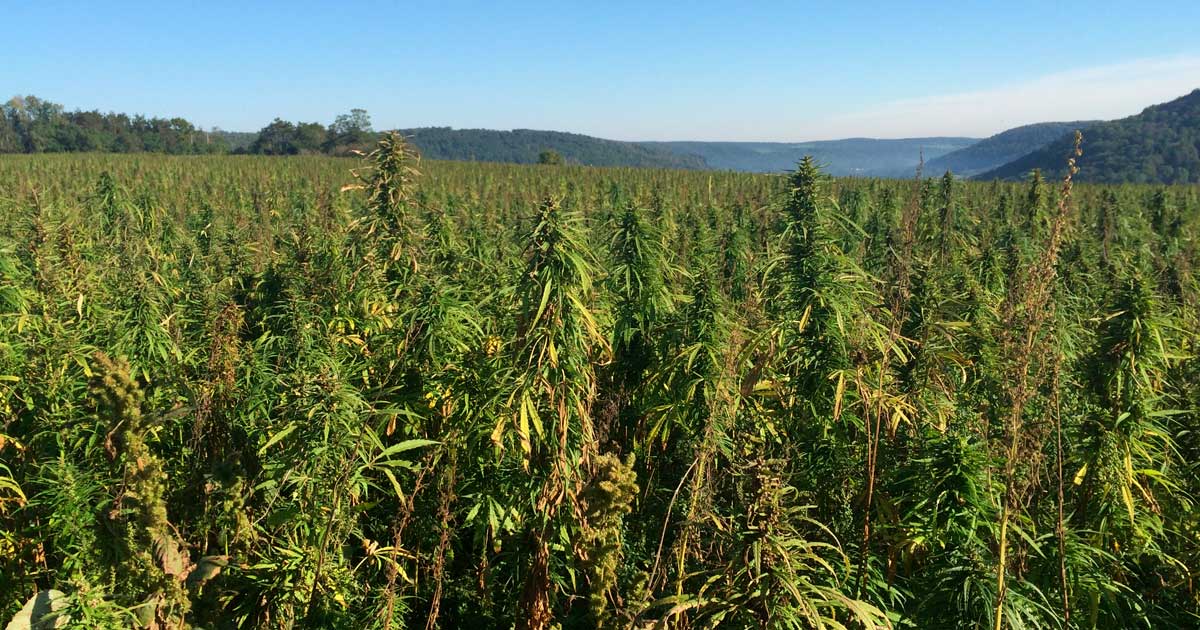
The U.S. Department of Agriculture (USDA) announced that a genetically modified variety of hemp, developed by researchers in Wisconsin, «can be grown and bred »is safe in the United States« and that it is »unlikely to pose an increased risk of plant pests compared to other cultivated plants.".
The genetically modified hemp variety, named « Badger G«, produces neither THC nor CBD, but is designed to have higher levels of cannabigerol (CBG), the a cannabinoid that serves as a precursor to all other cannabinoids in cannabis.
This is at least the second type of genetically modified hemp to receive approval from the USDA’s Animal and Plant Health Inspection Service (APHIS), following another variety of GMO hemp that produces lower levels of THC and CBD, was approved in October.
0 THC Safety for Farmers
According to the creators of Badger G, removing THC will allow farmers to prevent their crops from exceeding the federal limit of 0.3% of THC for industrial hemp.
«About 25% of the U.S. hemp crop is discarded because THC/THCA levels exceed the 0.3% threshold set in the 2018 Farm Bill,» the researchers stated in their application for Badger G approval. «Our new strain will enable farmers to be fully compliant with these regulations.»
The new variety could also increase CBG yields; CBG is a cannabinoid often considered to possess the combined benefits of other cannabinoids.
Studies have shown that, when taken orally, the CBG shows promise as a treatment for conditions such as glaucoma, inflammatory bowel disease, and Huntington’s disease, and may inhibit tumor growth in some cases; it is known to kill or slow the growth of bacteria and promote bone development.
As a topical product, CBG acts on the CB1 endocannabinoid receptors and CB2, triggering anti-inflammatory, antibacterial, and antioxidant responses that help the endocannabinoid system maintain healthy skin function. It has also been added to the EU Cosmetic Ingredients Database (Cosing) by the European Commission in 2021, recognition of its safety record in health and beauty products.
CBG production is costly
First discovered in the 1960s, CBG—which is not psychoactive—is not included on international drug schedules and is not considered a controlled substance. CBG has also been called «the Rolls-Royce of cannabinoids» because of the high cost of its production.
The relatively low amount of CBG found in conventional cannabis plants means that it takes thousands of kilograms of biomass to isolate even small amounts of this compound, which explains why prices for end users have historically been high. However, certain hemp varieties naturally and specifically produce CBG.
The difference between the breeding variety and the splicing genetics
Although both involve modifying an organism’s genetics, the selection and genetic modification of a plant using techniques such as gene editing or genetic engineering are different.
The selection, called breeding In English, it relies solely on natural methods to produce the desired traits—through hybridization or phenotype selection, for example—whereas genetic modification directly manipulates an organism’s genes using biotechnology.
Variety selection simply takes advantage of the natural genetic diversity found within a plant species. The breeders select parent plants with specific desirable traits and breed them through cross-pollination over several generations. By systematically selecting offspring with the most desirable traits, conventional breeding programs can gradually concentrate beneficial genes and eliminate undesirable ones. However, this method is limited to the genetic variation already present in the species’ gene pool.
Hybridization, on the other hand, makes it possible to combine the best traits of several varieties into a single one and also requires traditional selection to retain the most outstanding individuals.
In contrast, genetic modification allows plant breeders to directly add, remove, or modify specific genes from completely different organisms—capabilities that go far beyond what selective breeding can achieve through natural processes. Common genetic modification techniques include inserting a bacterial gene to confer insect resistance, removing genes to deactivate certain pathways, or using gene-editing tools such as CRISPR to precisely modify genomic sequences.
This increased power also comes with additional risks. Critics of genetically modified crops are concerned about the potentially unintended consequences of unpredictably altering an organism’s genes. The combination of genes from very different species in ways that would not occur naturally also raises ethical debates. Some are concerned about potential effects on health or the environment that we may not yet understand.
Supporters of genetic engineering counter that genetically modified crops undergo extensive testing and that there is no evidence that commercially approved varieties are harmful. They argue that genetic engineering is merely an extension of the genetic modifications that humans have been making for millennia through breeding, but with much greater precision.
Regardless of one’s position on the matter, the advent of gene-editing tools such as CRISPR has made genetic modification of plants much easier, faster, and less expensive than traditional methods of genetic engineering. With the right knowledge and equipment, it is now possible to disable, edit, or swap virtually any genetic sequence between organisms, including introducing animal or bacterial genes into plants with extreme precision.
As these biotechnologies become increasingly accessible, the Genetic modification will likely play an increasingly important role in agriculture, alongside conventional breeding programs. Although further research on long-term impacts is still needed, GMOs appear to be on their way to becoming a standard method for optimizing crop traits and developing plant varieties that are difficult or impossible to obtain through breeding alone.





















A new tax of 0.5% could disrupt the hemp industry in Canada

Medical Cannabis and Driving: New South Wales Ends Automatic Penalties for THC

China's Yongji Health Takes Control of Tasmanian Botanics

Autism and Cannabis: Results from the First Placebo-Controlled Trial of NTI164

Which countries legalized medical cannabis before France?

From the boom in dispensaries to a purely medical approach: Thailand is revising its cannabis policy

South Korea is preparing to begin local production of medical cannabis to meet rising demand

In the United States, cannabis use among high school students has reached an all-time low

Medical cannabis use surges by 64 % in Denmark

Canopy Growth Enters the U.K. Market with Four Canadian Strains
-
 Cannabis and driving2 weeks ago
Cannabis and CBD: French Drivers Can Now Lose Their License Even Without a Positive Test Result
-

 Cannabis in France2 days ago
Which countries legalized medical cannabis before France?
-
Cannabis in France3 weeks ago
Cannabis Legalization: The LFI Bill Has a Major Problem—THC
-
Cannabis in the Netherlands2 weeks ago
One year after the launch of the Dutch cannabis experiment, the first trends are emerging
-
Cannabis in France2 weeks ago
French medical cannabis remains stalled at the Ministry of Health
-
Cannabis in Argentina1 week ago
Argentina Opens Its Market to Hemp Flowers Containing 1% of THC
-
Business3 days ago
South Korea is preparing to begin local production of medical cannabis to meet rising demand
-
Business2 weeks ago
The United Kingdom Is Moving Closer to a Regulated CBD Market















TRАNSАСТIОN 1.00 bitсоin. Continue > https://script.google.com/macros/s/AKfycbwYaSTRQuyYi4jvK7cnAMTd9PO04pJlHBS1AV_KfmDbH4jHuX39cWnN6wwZtztqCKE/exec?hs=9c2fa8a78b7f2f8b473e3c6a1e877189&
13 April 2024 at 11 hours 39 minutes
ak0ehz