Study: psilocybin may help treat alcohol use disorders

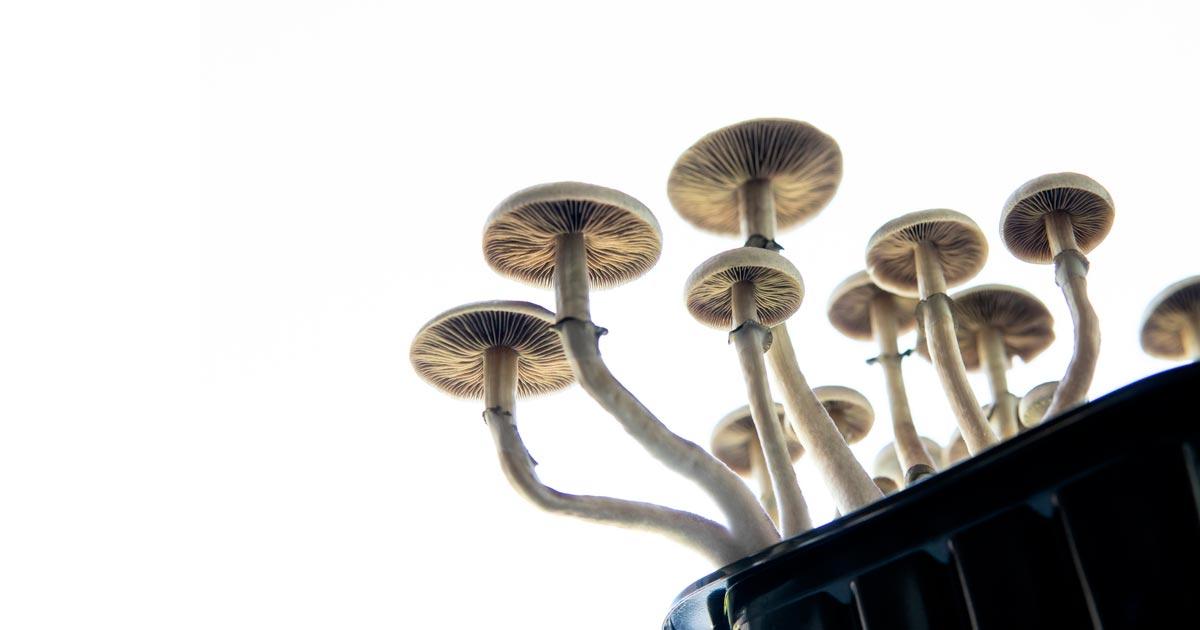
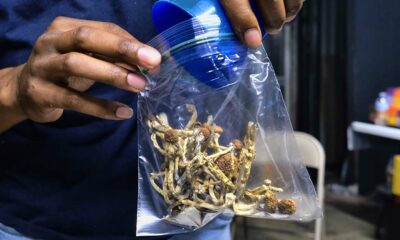
Psilocybin, the active ingredient in hallucinogenic mushrooms, has already attracted a great deal of interest for its therapeutic potential in various contexts, including helping people to stop smoking. or manage mental disorders. Now, researchers at the University of Heidelberg are hoping that this psychedelic might help combat alcohol cravings and alcohol-related disorders.
The research, published in Science Advances, study focused on psilocybin's ability to restore the expression of a specific glutamate receptor known as mGLuR2. Reduced expression of this specific receptor causes craving for alcohol and impairments in «executive functions», according to the study, with consequences for self-control and decision-making.
«In alcohol use disorders, there's a lot of cell loss and degeneration of brain tissue. Then, at the network level, when you look at the activity of different networks, you find that many networks related to executive functions are mainly down-regulated, but strongly increased when, for example, they are solicited by specific signals such as the smell of alcohol,» said study author Dr. Marcus Meinhardt.
To observe the potential benefits of psilocybin in the equation, the team exposed rats to alcohol vapors that intoxicated them to levels similar to those seen in people with clinical alcohol dependence. Within seven weeks, lasting behavioral and molecular changes occurred in the brain, and the rats became dependent on alcohol, the researchers report.
The first approach involved completely neutralizing all mGLuR2 receptors in a rat's brain from birth, which they succeeded in doing using a line of mutant rats that exhibit this deficiency from birth. The other approach uses a targeted gene-editing method aimed at deleting mGLuR2 neurons from the addiction pathways of adult rats.
Each approach produced different results. The targeted approach reduced cognitive flexibility in a similar way to prolonged alcohol exposure. Complete elimination did not affect the rat's behavioral performance. Meinhardt explains that the team suspects that this finding is due to the plasticity of the mammalian brain:
«This global knock-out is already present early in development, and as the brain is very plastic, it can adapt to very many processes during development. So the idea is that receptors such as mGLuR3, which is very similar to mGLuR2, could take over from mGLuR2 when the brain says to itself: ‘OK, there's no more mGluR2, so we need to compensate for that'.».
Having established this, the researchers then gave the rats one of two different doses of psilocybin to determine whether it would be effective in reducing relapse. The team showed that these modifications prompted rats who had not previously been exposed to alcohol to seek it out by pressing a lever in their cage that released it.
Injections of 1 mg/kg or 2.5/kg would stimulate a hallucinogenic response if applied on a human scale, and increased mGLuR2-related gene expression, ultimately reducing alcohol-seeking behavior.
Both doses were effective, compared with a control treatment, according to the team.
«Our preclinical results confirm that mGLuR2 is a molecular target for the treatment of reduced cognitive flexibility, craving and relapse in alcohol-dependent patients,» says the study.
Looking to the future and the potential of clinical treatments for alcohol use disorders, the researchers propose a number of key steps. First, they suggest conducting an experimental medicine trial in alcohol-dependent patients to demonstrate improved cognitive flexibility, in response to a single administration of psilocybin.
«Such an assay would benefit from an enrichment strategy based on the FDG-PET biomarker described here,» says the team.
Secondly, they suggest carrying out a study of cue-induced craving in alcoholic patients in the context of MRI to demonstrate normalized functional connectivity in brain areas known to be involved in neuronal reactivity to cues, after a single application of psilocybin.
«In the event that the two proposed experimental human studies yield positive results, a randomized controlled trial (RCT) to test psilocybin's anti-relapse properties is indicated,» they concluded.
While this initial study is promising, the researchers acknowledge that it is unlikely to be a magic bullet for curing alcohol addiction, as many factors contributing to addictive behavior exist, and stress the need for further research.




















Dr. Pascal Douek, a tireless advocate for medical cannabis in France, has died

Kentucky now has 26 medical cannabis dispensaries

«Vincy Gold»: Humboldt Seed Company on the Hunt for Saint Vincent Sativas

Cronos Completes the Acquisition of CanAdelaar for 57.5 million euros

Cannabis with a "bloody" twist: Discover Sensi True Blood and Sensi Sangria, the two new strains from Sensi Seeds

Hemp: The Council of the EU Takes a Stand on New Production and Marketing Rules

Missouri's legal cannabis market accounts for 93 % of consumer spending

THC Gummies: How to Read a Certificate of Analysis Before Buying

British patients now have access to THCV-rich cannabis flowers

Spain: Medical Cannabis Is Coming to About 50 Hospitals
-
 Business3 weeks ago
The legal cannabis market in New York exceeds 4 billion $ in revenue
-
Cannabis in France2 weeks ago
France already has 3,000 cannabis retail outlets. None of them are legal.
-
Cannabis in the U.S.2 weeks ago
A DEA report confirms that there are no fatal cannabis overdoses
-
Cannabis in France4 weeks ago
France’s Drug Policy Chief Defends Cannabis Prohibition... and Runs Into the Facts
-
Studies on cannabis2 weeks ago
Cannabis Oil and Endometriosis: A Promising Study for Pain Relief
-
CBD3 weeks ago
In Brazil, researchers are developing an innovative CBD eye drop
-
Business2 weeks ago
Tilray is accelerating its operations in Europe thanks to a license in Portugal
-
Cannabis in France2 weeks ago
CBD in France: Traceability, Retail Stores, THC and Driving… What the New Bill Proposes














You must be logged in to post a comment Login