Denmark opens its first Cannabis Social Club

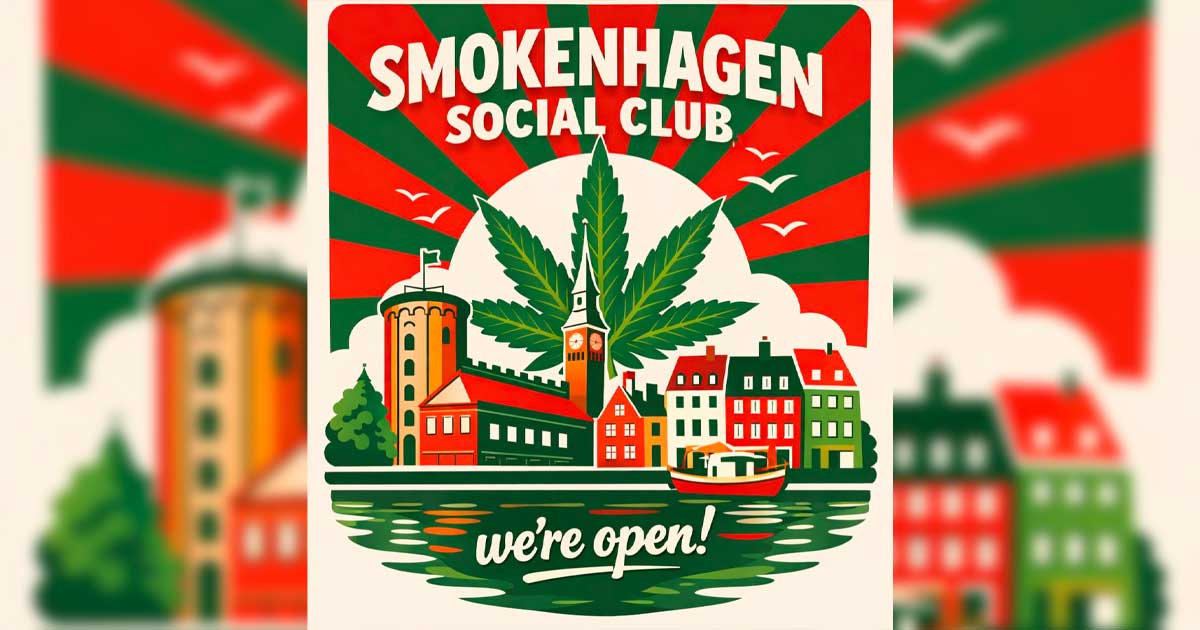
The February 2, 2026, Denmark has quietly crossed a symbolic threshold. In the heart of Copenhagen, the first Cannabis Social Club of the country, reserved exclusively for medical patients, has officially opened its doors. Located on Studiestræde, this initiative marks a first in Denmark: a private, members-only space where patients with a valid prescription can legally consume their medication in a social setting.
The club, named Smokenhagen, is the fruit of years of activism, legal action and preparation by Khodr «Cutter» Mehri, a long-standing activist. First announced at the beginning of 2025, the project experienced logistical delays, but finally saw the light of day at a time when the danish regulatory framework for medical cannabis has become permanent.
A space designed for prescription holders
The concept behind the Club is simple, but unprecedented in Denmark. Members must belong to an association and present a medical prescription allowing them to buy cannabis in a pharmacy. Only cannabis legally obtained through the Danish medical system is allowed on the premises.
Inside, the Club looks more like a community space than a dispensary. A reception desk controls access, while the main room includes lounge areas, a non-alcoholic bar and spaces for conversation and games. According to Mehri, the aim is to enable patients to consume their treatment openly, without disturbing family members, neighbors or the public.
«In many cases, people can't just use their cannabis-based medicine at home. Either there are neighbors who don't like the smell, or they have children and a wife they don't want to disturb. There are simply too many reasons why cannabis can't be consumed just anywhere,» he explained at the project presentation.
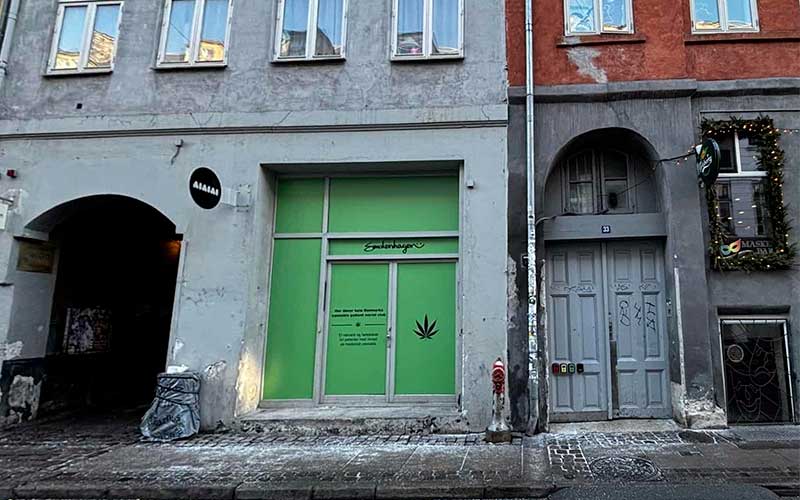
Smokenhagen, Denmark's first Cannabis Club
Medical cannabis in Denmark: from trial to legalization
Medical cannabis in Denmark was introduced in 2018 as part of a four-year pilot program, allowing doctors to prescribe dried cannabis oils, tablets and flowers that are neither approved medicines nor magistral preparations. At the end of 2024, a large majority of the Danish Parliament voted to make the program permanent.
According to the Ministry of the Interior and Health, approximately 1,800 patients have received prescriptions for medical cannabis since the program began, with approximately 20,000 prescriptions delivered. The system mainly targets patients suffering from multiple sclerosis, spinal cord injury, cancer and chronic pain.
Presenting the decision to extend the program, Minister Sophie Løhde said:
«Medical cannabis has proven to be a popular alternative to approved medications for patients with serious illnesses such as cancer and multiple sclerosis. Many experience relief from pain or nausea, which can dramatically improve their quality of life.»
Political debate and persistent skepticism
Even before it opened, the Club sparked debate across the Danish political spectrum. Conservative health spokesman, Per Larsen, criticized the initiative, calling it a «slippery slope» and questioning the need for a common space around a prescribed drug.
Others strongly disputed this claim. The pain specialist Tina Horsted, whose clinic would treat the majority of patients using medical cannabis, rejected this comparison.
«The classic chronic pain patient is a woman. She's between 55 and 75. She suffers from back pain or fibromyalgia,» she said, adding that public perception of cannabis patients is often very misguided.
Moderate Party spokeswoman, Nanna Gotfredsen, also rejected the argument, calling it outdated, and asserting that prohibition-oriented thinking ignores the real needs of patients.
Despite his activist past, Mehri is keen to stress that the Club has nothing to do with his past initiatives, in particular that of 2013, when he opened an establishment of the same name where cannabis was sold over the counter, in the manner of Pusher Street, before being closed down by the police nine months later. This time, the project is neither provocative nor a lobbying tool, but a strictly supervised structure within the legal framework of medical cannabis.
Membership fees, which are expected to amount to a few hundred kronor (€15) a month, are mainly intended to cover rent and running costs. He has repeatedly stated that profitability is not the objective.
«I have no ambition to change their prejudices,» said Mehri, referring to critics of the cannabis policy.
















France already has 3,000 cannabis retail outlets. None of them are legal.

Morocco's exports of legal cannabis have expanded to 15 countries

Aurora Cannabis Doubles Its Production Capacity in Germany

Tilray is accelerating its operations in Europe thanks to a license in Portugal

Boston will host the 10th annual State of the Cannabis Industry Conference on October 26

A DEA report confirms that there are no fatal cannabis overdoses

A British patient is challenging the NHS's refusal to reimburse medical cannabis

October 2026 CBD Highlights: 10 Strains and Hash to Discover from 5 French Producers

CBD in France: Traceability, Retail Stores, THC and Driving… What the New Bill Proposes

Organigram Enters the Race for Aurora Cannabis
-
 Business2 weeks ago
The legal cannabis market in New York exceeds 4 billion $ in revenue
-

 Cannabis in France3 weeks ago
Which countries legalized medical cannabis before France?
-
Business3 weeks ago
South Korea is preparing to begin local production of medical cannabis to meet rising demand
-
Cannabis in Thailand3 weeks ago
From the boom in dispensaries to a purely medical approach: Thailand is revising its cannabis policy
-
Cannabis and driving3 weeks ago
Medical Cannabis and Driving: New South Wales Ends Automatic Penalties for THC
-
Cannabis in Argentina4 weeks ago
Argentina Opens Its Market to Hemp Flowers Containing 1% of THC
-
Autism3 weeks ago
Autism and Cannabis: Results from the First Placebo-Controlled Trial of NTI164
-
Cannabis in France2 weeks ago
France’s Drug Policy Chief Defends Cannabis Prohibition... and Runs Into the Facts

















cbdtech
6 February 2026 at 12 h 16 min
The opening of Denmark's first Cannabis Social Club is a fascinating milestone for the European model. What's particularly interesting here is the choice of a not-for-profit associative structure rather than a purely commercial market.
This model favors public health and product traceability, while keeping the black market at bay. It's a pragmatic experiment that places collective responsibility at the heart of consumption. An initiative that many neighboring countries will be watching closely to assess its real impact on safety and prevention.