Synthetic Cannabis (Spice, K2, PTC): Dangers, Effects, and the Situation in France

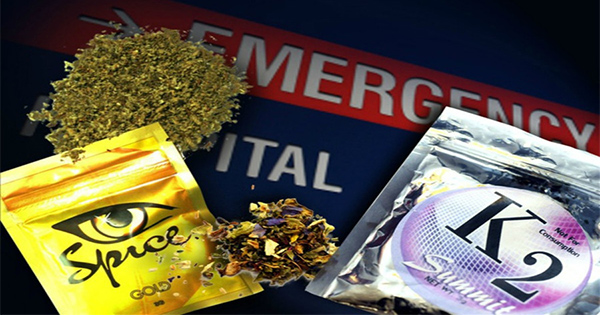
Synthetic cannabis is one of the most complex public health issues related to the world of drugs.
Behind street names like «spice,» “K2,” “PTC,” “black mamba,” or simply “synthetic weed” lie chemical compounds that often have nothing in common with natural cannabis—except, in some cases, their method of consumption and certain effects. But their toxicological profile is radically different, and their risks are incomparable to those of traditional cannabis. Here’s an overview of what we know in 2026.
What is synthetic cannabis?
Synthetic cannabis refers to a group of chemical molecules produced in a laboratory that are designed to act on the same receptors in the brain as natural THC: the CB1 cannabinoid receptors and CB2. These molecules are called synthetic cannabinoids, and there are hundreds of variants, which are constantly being reformulated to circumvent legal bans.
In their most common form, these molecules are sprayed onto dried plant material (herbs, various plants) that visually resembles cannabis or are incorporated into e-liquids. The product is then sold in colorful pouches with evocative names and packaging carefully designed to appeal to a young customer base.
It is important not to confuse synthetic cannabis with other new psychoactive substances (NPS) such as flakka (alpha-PVP) or bath salts, which belong to the family of synthetic cathinones and produce stimulant effects similar to those of amphetamines. These two families are often mentioned together in the media, but their mechanisms of action are very different.
CSs also differ from neo-cannabinoids, which synthetically replicate molecules found to varying degrees in cannabis; the line between the two is very fine.
Why is synthetic cannabis more dangerous than natural cannabis?
The dangers of synthetic cannabis stem from several structural factors that make it fundamentally different from natural cannabis.
A much stronger affinity for cannabinoid receptors
Synthetic cannabinoids bind to the brain’s CB1 receptors with an affinity that is often 2 to 100 times greater than that of THC. In other words, at equivalent doses, their effects are much more intense and much harder to control. Natural CBD, which is present in cannabis and partially modulates the effects of THC, is completely absent from synthetic cannabis, thereby removing this natural restraint.
An unpredictable and unstable composition
Unlike natural cannabis, whose cannabinoid and terpene profiles are relatively stable from one strain to another, synthetic cannabis is produced artisanally, often by clandestine laboratories located primarily in Asia. The concentration of the active ingredient varies greatly from one packet to another, and even from one part of the same packet to another. This variability makes the risk of accidental overdose very high.
A continuous chemical renewal
As soon as a molecule is classified as a narcotic and banned, producers synthesize a new one—with slight chemical modifications—that temporarily evades the law. This game of cat and mouse with the authorities means that users regularly ingest molecules that are completely unknown to health authorities, with no data available on their toxicity.
What are the effects and risks of synthetic cannabis?
The effects of synthetic cannabinoids can include intense euphoria, altered perception, deep sedation, hallucinations, and behavioral disinhibition. However, the adverse effects and medical complications observed are far more frequent and severe than those associated with natural cannabis.
Emergency departments regularly report cases of acute poisoning characterized by episodes of extreme agitation, acute psychotic states, seizures, severe tachycardia, uncontrollable vomiting, and loss of consciousness. Cases of acute kidney failure have also been documented with certain compounds in the synthetic cannabinoid class.
Addiction is a serious issue. Unlike natural cannabis, which has a real but moderate potential for addiction, synthetic cannabis causes documented withdrawal symptoms, including intense anxiety, irritability, tremors, and insomnia. Regular users report a rapid increase in dosage to achieve the same effect, a classic sign of developing tolerance.
Psychiatric risks are also a cause for concern: several studies link repeated use of synthetic cannabinoids to long-lasting psychotic episodes, even among people with no history of psychiatric disorders.
The Situation in France
In France, synthetic cannabis has been the subject of repeated health warnings since the early 2010s. The ANSM (French National Agency for Medicines and Health Products Safety) and the OFDT (French Observatory on Drugs and Addictive Trends) closely monitor developments regarding these substances and regularly publish safety bulletins.
French legislation has evolved in an effort to keep pace with the changing nature of these products. Since 2012, the law has allowed for the classification by decree of entire families of molecules—rather than just individual substances—which speeds up the process of banning them. However, as in all countries, the pace at which new molecules are created continues to outpace the speed at which they are classified.
These substances are distributed primarily through informal and online channels, sometimes packaged under innocuous names and misleading descriptions such as «incense» or «herbs for burning.» Their accessibility, low cost, and the fact that they cannot be detected by standard urine tests make them a popular substitute in certain contexts (prisons, athletic competitions, and jobs subject to regular drug testing).
Risk Mitigation and Resources
When it comes to synthetic cannabis, the harm reduction strategy is based on several pillars.
The first is information: understanding the nature of these substances and their actual dangers is the first line of defense. Harm reduction services such as Techno Plus, ASUD, and CAARUDs (centers providing support and assistance for harm reduction among drug users) offer tailored resources and support.
The second is testing: some harm-reduction programs offer substance analysis to identify their composition. This practice, which is still relatively uncommon in France, is becoming more widespread, particularly in party settings.
In case of an emergency or suspected acute poisoning, call 15 (SAMU) or 3114 (the national suicide prevention hotline, which also refers callers to addiction treatment resources). The Drogues Info Service website (0 800 23 13 13, toll-free and anonymous) is also a useful resource for drug users and their loved ones.
Conclusion
Synthetic cannabis is not a stronger or more legal version of natural cannabis: it is a family of unpredictable, potentially highly toxic chemical molecules whose composition is constantly changing to evade the law. The confusion created by their name and appearance is precisely what makes them dangerous. In 2026, health warnings have multiplied in France and across Europe, and vigilance remains high. The best protection is still information, and if you have any doubts about a substance you’ve consumed, consult a healthcare professional or a harm reduction service immediately.








Medical Cannabis in Germany: THC Prices Vary by a Factor of 12

France already has 3,000 cannabis retail outlets. None of them are legal.

Morocco's exports of legal cannabis have expanded to 15 countries

Aurora Cannabis Doubles Its Production Capacity in Germany

Tilray is accelerating its operations in Europe thanks to a license in Portugal

Boston will host the 10th annual State of the Cannabis Industry Conference on October 26

A DEA report confirms that there are no fatal cannabis overdoses

A British patient is challenging the NHS's refusal to reimburse medical cannabis

October 2026 CBD Highlights: 10 Strains and Hash to Discover from 5 French Producers

CBD in France: Traceability, Retail Stores, THC and Driving… What the New Bill Proposes
-
 Business2 weeks ago
The legal cannabis market in New York exceeds 4 billion $ in revenue
-

 Cannabis in France3 weeks ago
Which countries legalized medical cannabis before France?
-
Business3 weeks ago
South Korea is preparing to begin local production of medical cannabis to meet rising demand
-
Cannabis in Thailand3 weeks ago
From the boom in dispensaries to a purely medical approach: Thailand is revising its cannabis policy
-
Cannabis and driving3 weeks ago
Medical Cannabis and Driving: New South Wales Ends Automatic Penalties for THC
-
Cannabis in Argentina4 weeks ago
Argentina Opens Its Market to Hemp Flowers Containing 1% of THC
-
Autism3 weeks ago
Autism and Cannabis: Results from the First Placebo-Controlled Trial of NTI164
-
Cannabis in France2 weeks ago
France’s Drug Policy Chief Defends Cannabis Prohibition... and Runs Into the Facts













Von Berkowsky
July 18, 2017 at 19 h 26 min
What's terrible is that it's possible to buy these products legally in France via Amazon! Their chemical construction, different from natural THC, escapes legislation ...