
Indoor cannabis cultivation responsible for significant greenhouse gas emissions

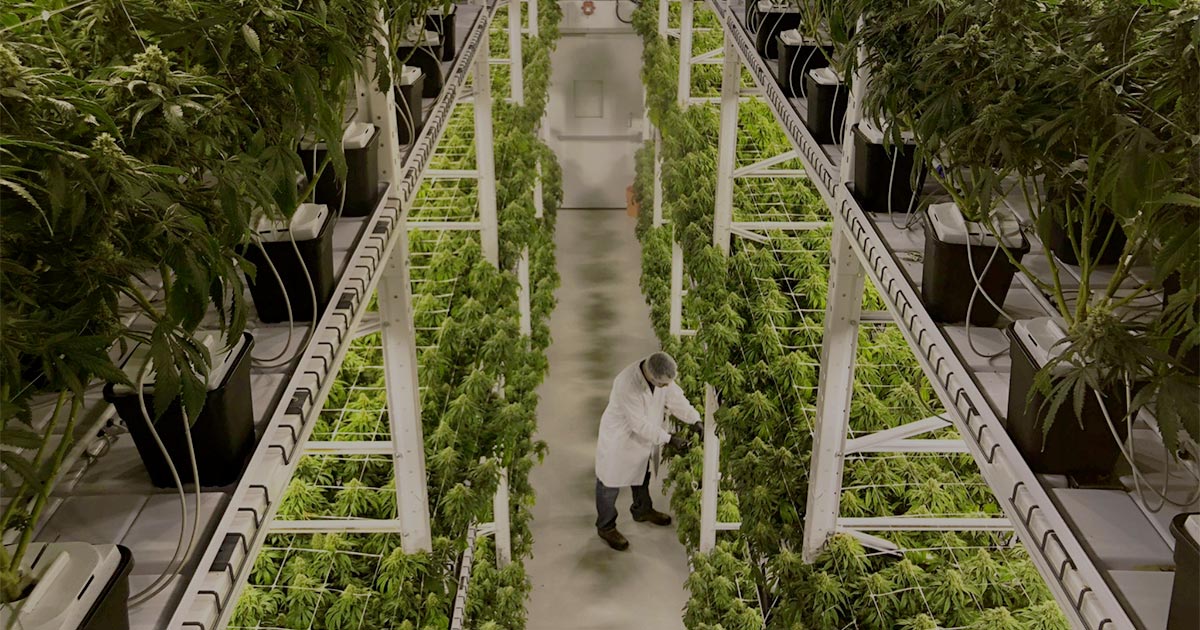
The production of cannabis Indoor cultivation is a major source of greenhouse gas emissions, and its environmental impacts vary considerably depending on where it is grown, according to a new study.
Hailey Summers and her colleagues at Colorado State University quantified and analyzed the greenhouse gas emissions produced by cannabis growers.
They found that emissions varied considerably from state to state, ranging from 2.3 to 5.2 metric tons of carbon dioxide equivalent (CO2e) per kilogram of dried flowers. In Colorado, emissions amount to approximately 2.6 megatons of CO2e, which is more than the state’s coal mining emissions of 1.8 megatons of CO2e.
«The emissions from growing one ounce—depending on where it is grown in the United States—are roughly the same as those from burning 7 to 16 gallons [Editor's note: 25 to 60 liters] »gas," said Summers.
The Intensive cannabis cultivation: a threat to the environment ? The lights used to grow cannabis indoors consume a lot of electricity. But the greatest source of energy consumption comes from the need to constantly supply fresh air to the grow facilities. All of this outside air must be treated to ensure the correct temperature and humidity, a very energy-intensive process because the air exchange rate is generally very high. Growers also pump carbon dioxide into the grow room to boost plant growth. This accounts for 11 to 25% of the facilities’ greenhouse gas emissions.
«One of the challenges associated with this is that profit margins are so huge that you don't have to make decisions that consume a lot of energy,» says Jason Quinn, a member of the research team.
The team of scientists suggests switching to growing cannabis outdoors or in greenhouses. This would significantly reduce energy consumption and emissions. And while we must remain indoor, to use horticultural LEDs while upgrading the air conditioning systems.
The cannabis industry’s carbon footprint could be even larger than this study suggests, as the researchers did not take into account emissions associated with the storage and processing of cannabis.
Illegal cannabis production is also likely to generate more emissions. «The energy profile of black-market production is very different in that it frequently involves on-site diesel generators, which are often less efficient and more polluting per kilowatt-hour than electricity purchased from the grid,» the study notes.






















Cannabis Oil and Endometriosis: A Promising Study for Pain Relief

CBD is said to promote athletic recovery, without improving performance

294 cannabis clubs in Chile: a booming movement with uneven distribution

Chronic Sciatica: New York Approves First Clinical Trial of a THC-Based Medication

United States: The DEA is accelerating the integration of medical cannabis at the federal level

Florida is nearing one million patients using medical cannabis

Uruguay Revives Its Plan to Allow Tourists to Legally Access Cannabis

In Brazil, researchers are developing an innovative CBD eye drop

Autism: Medical Cannabis Is Linked to Reduced Anxiety

The $28 billion U.S. hemp market remains under threat
-
 Business7 days ago
The legal cannabis market in New York exceeds 4 billion $ in revenue
-

 Cannabis in France2 weeks ago
Which countries legalized medical cannabis before France?
-
Business2 weeks ago
South Korea is preparing to begin local production of medical cannabis to meet rising demand
-
Cannabis in the Netherlands4 weeks ago
One year after the launch of the Dutch cannabis experiment, the first trends are emerging
-
Cannabis in Thailand2 weeks ago
From the boom in dispensaries to a purely medical approach: Thailand is revising its cannabis policy
-
Cannabis in France4 weeks ago
French medical cannabis remains stalled at the Ministry of Health
-
Cannabis in Argentina3 weeks ago
Argentina Opens Its Market to Hemp Flowers Containing 1% of THC
-
Cannabis and driving2 weeks ago
Medical Cannabis and Driving: New South Wales Ends Automatic Penalties for THC















You must be logged in to post a comment Login