Constitutional Council rejects request for censure of fixed fine for drug use offences

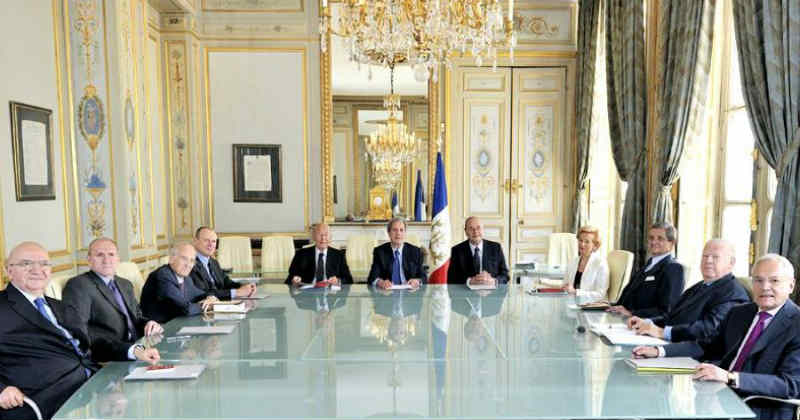
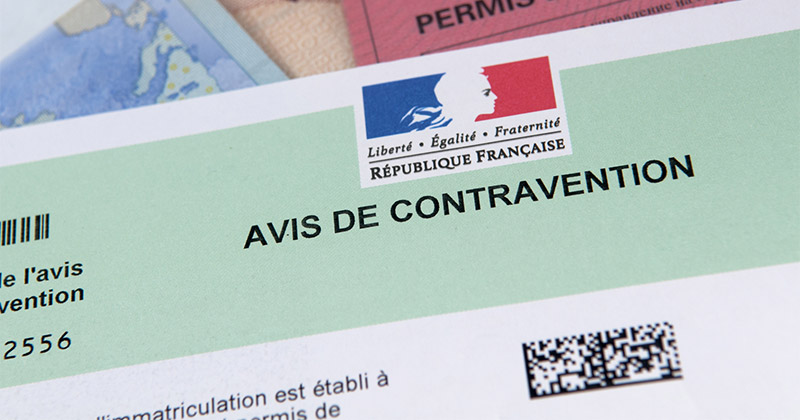
In February, a number of parliamentary groups in the French Assembly and Senate referred the draft justice reform bill to the French Constitutional Council. On this occasion, 19 associations submitted an external contribution to request the censure of article 58. The deputies took up a number of points, including: the infringement of the principles of separation of prosecuting and judging authorities and separation of powers, as well as the infringement of the principle of individualization of penalties and equality before the law induced by the lump-sum (fixed price) nature of the fine - we advise you to refer to our previous article on the subject. The Constitutional Council has just issued its opinion.
The Constitutional Council's response
With a certain irony, the Conseil recalled article 8 of the Declaration of 1789, which stipulates that «the law shall establish only strictly and obviously necessary penalties». Generally speaking, the Conseil sided with the government, rejecting all grievances relating to article 58 of the Justice reform bill (extension of the fixed fine to the offence of drug use). It considers that recourse to a method of repression outside the jurisdiction of the courts is justified by «the requirements of proper administration of justice and effective repression of offences».
The Conseil Constitutionnel considers that the imposition of a lump-sum fine is always carried out under the direction of the public prosecutor, by virtue of the provisions of the Criminal Code. items 12 and 39-3 of the Code of Criminal Procedure. These articles specify that «the judicial police is exercised under the direction of the public prosecutor» and that the latter «within the framework of his powers to direct the judicial police, may issue general instructions». Consequently, the fixed fine is always the responsibility of the judiciary, according to the Council, which therefore rejects the complaint against the principle of separation of authorities and powers.
The Council also considers that the option of extinguishing public proceedings by means of a fixed fine is possible and not contrary to the principle of equality, provided that it «only concerns the least serious offences (less than three years» imprisonment) and only implements small fines (below the ceiling for fines for minor offences)". - as is the case with article 58. At the same time, it ignores the sociological argument that some people would be more affected by the fine because of over-policing in certain areas and communities.
With regard to the principle of individualization of penalties, the Conseil Constitutionnel considers that it «cannot prevent the legislator from laying down rules to ensure the effective punishment of offences». This is clearly a value judgment on the part of the Conseil. What's more, it considers that «the lump-sum nature of the fine paid, without dispute, by the person charged with the offence does not, in itself, infringe the principle of individualization of penalties» - provided that the minimum amount of the fine is less «than half the ceiling set for tortious lump-sum fines». This is the case since the maximum fine is €750 and the minimum fine for this offence is set at €200.
Between theory and practice
In addition, it specifies that the introduction of the fixed fine «does not prevent the court from making use of other provisions for individualizing the penalty, enabling it to pronounce sentences and set their terms according to the circumstances of the offence and the personality of the offender», particularly in cases of complaint. For example: «In accordance with the last paragraph of article 495-21 of the Code of Criminal Procedure, the judge may exceptionally decide, by means of a specially reasoned decision based on the person's income and expenses, not to impose a fine, or to impose a fine of a lesser amount».
This is true only in the case of a claim. However, making a claim entails a major risk, since it implies that in the event of a conviction, the price to be paid will have to be 10% higher than the fixed fine or the increased fine, depending on the case. Few people are prepared to take this risk and go to court in the hope of a «specially motivated decision» that is clearly exceptional.
Incidentally, the Conseil Constitutionnel said nothing about the associations' objection to the claims procedure. How do you prove non-use? Impossible, so the claim is futile and the supposed integrity of the individualization principle is null and void in practice. Nor did it say anything about the infringement of the objective (of constitutional value) of accessibility and legibility of the law, as pointed out by the associations.











Medical Cannabis in Germany: THC Prices Vary by a Factor of 12

France already has 3,000 cannabis retail outlets. None of them are legal.

Morocco's exports of legal cannabis have expanded to 15 countries

Aurora Cannabis Doubles Its Production Capacity in Germany

Tilray is accelerating its operations in Europe thanks to a license in Portugal

Boston will host the 10th annual State of the Cannabis Industry Conference on October 26

A DEA report confirms that there are no fatal cannabis overdoses

A British patient is challenging the NHS's refusal to reimburse medical cannabis

October 2026 CBD Highlights: 10 Strains and Hash to Discover from 5 French Producers

CBD in France: Traceability, Retail Stores, THC and Driving… What the New Bill Proposes
-
 Business2 weeks ago
The legal cannabis market in New York exceeds 4 billion $ in revenue
-

 Cannabis in France3 weeks ago
Which countries legalized medical cannabis before France?
-
Business3 weeks ago
South Korea is preparing to begin local production of medical cannabis to meet rising demand
-
Cannabis in Thailand3 weeks ago
From the boom in dispensaries to a purely medical approach: Thailand is revising its cannabis policy
-
Cannabis and driving3 weeks ago
Medical Cannabis and Driving: New South Wales Ends Automatic Penalties for THC
-
Cannabis in Argentina4 weeks ago
Argentina Opens Its Market to Hemp Flowers Containing 1% of THC
-
Autism3 weeks ago
Autism and Cannabis: Results from the First Placebo-Controlled Trial of NTI164
-
Cannabis in France2 weeks ago
France’s Drug Policy Chief Defends Cannabis Prohibition... and Runs Into the Facts

















You must be logged in to post a comment Login